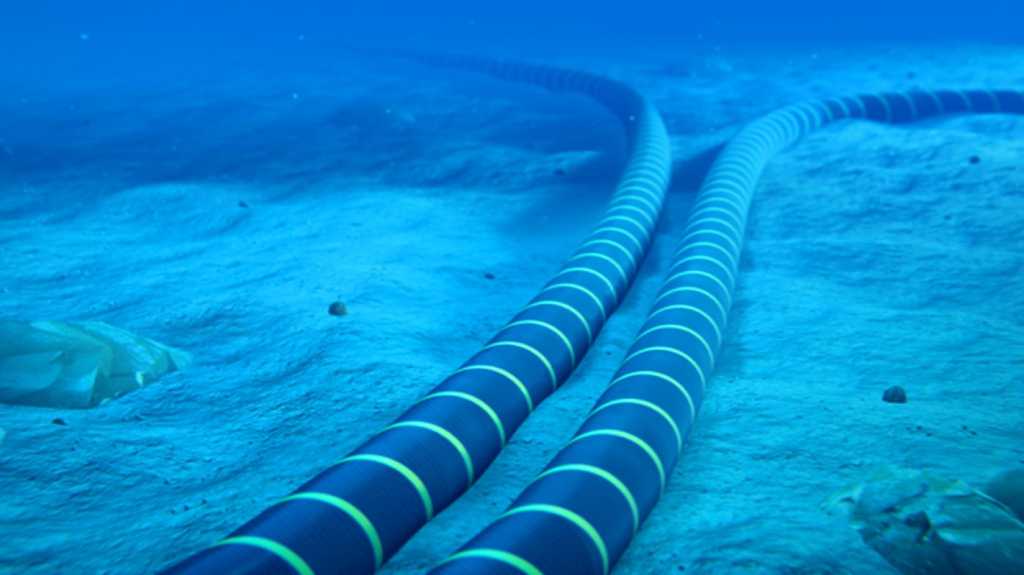
In an age dominated by instant global communication, it’s easy to overlook the physical infrastructure that makes it all possible. While satellites play a role, the vast majority of our international internet traffic, voice calls, and data transfers travel through an intricate network of submarine cables laid across the ocean floors. These seemingly simple strands of fiber are the true backbone of our interconnected world, enabling everything from streaming movies to conducting international business. This article delves into the fascinating world of submarine internet cables, exploring how they work, who owns and maintains them, and the regulatory frameworks that govern this critical global infrastructure.
How Submarine Internet Cables Work
At their core, modern submarine internet cables are marvels of engineering, designed to transmit vast amounts of data across immense distances with incredible speed and reliability. Unlike early telegraph and coaxial cables that relied on copper wires, today’s submarine cables utilize optical fiber technology. These hair-thin strands of glass or plastic are capable of transmitting digital data, including telephone conversations, internet traffic, and private network communications, using pulses of light.
The Technology Behind the Transmission
The fundamental principle behind data transmission in optical fibers is Total Internal Reflection. Lasers at one end of the cable fire light pulses down the thin glass fibers. These light pulses bounce off the inner walls of the fiber, traveling at nearly the speed of light, until they reach receptors at the other end. This process allows for extremely rapid and efficient data transfer. To maximize the data capacity, a technique called Dense Wavelength Division Multiplexing (DWDM) is employed. DWDM allows multiple data streams to be sent simultaneously over a single optical fiber by using different wavelengths (colors) of light, effectively increasing the cable’s bandwidth exponentially.
Cable Construction
While the optical fibers are the data carriers, the cables themselves are robust structures designed to withstand the harsh deep-sea environment. A typical submarine cable, especially in its deep-sea sections, is about 25 millimeters (1 inch) in diameter. However, near shore, where they are more susceptible to damage from fishing activities, ship anchors, and natural events, the cables are much larger and heavier, often armored with multiple layers of protection. A cross-section of a shore-end cable reveals its intricate design:
•Optical Fibers: The core of the cable, carrying the light signals.
•Petroleum Jelly: Fills the space around the fibers to prevent water ingress.
•Copper or Aluminium Tube: Provides a hermetic seal and conducts electricity to power repeaters along the cable.
•Polycarbonate: A protective layer.
•Aluminium Water Barrier: Another layer to prevent water penetration.
•Stranded Steel Wires: Provide strength and protection against tension.
•Mylar Tape: A binding layer.
•Polyethylene: The outermost protective jacket, providing insulation and abrasion resistance.
Along the length of the cable, especially in longer transoceanic routes, repeaters are strategically placed. These are electronic devices that regenerate and amplify the optical signals, ensuring that the data remains strong and clear over thousands of kilometers. These repeaters are powered by electricity sent down the copper or aluminum conductors within the cable from the land-based stations.
Submarine cable systems are the primary conduits for international communications, carrying approximately 99 percent of all global internet traffic. Their unparalleled capacity, low latency, and high reliability make them indispensable for our modern digital world.
Ownership of Submarine Internet Cables
Submarine internet cables represent a massive investment in infrastructure, and their ownership structures are often complex, involving a diverse range of entities. This distributed ownership model reflects both the significant capital required for deployment and the strategic importance of these global communication arteries.
Key Players in Cable Ownership
Historically, telecommunications companies were the primary owners of submarine cables. However, in recent years, there has been a significant shift with the increasing involvement of major tech giants. The main types of owners include:
•Telecommunications Companies: Traditional telecom carriers, such as AT&T, Verizon, British Telecom, and Orange, continue to be major stakeholders. They often form consortiums to share the enormous costs, risks, and operational responsibilities associated with laying and maintaining these vast networks. These consortiums allow multiple carriers to gain capacity on a single cable system, optimizing resource utilization and reducing individual financial burdens.
•Content Providers (Tech Giants): Companies like Google (Alphabet), Meta (Facebook), Amazon, and Microsoft have become increasingly prominent owners of submarine cables. These tech giants, driven by the need to support their vast cloud services, data centers, and global user bases, are investing heavily in building their own private cables or participating as major partners in consortiums. This direct investment provides them with greater control over their data infrastructure, ensures lower latency for their services, and reduces their reliance on third-party network providers. For instance, Google has invested in numerous cables globally, including the Curie cable connecting the US to Chile, and the Dunant cable across the Atlantic.
•International Consortiums: This is perhaps the most common ownership model for large, transoceanic cable systems. Multiple companies, which can include a mix of telecommunications providers, content providers, and sometimes even governments, pool their resources to fund, build, and operate a cable system. Each member of the consortium typically owns a certain percentage of the cable’s capacity, proportional to their investment. Notable examples include the SEA-ME-WE (South East Asia–Middle East–Western Europe) series of cables, which involve dozens of telecommunication operators from various countries along their routes.
•Governments and State-Owned Entities: While less common for purely commercial internet traffic, some governments and state-owned telecommunication companies invest in submarine cables for strategic national interests, to improve connectivity in underserved regions, or to ensure data sovereignty. For example, the Tonga-Fiji Submarine Cable System is owned and operated by Tonga Cable Limited, a company majority-owned by the Government of Tonga, highlighting efforts to bridge the digital divide in island nations.
This diverse and evolving ownership landscape underscores the critical nature of submarine cables as essential infrastructure for the global digital economy. The collaborative nature of consortiums, combined with the strategic investments from tech giants, ensures the continuous expansion and resilience of the internet’s physical foundation.
Submarine Cable Maintenance and Regulation
The sheer scale and critical importance of submarine cable networks necessitate specialized maintenance operations and a robust regulatory framework to ensure their continuous and secure operation. Given their location in often remote and challenging environments, maintaining these cables is a complex and costly endeavor.
Maintenance Operations and Key Companies
Submarine cable faults can occur due to various reasons, including fishing gear entanglement, anchor drops, seismic activity, and even shark bites. When a fault occurs, rapid response is crucial to minimize disruption to global communications. Maintenance is typically carried out by a specialized fleet of cable-laying and repair ships equipped with advanced underwater remotely operated vehicles (ROVs) and highly skilled technicians. These operations involve locating the fault, retrieving the damaged section of cable from the seabed, repairing it on board the ship, and then re-laying it.
Several companies specialize in submarine cable installation, maintenance, and repair. These include:
•Global Marine Group: A long-standing and prominent player in the subsea cable industry, providing installation, maintenance, and burial services for fiber optic cables worldwide.
•ACSM Ships: Known for their expertise in subsea cable solutions, offering a range of services including maintenance, repair, and installation.
•IT International Telecom Inc.: Operates a fleet of cable ships dedicated to repair, laying, and remedial work on submarine cables.
•Subsea Global Solutions: Offers comprehensive services for underwater cable laying, burial, and recovery.
•Prysmian Group: While a major manufacturer of cables, they also have significant involvement in the installation and maintenance of subsea power cables, with similar operational requirements to communication cables.
To ensure efficient and timely repairs, many cable owners participate in maintenance agreements or consortiums, such as the Atlantic Cable Maintenance & Repair Agreement (ACMA). These agreements establish shared resources, including repair ships and spare cable, allowing for a coordinated and rapid response to any cable breaks within a designated region.
Regulatory Frameworks and Authorities
The regulation of submarine cables is a multifaceted challenge, involving both national and international bodies, due to their transboundary nature and strategic importance. The primary goals of regulation are to ensure the protection, security, and efficient operation of these vital communication links.
•International Cable Protection Committee (ICPC): The ICPC is arguably the most significant international body dedicated to submarine cable protection. Established in 1958, it is a non-profit organization that brings together cable owners, operators, and governments from around the world. Its primary mission is to promote the safeguarding of international submarine cables against both man-made (e.g., fishing, anchoring) and natural (e.g., earthquakes) hazards. The ICPC serves as a forum for sharing technical, legal, and environmental information, developing best practices, and advocating for policies that protect the global submarine cable network. It has over 220 members from more than 70 countries, playing a crucial role in fostering cooperation and understanding among stakeholders.
•National Regulatory Bodies: At the national level, individual countries have their own regulatory authorities that oversee aspects of submarine cable operations within their jurisdiction. This typically includes:
•Cable Landing Licenses: Governments often require licenses for the landing of submarine cables on their shores. These licenses ensure compliance with national laws, environmental regulations, and national security interests. For example, in the United States, the Federal Communications Commission (FCC) is the primary regulatory authority responsible for issuing licenses to own and operate submarine cables and their associated landing stations.
•Environmental Regulations: The laying and maintenance of cables must adhere to environmental protection laws to minimize impact on marine ecosystems.
•Navigation and Safety: Regulations are in place to ensure that cable laying and repair operations do not interfere with maritime navigation and safety.
•National Security: Given the critical role of these cables, national security concerns often play a significant role in regulatory oversight, particularly regarding foreign ownership and access.
•International Telecommunication Union (ITU): While the ITU does not directly regulate cable protection, as a specialized agency of the United Nations for information and communication technologies, it plays a crucial role in developing international standards and recommendations for telecommunication networks, including those related to submarine cables. Its work contributes to the interoperability and global coordination of telecommunications infrastructure.
•Domestic Legislation: Beyond specific regulatory bodies, various domestic laws and regulations in coastal states govern the installation, maintenance, repair, and removal of submarine cables, covering aspects from property rights to environmental impact assessments.
In essence, the regulatory landscape for submarine cables is a complex web of international cooperation, national sovereignty, and industry self-regulation, all aimed at protecting the vital arteries of the global internet. This collaborative approach is essential to ensure the continued flow of information that underpins our modern digital society.






Be First to Comment