
Introduction
While the semiconductor industry often emphasizes cutting-edge processors built on advanced nodes like 5nm or 3nm, the world still relies heavily on mature chip processors (28nm and above, often up to 180nm). These chips are not designed for bleeding-edge smartphones or AI accelerators but instead power automobiles, industrial equipment, medical devices, consumer electronics, and IoT systems. Their stability, lower cost, and reliability make them indispensable. To understand their significance, one must examine the materials, design anatomy, and supply chain ecosystem that sustain them.
Materials of Mature Chip Processors
Mature node processors are built from similar fundamental materials as advanced chips but optimized for cost-effectiveness and robust operation.
- Silicon Substrates
- The foundation is 200mm or 300mm silicon wafers.
- Unlike advanced nodes, mature fabs often use 200mm wafers, which are cheaper and still widely supported.
- Dielectrics & Insulators
- Layers of silicon dioxide (SiO₂) or low-k dielectrics are used for transistor isolation.
- These materials are less complex than those in cutting-edge chips, allowing more stable yields.
- Conductive Metals
- Copper interconnects dominate, though older fabs still use aluminum.
- Barrier metals like tantalum (Ta) and titanium nitride (TiN) prevent diffusion.
- Doping Materials
- Boron, phosphorus, and arsenic are introduced via ion implantation to adjust semiconductor conductivity.
- Packaging Materials
- Epoxy resins, lead frames, and solder bumps (tin-silver-copper alloys) are used for final assembly.
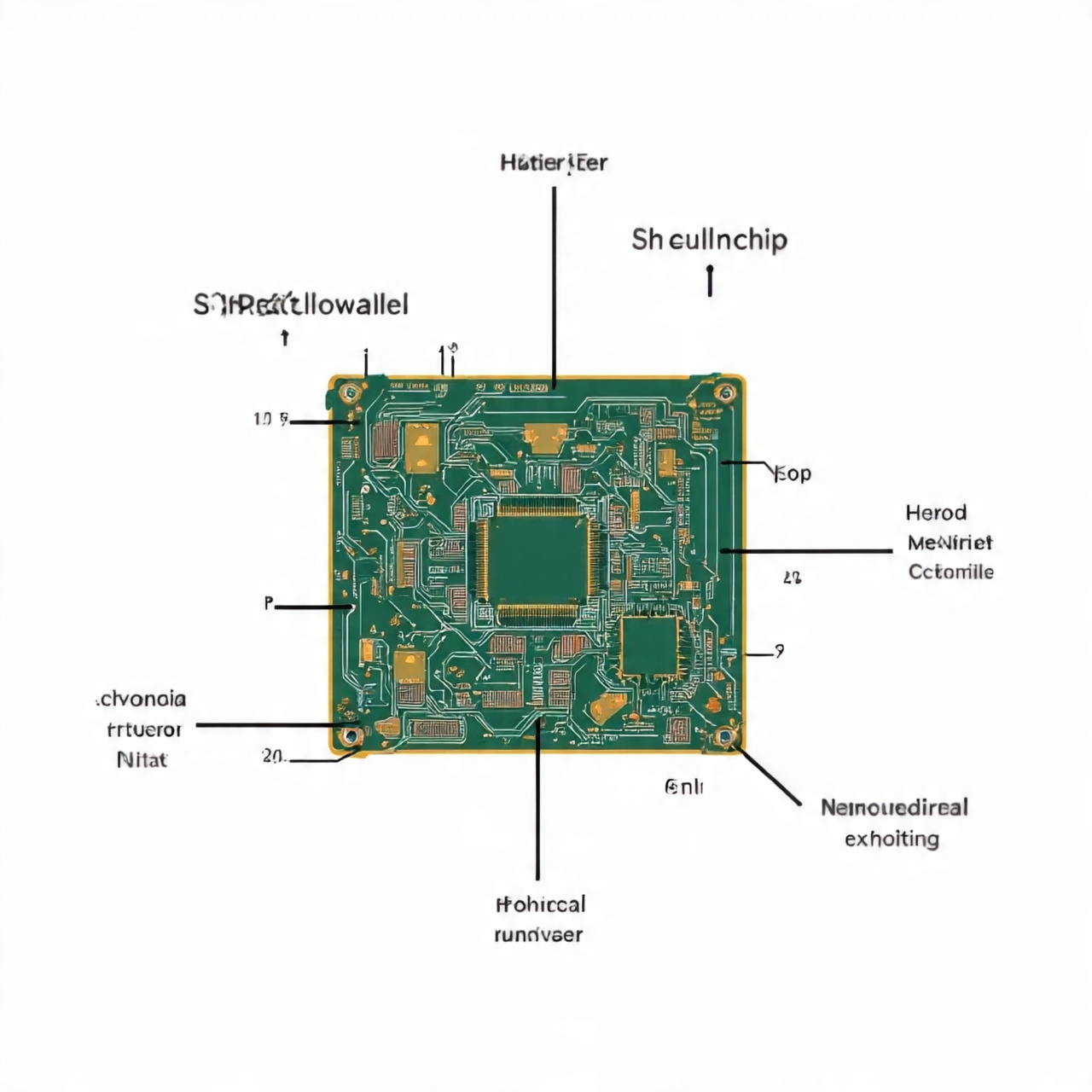
Anatomy of Mature Chip Processors
The structural composition of mature chips reflects their practical, reliable design:
- Transistors (MOSFETs)
- Still the building blocks, but often larger in geometry (65nm, 90nm, 130nm, or 180nm).
- Larger nodes provide better thermal stability and longevity, ideal for automotive and industrial uses.
- Interconnect Layers
- Multiple metal layers (4–8, fewer than advanced chips with 12+) route signals.
- Simpler structures reduce cost and complexity.
- Functional Blocks
- Mature processors integrate CPU cores, memory (SRAM, DRAM, flash), and analog components.
- Many chips combine digital + analog (mixed-signal ICs), such as motor drivers, power management ICs, and microcontrollers.
- I/O Interfaces
- Support for older standards like UART, SPI, I²C, USB 2.0, and CAN bus for automotive/industrial systems.
- Packaging & Integration
- Often come in QFN, SOIC, or BGA packages, designed for robustness over miniaturization.
Supply Chain of Mature Chip Processors
The supply chain for mature chips is different from advanced processors, being less concentrated and more globally distributed.
1. Design & IP
- Companies like NXP, Texas Instruments, Microchip, Renesas, and Infineon specialize in mature-node designs.
- These designs focus on reliability, long lifecycles (10–20 years), and low power rather than peak performance.
2. Fabrication (Foundries)
- TSMC, UMC, SMIC, GlobalFoundries, Tower Semiconductor remain major producers of mature nodes.
- Many still run 200mm fabs, which are in high demand due to automotive and IoT growth.
3. Materials & Equipment Suppliers
- Silicon wafers: Shin-Etsu (Japan), SUMCO (Japan), GlobalWafers (Taiwan).
- Chemicals & gases: Air Liquide, Linde, BASF supply etchants, dopants, and resists.
- Lithography tools: ASML, Canon, Nikon provide DUV (deep ultraviolet) tools for 90nm–180nm ranges.
4. Assembly & Packaging
- Outsourced Semiconductor Assembly and Test (OSAT) companies such as ASE, Amkor, JCET handle packaging.
5. Distribution & End Markets
- Major customers include automotive (ECUs, sensors), industrial automation, telecommunications, and healthcare.
- These chips often have long product cycles, unlike smartphones which refresh yearly.
Challenges in the Mature Chip Supply Chain
- Capacity Constraints: Demand for automotive and IoT chips has outpaced 200mm fab supply.
- Geopolitical Risks: Concentration of fabs in Taiwan and China makes supply vulnerable.
- Legacy Equipment Shortage: Some lithography and etching tools for older nodes are no longer manufactured.
- Price Volatility: Limited capacity keeps pricing pressure high, despite “mature” technology.
Future Outlook
Mature chip processors will remain essential for decades. With the rise of electric vehicles, 5G infrastructure, renewable energy systems, and IoT, demand will grow. While advanced chips chase performance, mature nodes prioritize stability, cost, and wide adoption. Industry players are now investing in new 200mm fabs and even modernizing older 300mm fabs for mature processes to ease shortages.
✅ Conclusion
Mature chip processors represent the backbone of modern technology—quietly powering cars, factories, homes, and medical devices. Their materials ensure durability, their anatomy balances performance with efficiency, and their supply chain reflects global interdependence. Even as 3nm and beyond dominate headlines, the true workhorses of the digital age will continue to be the reliable, mature chips.






Be First to Comment