
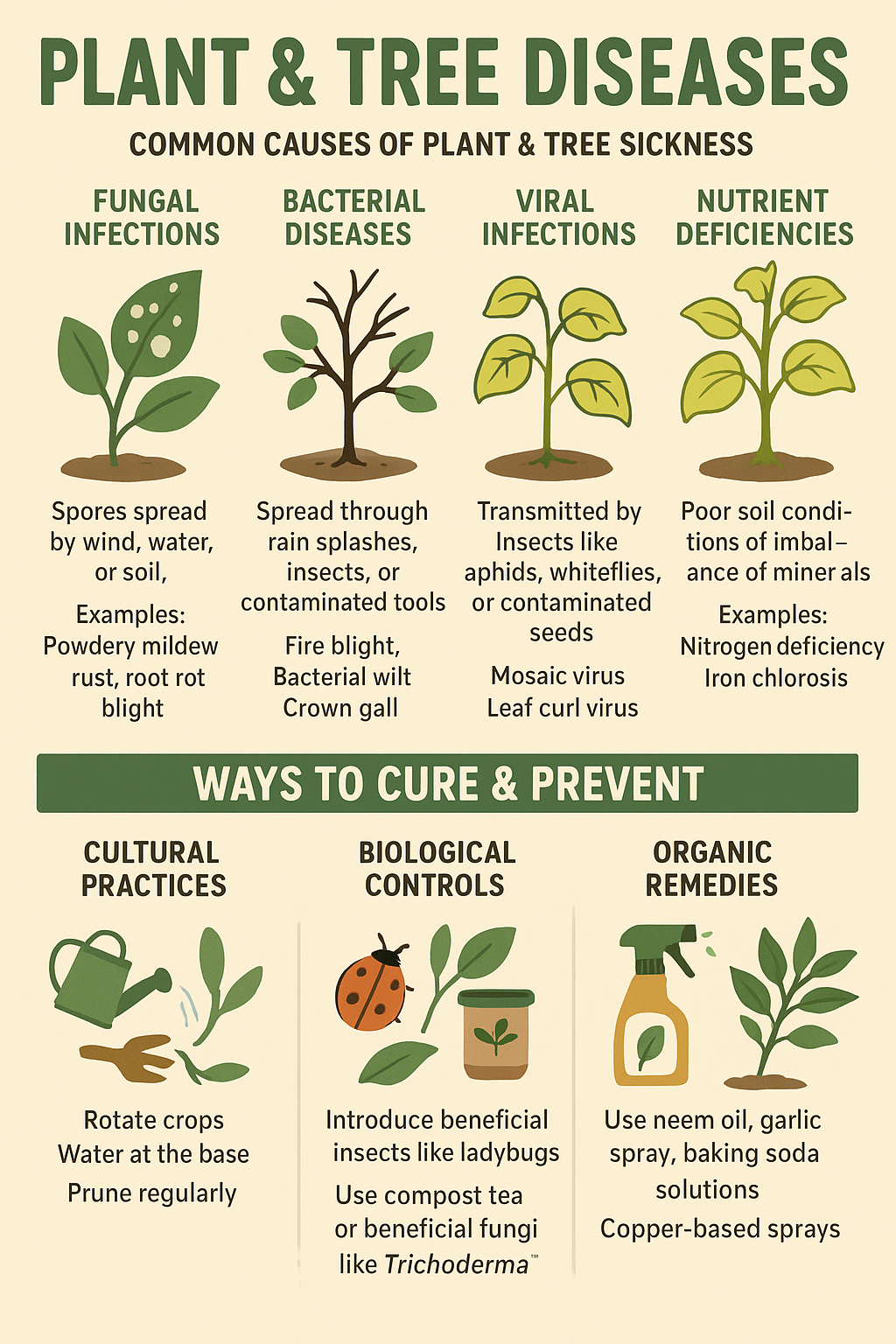
Plants and trees, like any living organisms, are susceptible to various diseases caused by pathogens, environmental factors, or nutrient deficiencies. Recognizing the signs of sickness and applying appropriate treatments can help restore their health and ensure their longevity. This article explores common plant and tree ailments, their causes, and effective cures.
Common Causes of Plant and Tree Sickness
1. Fungal Infections
Fungi are among the most common causes of plant diseases. They thrive in moist, warm conditions and can affect leaves, stems, roots, or fruits.
- Symptoms: Wilting, yellowing leaves, powdery white or gray coatings (powdery mildew), black spots (black spot disease), or root rot (waterlogged roots with a foul smell).
- Examples:
- Powdery Mildew: Appears as white or grayish powdery spots on leaves.
- Root Rot: Caused by fungi like Phytophthora, leading to mushy, discolored roots.
- Anthracnose: Dark lesions on leaves and stems, often in wet conditions.
- Cure:
- Improve Air Circulation: Prune overcrowded branches or plants to reduce humidity.
- Fungicides: Apply appropriate fungicides like sulfur-based products for powdery mildew or copper-based fungicides for anthracnose. Always follow label instructions.
- Water Management: Avoid overhead watering to keep foliage dry and water only at the base.
- Sanitation: Remove and destroy infected plant parts to prevent spore spread.
2. Bacterial Infections
Bacterial diseases often spread through water splashes, contaminated tools, or insects.
- Symptoms: Water-soaked spots, wilting, leaf drop, or cankers (sunken, dead areas on stems or trunks). Fire blight in fruit trees, for example, causes blackened, scorched-looking leaves.
- Examples:
- Bacterial Leaf Spot: Small, water-soaked spots that turn dark with a yellow halo.
- Fire Blight: Affects apples and pears, causing rapid wilting and blackened shoots.
- Cure:
- Pruning: Remove infected parts using sterilized tools, cutting at least 6–12 inches below visible symptoms.
- Copper-Based Sprays: Use copper-based bactericides early in the season to prevent spread.
- Sanitation: Disinfect tools between cuts and remove debris from the base of plants.
- Resistant Varieties: Plant disease-resistant cultivars where available.
3. Viral Diseases
Viruses are spread by insects, grafting, or contaminated tools and are often incurable once established.
- Symptoms: Mosaic patterns (mottled yellow and green leaves), stunted growth, distorted leaves, or reduced yields.
- Examples:
- Tobacco Mosaic Virus: Causes mottled leaves and stunted plants.
- Tomato Spotted Wilt Virus: Leads to bronzing, wilting, and ring spots on fruit.
- Cure:
- Prevention: Control insect vectors like aphids or whiteflies with insecticidal soap or neem oil.
- Removal: Uproot and destroy infected plants to prevent spread, as most viral diseases have no cure.
- Sanitation: Use clean tools and avoid handling healthy plants after touching infected ones.
- Resistant Varieties: Choose virus-resistant plant varieties when possible.
4. Nutrient Deficiencies
Lack of essential nutrients can mimic disease symptoms and weaken plants, making them more susceptible to pathogens.
- Symptoms:
- Nitrogen Deficiency: Yellowing older leaves and stunted growth.
- Potassium Deficiency: Brown, scorched leaf edges and weak stems.
- Iron Deficiency: Yellowing leaves with green veins (chlorosis), especially in new growth.
- Magnesium Deficiency: Yellowing between leaf veins, often in older leaves.
- Cure:
- Soil Testing: Conduct a soil test to identify specific deficiencies.
- Fertilization: Apply balanced fertilizers or specific nutrient supplements (e.g., iron chelate for iron deficiency, Epsom salts for magnesium).
- pH Adjustment: Ensure soil pH is optimal (typically 6.0–7.0) for nutrient uptake, using lime to raise pH or sulfur to lower it.
- Organic Matter: Add compost or well-rotted manure to improve soil fertility.
5. Environmental Stress
Environmental factors like drought, frost, or poor soil drainage can cause or exacerbate plant sickness.
- Symptoms:
- Drought: Wilting, leaf drop, or browning leaf edges.
- Frost Damage: Blackened or shriveled leaves and stems, especially in early spring or late fall.
- Poor Drainage: Yellowing leaves, root rot, or stunted growth due to waterlogged soil.
- Cure:
- Watering: Maintain consistent, deep watering, especially during dry periods, but avoid overwatering.
- Mulching: Apply organic mulch (e.g., bark or straw) to retain moisture and regulate soil temperature.
- Frost Protection: Use frost cloths or burlap to cover plants during cold snaps.
- Improve Drainage: Plant in raised beds or amend soil with organic matter to enhance drainage.
6. Pest Damage
Insects and pests can weaken plants and transmit diseases.
- Symptoms: Chewed leaves, holes, sticky residue (honeydew from aphids), or visible insects.
- Examples:
- Aphids: Small, sap-sucking insects causing curled leaves and stunted growth.
- Spider Mites: Tiny pests causing stippling or webbing on leaves.
- Borers: Larvae tunneling into tree trunks or stems, causing dieback.
- Cure:
- Insecticidal Soap or Neem Oil: Apply to control soft-bodied pests like aphids or spider mites.
- Beneficial Insects: Introduce ladybugs or predatory mites to naturally control pest populations.
- Physical Removal: Hand-pick larger pests or use water sprays to dislodge smaller ones.
- Barriers: Use sticky traps or tree bands to prevent pests like borers from accessing plants.
General Prevention Tips
- Healthy Practices: Rotate crops, choose disease-resistant varieties, and maintain proper spacing for air circulation.
- Regular Monitoring: Inspect plants weekly for early signs of disease or pest activity.
- Clean Environment: Remove fallen leaves, weeds, and debris that harbor pathogens or pests.
- Proper Planting: Ensure plants are suited to their climate, soil, and light conditions to reduce stress.
When to Seek Professional Help
If symptoms persist despite treatment, or if large trees or valuable plants are at risk, consult a local arborist or extension service. They can provide precise diagnoses (e.g., through lab testing) and recommend advanced treatments like systemic fungicides or professional pest control.
Conclusion
By understanding the causes of plant and tree sickness—whether fungal, bacterial, viral, nutritional, environmental, or pest-related—gardeners can take proactive steps to diagnose and treat issues effectively. Early intervention, proper care, and preventive measures are key to maintaining healthy, thriving plants and trees.






Be First to Comment