
Introduction
Stem cells are remarkable biological entities characterized by their unique ability to self-renew and differentiate into various specialized cell types. These fundamental properties make them crucial for the body’s development, growth, and continuous repair throughout an organism’s life. Understanding the origin and functions of different stem cell types is paramount to appreciating their profound importance in maintaining human health and preventing disease.
Types and Origins of Human Stem Cells
Human stem cells are broadly categorized into pluripotent and adult (somatic) stem cells, each with distinct origins and developmental potentials.
Pluripotent Stem Cells
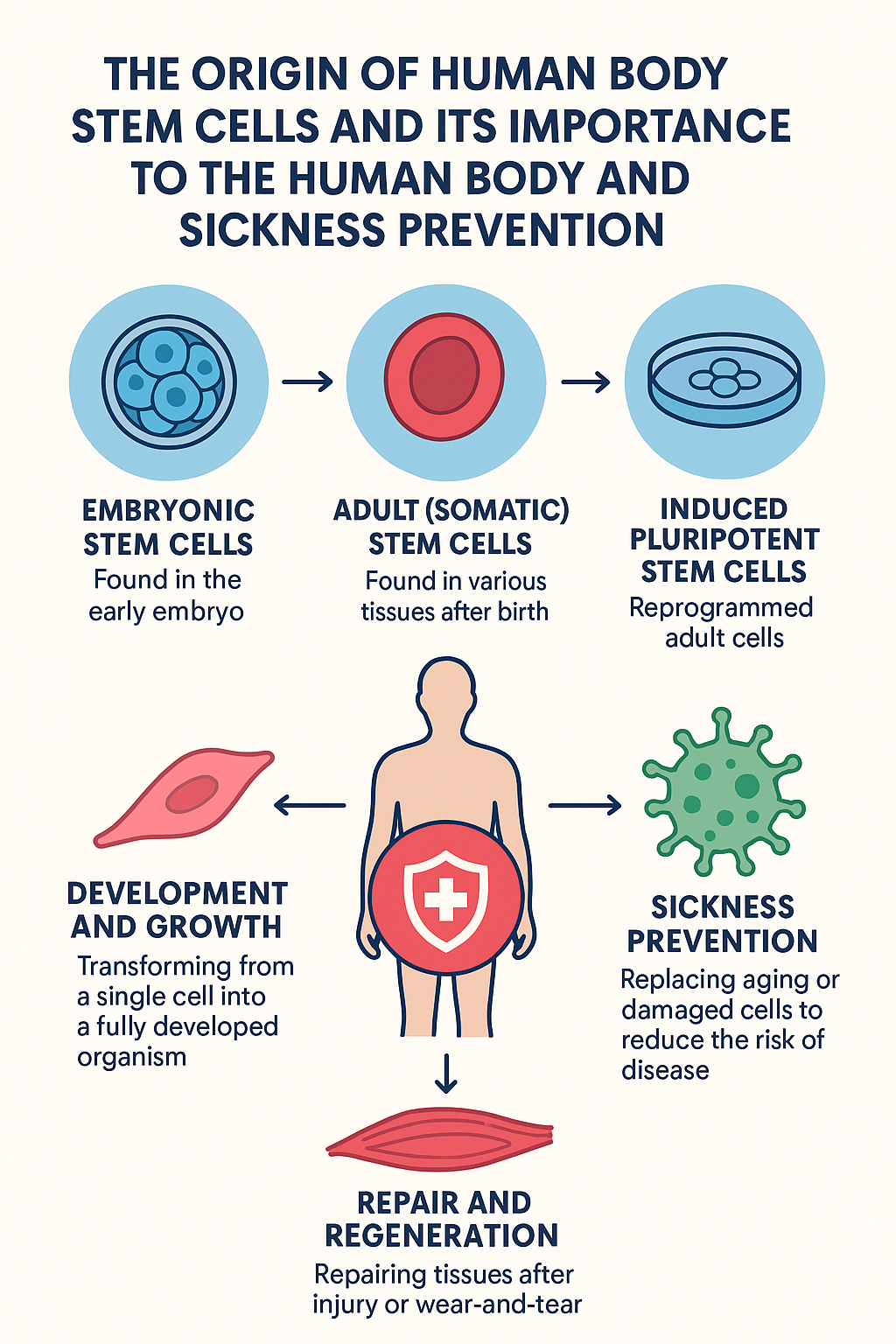
Embryonic Stem Cells (ESCs) are derived from the inner cell mass of a blastocyst, which is an early-stage pre-implantation embryo, typically 3 to 5 days old. These embryos are often obtained from excess embryos created during in vitro fertilization (IVF) procedures. ESCs are characterized by their pluripotency, meaning they have the capacity to differentiate into all cell types that make up the adult body, excluding extraembryonic tissues like the placenta.
Induced Pluripotent Stem Cells (iPSCs) represent a significant breakthrough in stem cell research. Discovered in 2006 by Shinya Yamanaka, iPSCs are generated by reprogramming mature adult somatic cells (e.g., skin cells, blood cells) back into a pluripotent state. This reprogramming is achieved through the introduction of specific genes, often referred to as transcription factors. The development of iPSCs has provided an alternative to ESCs, bypassing some of the ethical concerns associated with embryonic sources and enabling the creation of patient-specific stem cell lines.
Adult Stem Cells
Adult Stem Cells, also known as somatic stem cells, are found in various postnatal tissues and organs throughout the human body. These include, but are not limited to, bone marrow, adipose tissue (fat), peripheral blood, umbilical cord blood, and even dental pulp. Unlike pluripotent stem cells, adult stem cells are generally multipotent, meaning they can differentiate into a limited range of cell types specific to their tissue of origin. Their primary role is to serve as an internal repair system, maintaining and repairing the tissues in which they reside by replacing cells lost due to normal wear and tear, injury, or disease.
Importance to the Human Body and Sickness Prevention
Stem cells are indispensable for the human body due to their inherent regenerative capabilities. They function as a sophisticated internal repair system, continuously replacing damaged or aged cells and tissues. This constant cellular renewal is fundamental for maintaining optimal organ function, tissue homeostasis, and overall physiological health.
In the context of sickness prevention and treatment, stem cells offer immense therapeutic potential:
•Tissue Regeneration and Repair: Stem cell-based therapies aim to replace diseased or damaged cells and tissues with healthy, functional ones. This approach holds significant promise for treating a wide array of conditions, including spinal cord injuries, heart disease, neurodegenerative disorders such as Parkinson’s disease, and metabolic diseases like diabetes. By introducing healthy stem cells, or stimulating endogenous stem cells, the body’s natural healing processes can be augmented.
•Disease Modeling and Drug Discovery: Pluripotent stem cells (both ESCs and iPSCs) can be differentiated in vitro into various specialized cell types relevant to specific diseases. This capability allows researchers to create disease-specific cellular models in a laboratory setting. These models are invaluable tools for studying disease mechanisms, identifying potential therapeutic targets, screening novel drug candidates, and assessing drug toxicity more effectively and ethically than traditional methods.
•Immunomodulation: Certain types of stem cells, particularly mesenchymal stem cells (MSCs), exhibit powerful immunomodulatory properties. They can regulate the immune system by suppressing inflammation and modulating immune responses. This characteristic makes them promising candidates for treating autoimmune diseases, reducing graft-versus-host disease in transplantation, and mitigating chronic inflammatory conditions.
•Personalized Medicine: The ability to generate iPSCs from a patient’s own somatic cells is a cornerstone of personalized medicine. These patient-specific iPSCs can then be used to create tissues or organs for transplantation, significantly reducing the risk of immune rejection. This advancement paves the way for highly individualized regenerative medicine strategies, tailoring treatments to the unique genetic makeup of each patient.
•Understanding Development: Beyond their therapeutic applications, studying stem cells provides fundamental insights into the intricate processes of human development and growth. By observing how stem cells differentiate and form complex tissues and organs, scientists can gain a deeper understanding of the biological mechanisms that govern life and identify what goes awry in various developmental disorders and diseases. This knowledge is crucial for advancing both basic science and clinical medicine.
Conclusion
Human body stem cells, originating from embryonic stages or residing in adult tissues, are central to our understanding of life, health, and disease. Their unique properties of self-renewal and differentiation underpin the body’s capacity for repair and regeneration. The ongoing research into these remarkable cells continues to unlock unprecedented opportunities for developing innovative therapies, advancing personalized medicine, and ultimately, enhancing human well-being and preventing a multitude of sicknesses. As our understanding deepens, stem cells are poised to revolutionize medical science and transform healthcare practices.



Be First to Comment