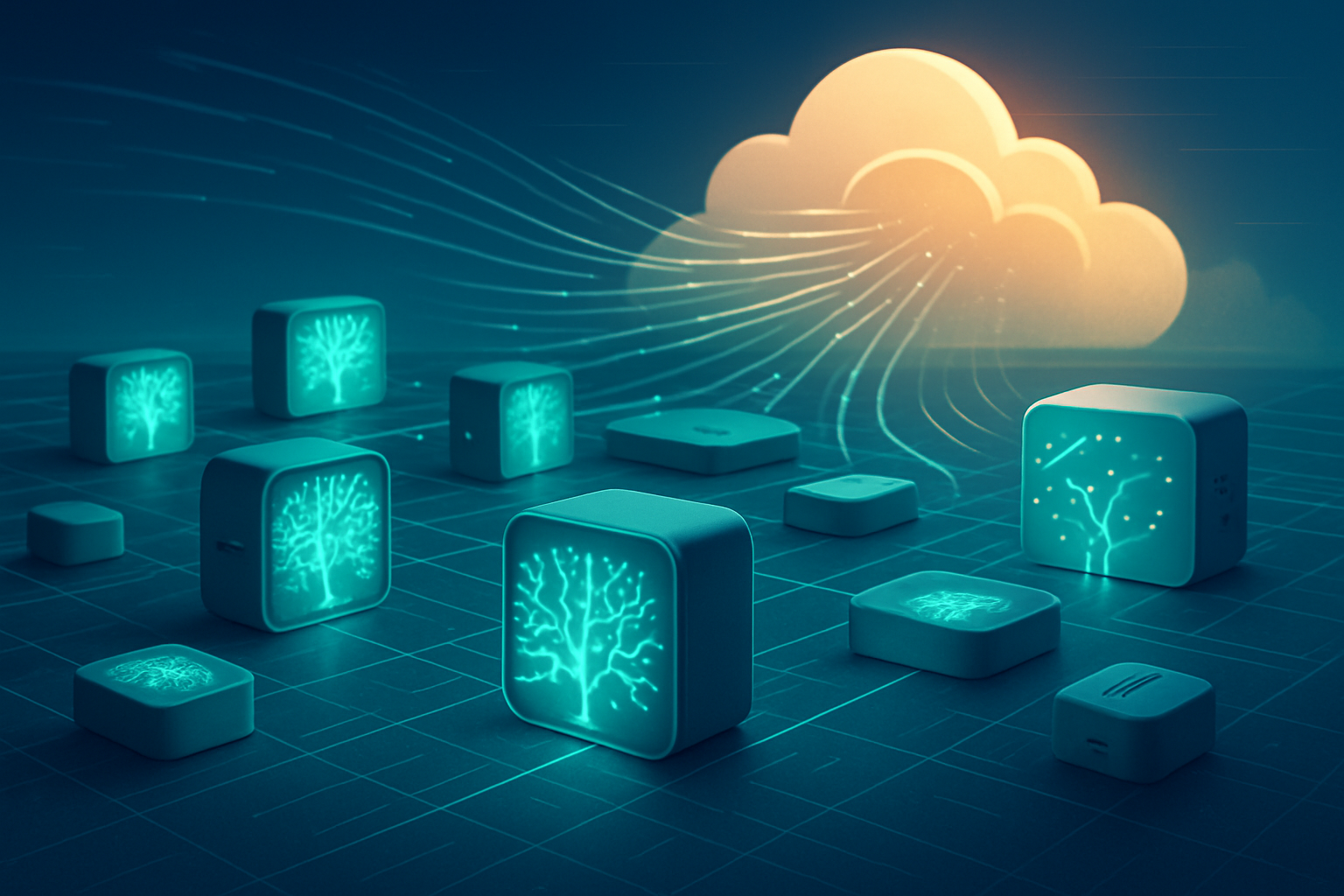
Edge AI refers to running AI algorithms directly on IoT devices or local edge servers, rather than sending all data to the cloud. This allows devices to analyze data, make decisions, and act in real-time.
Key components of Edge AI:
- Edge Devices: Sensors, cameras, or embedded devices capable of computation.
- Local AI Models: Lightweight machine learning models optimized for low-latency inference.
- Edge Servers/Gateways: Intermediate computing nodes that handle heavier processing while staying close to the source of data.
Why Cloud-Only IoT is No Longer Enough
- Latency Issues
- Sending data to the cloud introduces delays, which is problematic for real-time applications like autonomous vehicles or industrial automation.
- Example: A self-driving car needs to react in milliseconds—waiting for cloud computation is too slow.
- Bandwidth Constraints
- IoT networks generate enormous volumes of data. Transmitting everything to the cloud can overload networks and increase costs.
- Privacy and Security
- Sensitive data (like health metrics from wearables) is at risk if sent to centralized servers. Processing locally reduces exposure.
- Reliability
- Cloud connectivity is not always guaranteed. Edge devices can operate independently even when offline or in remote areas.
Advantages of Edge AI for IoT
- Real-Time Decision Making
- Devices can respond instantly to local conditions without waiting for cloud commands.
- Reduced Network Load
- Only relevant insights, not raw data, are sent to the cloud, saving bandwidth and storage costs.
- Enhanced Privacy
- Local processing minimizes the amount of sensitive data leaving the device.
- Energy Efficiency
- Transmitting less data reduces energy consumption for both devices and networks.
- Scalability
- IoT systems can grow without overwhelming centralized cloud resources.
Applications Driving the Shift to Edge AI
- Smart Cities: Traffic monitoring, energy management, and surveillance benefit from local AI to act quickly.
- Industrial IoT: Predictive maintenance and process automation require instantaneous decisions.
- Healthcare: Wearables and remote monitoring devices can alert users or medical staff immediately.
- Autonomous Vehicles: Real-time object detection and navigation must happen on the edge.
Future Outlook
The future of IoT will likely be hybrid, combining edge AI with cloud computing:
- Edge for speed, privacy, and efficiency
- Cloud for long-term storage, heavy analytics, and model training
This shift positions Edge AI not as a replacement, but as a complement to the cloud, ensuring IoT systems are smarter, faster, and more resilient.
Conclusion
The era of cloud-only IoT is fading. Edge AI empowers devices to act intelligently at the source, ensuring real-time responsiveness, reduced latency, improved security, and operational efficiency. The next generation of IoT will be defined not just by connectivity, but by where intelligence lives—right at the edge.




Be First to Comment