

A comprehensive survey of the discoveries and technologies that reshaped physics, life sciences, computing, materials and aerospace engineering, and energy and environmental science — from quantum mechanics to quantum biology.
Part I
Physics and the Nature of Reality
The twentieth century opened with two revolutions that dismantled the clockwork universe of Newton: relativity and quantum mechanics. Everything modern physics has produced since — nuclear energy, lasers, semiconductors, particle accelerators — traces back to these two ruptures in how humanity understood space, time, matter, and energy.
1. Quantum Mechanics
Quantum mechanics emerged between 1900 and 1930 through the work of Max Planck, Albert Einstein, Niels Bohr, Werner Heisenberg, and Erwin Schrödinger, overturning the assumption that matter and energy behave continuously and predictably at every scale. At the atomic level, energy is quantized — it arrives in discrete packets rather than a smooth stream — and particles such as electrons exhibit both wave-like and particle-like behavior depending on how they are observed. Heisenberg’s uncertainty principle established that a particle’s position and momentum cannot both be known with perfect precision, replacing classical determinism with probability distributions described by the wave function.
The practical consequences of this shift are difficult to overstate. Quantum mechanics explains why atoms are stable, why materials conduct or insulate electricity, and why chemical bonds form the way they do. It underpins the transistor, the laser, the MRI scanner, and the light-emitting diode — technologies so embedded in daily life that their quantum origins are rarely noticed. Quantum tunneling, a phenomenon with no classical analogue, allows particles to pass through energy barriers they classically should not be able to cross, and is exploited in flash memory and tunnel diodes.
In the current era, quantum mechanics has moved from explanatory theory to engineering discipline. Quantum computing exploits superposition and entanglement to represent and process information in ways classical bits cannot, with qubits capable of existing in combinations of states simultaneously. Companies and national labs are racing to build machines that can solve optimization, cryptographic, and molecular-simulation problems intractable for classical supercomputers. Quantum sensing and quantum cryptography — using entangled photons to detect eavesdropping on a communication channel — are already deployed in limited commercial and defense contexts. The second quantum revolution, as researchers now call it, is concerned not merely with understanding quantum behavior but with directly manipulating individual quantum states as an engineering resource.
2. Relativity and Modern Cosmology
Einstein’s special theory of relativity (1905) and general theory of relativity (1915) redefined space and time as a single interwoven fabric — spacetime — that curves in the presence of mass and energy. Special relativity showed that measurements of time and length depend on the observer’s velocity, and that mass and energy are equivalent, expressed in the iconic relation E = mc². General relativity went further, describing gravity not as a force acting at a distance but as the geometry of curved spacetime itself, with massive objects like stars and planets bending the paths of light and matter around them.
These theories have been confirmed with extraordinary precision. The bending of starlight around the sun, the perihelion precession of Mercury, gravitational time dilation (verified by atomic clocks on aircraft and satellites), and the direct detection of gravitational waves by LIGO in 2015 — ripples in spacetime from colliding black holes — have each validated predictions that seemed abstract a century earlier. GPS satellites must correct for relativistic time dilation continuously; without this correction, global positioning would drift by kilometers within a day.
Relativity also supplied the mathematical foundation for modern cosmology: the expanding universe, the Big Bang model, and the existence of black holes. Edwin Hubble’s observation that galaxies recede from one another provided the first evidence for cosmic expansion, later refined through measurements of the cosmic microwave background — the residual radiation from the universe’s infancy. The 2019 and 2022 images of black hole event horizons from the Event Horizon Telescope, and the ongoing operation of the James Webb Space Telescope observing galaxies from the universe’s first several hundred million years, represent the current frontier: probing dark matter, dark energy, and the earliest moments of cosmic history, all built on a century-old theoretical foundation.
3. Particle Physics and the Standard Model
Particle physics asks what matter is ultimately made of and how its constituents interact. Through decades of accelerator experiments, physicists assembled the Standard Model: a framework describing quarks, leptons, and force-carrying bosons (photons, gluons, W and Z bosons) as the fundamental building blocks of visible matter, governed by the electromagnetic, weak, and strong nuclear forces. The Standard Model has proven remarkably accurate, correctly predicting particles — the W and Z bosons, the top quark — years before they were experimentally observed.
Its capstone discovery came in 2012 at CERN’s Large Hadron Collider, the world’s largest and most powerful particle accelerator, where the Higgs boson was detected. The Higgs field explains why fundamental particles have mass at all, completing a theoretical prediction made nearly fifty years earlier. The discovery required smashing protons together at energies approaching 13 teraelectronvolts and sifting through billions of collision events to isolate a signal appearing in only a handful of them — a triumph of both theory and large-scale international engineering.
The Standard Model is known to be incomplete: it does not account for gravity, dark matter, or dark energy, which together make up roughly ninety-five percent of the universe’s total mass-energy content. Current research at the LHC and successor facilities searches for supersymmetric particles, extra dimensions, and evidence of physics beyond the Standard Model. Particle physics has also yielded direct technological dividends — the World Wide Web itself was invented at CERN to help physicists share data, and medical particle accelerators derived from collider technology are now used in cancer treatment via proton and hadron therapy.
4. Nuclear Physics and Energy
The discovery of nuclear fission in 1938 by Otto Hahn and Fritz Strassmann, interpreted by Lise Meitner and Otto Frisch, revealed that splitting a heavy atomic nucleus such as uranium-235 releases enormous energy — roughly a million times more per unit mass than chemical combustion. This discovery reshaped geopolitics and energy production within a single decade, culminating in both nuclear weapons and, from the 1950s onward, nuclear power plants that generate electricity through controlled chain reactions.
A nuclear reactor works by sustaining a controlled fission chain reaction: neutrons released from splitting uranium or plutonium nuclei strike other nuclei, causing further fissions, while control rods absorb excess neutrons to prevent runaway reactions. The heat generated boils water into steam, which drives turbines exactly as in a fossil-fuel plant, but without direct carbon emissions. As of the mid-2020s, roughly ten percent of global electricity comes from nuclear fission, concentrated in countries such as France, the United States, China, and South Korea, with a wave of new reactor construction underway, including small modular reactors designed for lower cost and faster deployment.
The next frontier is nuclear fusion — combining light nuclei such as hydrogen isotopes rather than splitting heavy ones — which powers the sun and promises far greater energy density with minimal long-lived radioactive waste. For decades fusion remained perpetually decades away, but recent milestones have shifted the outlook: the National Ignition Facility achieved fusion ignition (more energy out than laser energy in) in December 2022, and the ITER international collaboration in France continues assembling the largest tokamak ever built. Private fusion companies have attracted billions of dollars in investment on the premise that commercially viable fusion power could arrive within the coming two decades, potentially providing a near-limitless, low-carbon energy source.
5. Photonics and Laser Technology
The laser — Light Amplification by Stimulated Emission of Radiation — was first demonstrated in 1960 by Theodore Maiman, built on Einstein’s 1917 theoretical description of stimulated emission. A laser produces coherent light: photons of a single wavelength traveling in phase, unlike the incoherent, multi-wavelength light of ordinary sources. This property makes laser light exceptionally precise, focusable, and controllable, and it has made photonics — the science and technology of generating and controlling light — one of the most quietly pervasive modern revolutions.
Lasers now underpin fiber-optic communication, which carries the overwhelming majority of global internet and telephone traffic as pulses of light through glass fibers thinner than a human hair, achieving data transmission speeds and distances impossible with electrical signals. In medicine, lasers perform corrective eye surgery, remove tumors with minimal collateral tissue damage, and enable minimally invasive procedures. In manufacturing, laser cutting and welding provide precision measured in micrometers, and additive manufacturing (3D printing) in metal relies on lasers to fuse powdered material layer by layer.
Photonics continues to advance on multiple fronts. Photonic integrated circuits — the optical analogue of electronic microchips — are being developed to move data within and between computer chips using light instead of electrons, promising dramatic reductions in energy consumption and heat generation for data centers. LIDAR, a laser-based ranging technology, is central to autonomous vehicle navigation and high-resolution topographic mapping. Attosecond laser pulses, honored by the 2023 Nobel Prize in Physics, now allow scientists to observe the motion of electrons in real time, opening a new frontier in ultrafast science that may eventually allow direct observation and control of chemical reactions as they happen.
Part II
Life, Medicine, and Biology
Where twentieth-century physics rewrote our understanding of matter and energy, twentieth- and twenty-first-century biology rewrote our understanding of life itself. From the discovery of DNA’s structure to the direct editing of genetic code, biology has moved from observation to engineering — a shift with consequences for medicine, agriculture, and human longevity that are still unfolding.
6. Genetics and the Human Genome
James Watson and Francis Crick’s 1953 description of DNA’s double-helix structure, built substantially on Rosalind Franklin’s X-ray diffraction images, revealed how genetic information is stored, copied, and passed between generations. DNA’s four-letter code — adenine, thymine, guanine, cytosine — pairs in a predictable way that allows the molecule to replicate itself with high fidelity, solving the central mystery of heredity that had persisted since Gregor Mendel’s pea-plant experiments nearly a century earlier.
The decades that followed produced the tools to read and manipulate this code: DNA sequencing, polymerase chain reaction (PCR) for amplifying DNA samples, and recombinant DNA technology for inserting genes from one organism into another. The Human Genome Project, an international effort completed in 2003, sequenced all three billion base pairs of human DNA at a cost of roughly three billion dollars and thirteen years of work. Sequencing costs have since collapsed by a factor of more than a million; a full human genome can now be sequenced for a few hundred dollars in about a day, a pace of technological improvement that outstrips even Moore’s Law in computing.
This affordability has transformed genetics from a research discipline into a clinical and consumer one. Genetic testing informs cancer treatment selection, prenatal screening, and diagnosis of rare inherited disorders. Population-scale genomic databases are revealing the genetic architecture of common diseases such as diabetes and heart disease, which involve the combined small effects of thousands of gene variants rather than a single mutation. Direct-to-consumer genetic testing has made ancestry and health-risk information broadly accessible, while raising ongoing questions about genetic privacy, insurance discrimination, and the appropriate limits of genetic information in employment and law enforcement.
7. CRISPR and Gene Editing
CRISPR-Cas9, adapted for gene editing by Jennifer Doudna and Emmanuelle Charpentier in 2012 (earning them the 2020 Nobel Prize in Chemistry), converted a bacterial immune defense mechanism into a programmable tool for editing DNA at precise locations in any living cell. The system uses a guide RNA to direct the Cas9 enzyme to a specific DNA sequence, where it cuts both strands of the double helix; the cell’s own repair machinery then either disables the targeted gene or, if a template is supplied, incorporates a specific new sequence.
Compared to earlier gene-editing methods such as zinc-finger nucleases and TALENs, CRISPR is dramatically cheaper, faster, and easier to redesign for new targets, which is why it moved from laboratory curiosity to widespread biomedical tool within a few years. It has become the standard method for creating genetically modified research organisms, screening gene function at scale, and developing crops with improved yield, drought tolerance, or disease resistance without introducing genes from unrelated species — a distinction that has shaped its regulatory treatment differently from earlier genetically modified organisms in some jurisdictions.
The clinical impact arrived quickly. In December 2023, the United States FDA and United Kingdom regulators approved Casgevy, the first CRISPR-based therapy, for sickle cell disease and beta-thalassemia — genetic blood disorders treated by editing a patient’s own stem cells outside the body and reinfusing them. Dozens of additional CRISPR-based therapies are in clinical trials for cancers, inherited blindness, and cardiovascular disease. Newer variants of the technology — base editing and prime editing — allow single-letter DNA changes without cutting both strands, reducing the risk of unintended edits and expanding the range of correctable mutations. The technology’s power has also prompted international ethical debate, particularly after the 2018 announcement of the first gene-edited human babies in China, an act widely condemned by the scientific community and followed by tightened international oversight of heritable human genome editing.
8. Immunology and Vaccine Development
Modern immunology traces to Edward Jenner’s 1796 smallpox vaccination, but the field matured into a molecular science over the twentieth century as researchers identified antibodies, T-cells, B-cells, and the signaling networks that allow the immune system to recognize and remember pathogens. This mechanistic understanding enabled vaccines against polio, measles, and hepatitis, and contributed directly to smallpox’s global eradication in 1980 — the only human disease eliminated entirely through vaccination.
The most consequential recent advance is messenger RNA (mRNA) vaccine technology, developed over decades by researchers including Katalin Karikó and Drew Weissman (2023 Nobel laureates), which delivers genetic instructions that direct a person’s own cells to produce a harmless piece of a pathogen, training the immune system without using any live or weakened virus. mRNA vaccines against COVID-19, developed and authorized within roughly a year of the pandemic’s onset — a process that traditionally took a decade or more — demonstrated the platform’s speed and adaptability, and mRNA technology is now being extended to influenza, RSV, and personalized cancer vaccines that target the specific mutations present in an individual patient’s tumor.
Immunology has also transformed cancer treatment through immunotherapy, which enlists the patient’s own immune system to attack tumors rather than relying solely on chemotherapy or radiation. Checkpoint inhibitors, honored by the 2018 Nobel Prize in Medicine, block molecular brakes that tumors exploit to evade immune detection. CAR-T cell therapy genetically engineers a patient’s own T-cells to recognize and destroy cancer cells, producing durable remissions in some blood cancers that had previously been considered incurable. These successes have positioned immunology, alongside genetics, as one of the two central pillars of twenty-first-century precision medicine.
9. Neuroscience and Brain Mapping
Understanding the human brain — roughly eighty-six billion neurons connected by an estimated hundred trillion synapses — has advanced enormously through imaging and recording technologies developed over the past half-century. Functional MRI, which detects blood-flow changes associated with neural activity, allows researchers to observe which brain regions activate during specific tasks without surgery. Electroencephalography and, more recently, high-density electrode arrays implanted directly in brain tissue allow recording of individual neuron activity at millisecond resolution.
Large international projects — the Human Connectome Project, the BRAIN Initiative in the United States, and the Human Brain Project in Europe — have worked to map neural circuitry at increasing resolution, from whole-brain connectivity down to synapse-level detail in smaller organisms. In 2023 and 2024, complete synaptic-resolution wiring diagrams (connectomes) of an adult fruit fly brain and a portion of human cortical tissue were published, milestones that would have been computationally and experimentally infeasible a decade earlier.
This foundational science has translated into brain-computer interfaces that read neural signals directly and convert them into digital commands. Companies including Neuralink, Synchron, and academic groups have demonstrated implants that allow paralyzed patients to control computer cursors, robotic arms, and communication devices using thought alone, with several systems now in early human clinical trials. Deep brain stimulation, an older but continuously refined technique, treats Parkinson’s disease, essential tremor, and treatment-resistant depression by delivering targeted electrical pulses to specific brain structures. Neuroscience has also reshaped understanding of neuroplasticity — the brain’s capacity to reorganize itself throughout life — informing new approaches to stroke rehabilitation, addiction treatment, and the treatment of neurodegenerative diseases such as Alzheimer’s, for which the first disease-modifying (rather than purely symptomatic) drugs were approved in 2023.
10. Epigenetics
Epigenetics studies heritable changes in gene expression that do not alter the underlying DNA sequence itself — chemical modifications, chiefly DNA methylation and histone modification, that act as a layer of control determining which genes in a cell are switched on or off. Every cell in the human body carries the same DNA, yet a liver cell and a neuron perform entirely different functions; epigenetics explains how identical genetic code produces such radically different cellular outcomes, and how those patterns are established during development and maintained thereafter.
The field gained urgency once researchers discovered that epigenetic patterns are not fixed: they respond to environment, diet, stress, and toxin exposure, and in some cases persist across cell divisions or even, controversially, across generations. Studies of survivors of famine and extreme stress have found altered methylation patterns in their offspring, suggesting that lived experience can leave a molecular trace transmitted, at least partially, to children — a finding that remains an active area of investigation and debate regarding the extent and mechanism of such transgenerational effects in humans.
Practically, epigenetics has become central to cancer research, since tumor cells frequently silence tumor-suppressor genes or activate oncogenes through epigenetic rather than purely genetic changes; several epigenetic-targeting drugs are now FDA-approved cancer treatments. Epigenetic clocks — algorithms that estimate biological age from methylation patterns — have emerged as some of the most accurate biomarkers of aging, more predictive of mortality risk than chronological age alone, and are increasingly used to evaluate whether interventions such as caloric restriction, exercise, or experimental longevity drugs measurably slow biological aging. This has positioned epigenetics at the center of the rapidly growing longevity science field.
11. Antibiotics and the Pharmaceutical Revolution
Alexander Fleming’s 1928 discovery of penicillin, and its mass production for battlefield use during the Second World War, inaugurated the antibiotic era, transforming previously fatal bacterial infections — pneumonia, sepsis, tuberculosis, wound infections — into routinely treatable conditions. Life expectancy gains in the mid-twentieth century owe more to antibiotics and sanitation than to any single other medical advance, and antibiotics remain foundational to modern surgery, cancer chemotherapy, and organ transplantation, all of which depend on the ability to control infection risk.
The broader pharmaceutical revolution extended this model of systematically discovering and synthesizing molecules that interact with specific biological targets: statins for cardiovascular disease, insulin analogues for diabetes, antiretrovirals that turned HIV from a fatal diagnosis into a manageable chronic condition, and targeted cancer therapies designed around a tumor’s specific molecular vulnerabilities rather than broadly toxic chemotherapy. Combinatorial chemistry and, more recently, AI-assisted drug design have accelerated the identification of candidate molecules, though clinical trial timelines and costs remain the dominant bottleneck in bringing new drugs to patients.
The pharmaceutical revolution now faces its most significant countervailing threat in antimicrobial resistance: bacteria evolving to survive drugs that once reliably killed them, driven by decades of antibiotic overuse in medicine and agriculture. The World Health Organization has identified antimicrobial resistance as one of the top global public health threats, with drug-resistant infections already causing over a million deaths annually and projected to rise sharply without intervention. In response, new antibiotic classes, bacteriophage therapy (using viruses that specifically infect bacteria), and AI-driven molecule discovery — which identified a novel antibiotic candidate effective against drug-resistant bacteria in 2023 — represent the current frontier of a field racing to stay ahead of bacterial evolution.
12. Medical Imaging
Wilhelm Röntgen’s 1895 discovery of X-rays gave physicians their first window into the living body without surgery, but the medical imaging revolution truly accelerated in the second half of the twentieth century with computed tomography (CT), magnetic resonance imaging (MRI), positron emission tomography (PET), and ultrasound — technologies that together allow visualization of soft tissue, blood flow, metabolic activity, and structural detail at resolutions unimaginable a century ago.
CT scanning, developed in the early 1970s, combines multiple X-ray images taken from different angles to reconstruct detailed cross-sectional images of the body using computer processing — a direct beneficiary of the parallel computing revolution. MRI, which uses strong magnetic fields and radio waves to image soft tissue without ionizing radiation, exploits the same quantum mechanical property (nuclear magnetic resonance) that underlies certain spectroscopy techniques, and has become indispensable for diagnosing conditions in the brain, spinal cord, joints, and organs. PET imaging tracks radioactively labeled glucose or other tracers to visualize metabolic activity directly, allowing detection of cancer or neurodegenerative changes often before structural abnormalities appear on CT or MRI alone.
The current frontier combines these imaging modalities with artificial intelligence. Deep learning models trained on millions of medical images now match or exceed specialist radiologists at detecting certain cancers, diabetic retinopathy, and fractures, and are increasingly deployed as a second reader to flag cases for closer human review. Low-field, portable MRI machines — a fraction of the cost and size of conventional scanners — are being deployed in resource-limited settings and emergency rooms, extending imaging access far beyond the large hospitals that alone could previously afford it. Photon-counting CT, a newer detector technology entering clinical use, provides higher-resolution images at lower radiation doses, continuing a decades-long trend of imaging becoming simultaneously more powerful, faster, and safer.
13. Synthetic Biology
Synthetic biology applies engineering principles — standardization, modularity, predictable design — to living systems, treating genetic circuits as programmable components rather than objects of pure observation. Where traditional genetic engineering typically modifies one or a few genes, synthetic biology aims to design entire biological systems from the ground up: engineered metabolic pathways, synthetic gene circuits that function as biological logic gates, and in the most ambitious cases, organisms with synthetic genomes.
The field’s landmark demonstrations include the 2010 creation by the J. Craig Venter Institute of a bacterial cell controlled entirely by a chemically synthesized genome, and the subsequent development of a minimal synthetic genome containing only the genes essential for life. More practically, synthetic biology has enabled the engineering of microorganisms to produce compounds that would otherwise require inefficient extraction from natural sources: artemisinin, the key antimalarial drug, is now produced by engineered yeast rather than extracted from the sweet wormwood plant, and engineered microbes produce insulin, vanillin, and a growing range of biofuels, bioplastics, and specialty chemicals.
The most consequential recent development in the adjacent field of computational protein design is AlphaFold, an AI system from DeepMind that predicts a protein’s three-dimensional structure from its amino acid sequence with near-experimental accuracy — a problem that had resisted five decades of research. AlphaFold’s 2021 release, followed by its expansion to model molecular interactions, and the concurrent rise of AI-driven de novo protein design (recognized by the 2024 Nobel Prize in Chemistry), has compressed years of laboratory structural biology into hours of computation, and now allows researchers to design entirely novel proteins — enzymes, antibodies, vaccine components — with specified functions rather than merely studying those that evolution has already produced. This convergence of synthetic biology and artificial intelligence is widely regarded as one of the most significant scientific developments of the 2020s.
Part III
Computing and Information
The digital revolution compressed a century of change into a few decades: from room-sized calculating machines to a global network connecting billions of devices, and now to artificial intelligence systems capable of generating language, code, and images indistinguishable from human output. This part traces the technologies that turned information itself into the defining resource of the modern economy.
14. Artificial Intelligence and Machine Learning
Artificial intelligence research began formally at the 1956 Dartmouth Workshop, but decades of alternating enthusiasm and disappointment — periods now called “AI winters” — followed before the field’s current sustained acceleration. The decisive shift came through machine learning, particularly deep learning: artificial neural networks with many layers, loosely inspired by biological neurons, trained on large datasets to recognize patterns rather than following explicitly programmed rules. The 2012 breakthrough of a deep convolutional neural network dramatically outperforming prior methods on image recognition demonstrated that, given sufficient data and computing power, neural networks could exceed traditional approaches by a wide margin.
The subsequent decade combined three converging trends: exponentially growing datasets (much of it generated by the internet itself), specialized computing hardware (graphics processing units, later purpose-built AI accelerators), and architectural innovations, most significantly the transformer architecture introduced in 2017, which allowed models to process sequential data such as language far more efficiently through a mechanism called attention. Transformers underpin the large language models that have defined the AI landscape of the 2020s — systems trained on vast text corpora to predict and generate coherent language, capable of writing, translating, coding, and reasoning across an enormous range of tasks after training on next-word prediction alone.
The practical and economic impact has been rapid and broad. AI systems now assist in drug discovery, materials design, weather forecasting, legal and medical document review, software development, and scientific research itself. Generative AI for images, video, and audio has similarly advanced from crude outputs to near-photorealistic results within a few years. This pace has also generated serious debate about labor displacement, misinformation, concentration of AI development among a small number of well-resourced organizations, and the long-term safety of increasingly capable autonomous systems — debates that governments, companies, and international bodies are actively working to address through emerging regulatory frameworks, safety research, and voluntary industry commitments even as the underlying technology continues to advance.
15. The Semiconductor and Microelectronics Revolution
The invention of the transistor at Bell Labs in 1947 by John Bardeen, Walter Brattain, and William Shockley replaced bulky, power-hungry, and unreliable vacuum tubes with a small solid-state device that could amplify or switch electronic signals. The subsequent invention of the integrated circuit in 1958–1959 by Jack Kilby and Robert Noyce allowed multiple transistors to be fabricated on a single piece of semiconductor material, launching the microelectronics industry and setting in motion the phenomenon later named Moore’s Law: the empirical observation that the number of transistors on a chip doubles roughly every two years.
This exponential improvement, sustained for over half a century through relentless advances in photolithography and materials engineering, is the single technological trend most responsible for the affordability and ubiquity of modern computing. Chips that once cost millions of dollars and filled rooms now fit in a smartwatch and perform vastly more computation. Extreme ultraviolet lithography, developed over decades at enormous capital cost and now dominated by a small number of highly specialized manufacturers, allows the printing of transistor features only a few nanometers wide — smaller than many viruses — onto silicon wafers.
The semiconductor industry has also become a matter of acute geopolitical significance, as advanced chip manufacturing is concentrated in a handful of facilities, chiefly in Taiwan, South Korea, and the United States, creating strategic vulnerabilities that governments have moved to address through subsidized domestic chip production initiatives such as the U.S. CHIPS Act and comparable programs in the European Union, Japan, India, and China. Meanwhile, the industry is approaching the physical limits of further miniaturization on silicon, driving research into new transistor architectures (gate-all-around designs), new materials, chiplet-based packaging that combines multiple smaller dies rather than one monolithic chip, and specialized AI accelerator chips designed specifically for the matrix-multiplication workloads that dominate modern machine learning.
16. The Internet and Digital Communication
The internet’s technical foundations trace to ARPANET, a U.S. Department of Defense research network launched in 1969, and matured through the development of packet-switching protocols (TCP/IP, standardized in 1983) that allowed independent networks to interconnect reliably. The invention of the World Wide Web by Tim Berners-Lee in 1989–1991 at CERN added a user-friendly layer of hyperlinked documents on top of this network infrastructure, and the release of graphical web browsers in the mid-1990s brought the internet to a mass consumer audience for the first time.
What followed was arguably the most rapid infrastructure buildout in human history: within three decades, the internet grew from a research curiosity connecting a few hundred computers to a global network connecting more than five billion people, carrying voice, video, and data traffic that has largely displaced older telecommunications infrastructure. Broadband, then mobile data networks (3G, 4G, and now 5G), and submarine fiber-optic cables spanning ocean floors have progressively removed the practical barriers to real-time global communication, enabling entirely new industries — e-commerce, streaming media, cloud computing, social media, remote work — that did not exist in their current form before the internet’s mass adoption.
The internet’s social and economic effects have been genuinely transformative and genuinely contested in equal measure. It has democratized access to information and enabled forms of commerce, education, and organizing that were previously impossible, while also concentrating enormous market power in a small number of platform companies, enabling new forms of surveillance, and accelerating the spread of misinformation. Current infrastructure development is focused on low-earth-orbit satellite internet constellations extending connectivity to the roughly one-third of the global population still without reliable internet access, alongside continued buildout of higher-capacity fiber and 5G/6G wireless networks needed to support the growing data demands of AI, streaming video, and an expanding universe of connected devices.
17. Big Data and Cloud Computing
As digital devices, sensors, and online services proliferated through the 2000s and 2010s, the volume of data generated worldwide grew at a pace that outstripped the storage and processing capabilities of individual organizations’ own computer systems. This gave rise to two related revolutions: big data analytics, encompassing the tools and techniques for extracting insight from datasets too large and complex for traditional database software, and cloud computing, which allows organizations to rent computing power, storage, and software over the internet from specialized providers rather than owning and maintaining their own data centers.
Cloud computing, pioneered commercially by Amazon Web Services (launched 2006) and followed by Microsoft Azure, Google Cloud, and others, fundamentally changed the economics of building digital products: a startup can now access essentially unlimited, instantly scalable computing infrastructure for a fraction of the upfront capital cost that would previously have been required to build equivalent data centers. This shift lowered barriers to entry across the technology industry and enabled the rapid scaling of services from a handful of users to hundreds of millions within a period of months, a pattern that would have been operationally impossible in the pre-cloud era.
Big data techniques — distributed storage and processing frameworks capable of handling datasets spanning petabytes across thousands of computers — became the substrate on which modern machine learning was built, since training capable AI models requires both massive datasets and massive computing power delivered through this same cloud infrastructure. Data centers themselves have become a significant and rapidly growing consumer of global electricity, driven substantially by the computational demands of AI training and inference, prompting major cloud providers to invest heavily in renewable energy procurement, advanced cooling technology, and, increasingly, dedicated nuclear power arrangements to meet the escalating energy demands of an AI-driven computing era.
18. Robotics and Automation
Industrial robotics began in earnest with Unimate, installed at a General Motors plant in 1961 to perform repetitive, hazardous die-casting work, launching a wave of factory automation that fundamentally restructured manufacturing labor over the following decades. Early industrial robots were largely blind and rigid, executing pre-programmed motions without sensing or adapting to their environment, but successive generations incorporated increasingly sophisticated sensors, computer vision, and force feedback, allowing robots to handle variable tasks, inspect their own work quality, and operate safely alongside human workers in shared spaces — so-called collaborative robots, or cobots.
Robotics has since expanded well beyond the factory floor. Surgical robots, most prominently the da Vinci system, allow surgeons to perform minimally invasive procedures with a precision and range of motion exceeding unassisted human hands. Autonomous mobile robots now navigate warehouses, hospitals, and increasingly public roads, combining LIDAR, cameras, radar, and AI-based perception to build and continuously update a model of their surroundings. Agricultural robots perform precision planting, weeding, and harvesting, reducing pesticide use and labor demands in an industry facing persistent worker shortages in many regions.
The current frontier is humanoid and general-purpose robotics, an area that has attracted substantial investment as advances in AI — particularly the same foundation-model techniques driving large language models — are applied to robotic perception and control, allowing robots to learn manipulation tasks from demonstration and generalize to novel objects and environments rather than requiring painstaking task-specific programming. Multiple companies unveiled humanoid robots intended for warehouse, manufacturing, and eventually domestic use through the mid-2020s, though significant technical challenges around dexterity, reliability, and cost remain before such systems achieve the broad practical deployment long depicted in science fiction. Automation’s broader economic effect — displacing some categories of routine physical and cognitive labor while creating new categories of technical work — remains one of the most actively studied and debated consequences of the wider technological revolution.
19. Extended Reality: Virtual and Augmented Reality
Extended reality encompasses virtual reality (fully immersive digital environments that replace the user’s view of the physical world), augmented reality (digital information overlaid on the physical world, typically through a headset or phone camera), and mixed reality (a blend permitting interaction between virtual and physical elements). Though experimental headsets date to the 1960s, the technology remained impractical — bulky, low-resolution, and prohibitively expensive — until advances in display technology, motion tracking, and mobile-derived processing power converged in the 2010s to produce consumer-viable devices.
Modern headsets use high-resolution micro-displays, inside-out tracking (using onboard cameras rather than external sensors to determine headset position), and increasingly sophisticated hand and eye tracking to create a sense of presence and enable natural interaction without physical controllers. Beyond entertainment and gaming, extended reality has found substantive application in industrial training (allowing workers to rehearse hazardous or expensive procedures in a risk-free virtual environment), surgical training and planning, architectural and product design visualization, and remote collaboration tools that place distributed teams in a shared virtual space.
The technology remains earlier in its adoption curve than computing or mobile internet were at comparable points after their introduction, constrained by cost, headset comfort for extended use, and the absence of a clearly dominant use case for mass consumer adoption comparable to web browsing or messaging on smartphones. Nonetheless, continued investment by major technology companies, combined with the integration of AI-driven virtual assistants and increasingly realistic spatial computing capabilities, suggests the category is still working toward, rather than past, its inflection point — with augmented reality glasses resembling ordinary eyewear widely regarded as the more likely mass-adoption form factor than fully immersive headsets over the coming decade.
Part IV
Materials, Engineering, and Space
Materials science and aerospace engineering sit at the boundary between fundamental physics and applied technology — disciplines that take discoveries about the atomic and molecular world and convert them into structures, devices, and vehicles capable of extraordinary feats, from computer chips built atom by atom to spacecraft that have left the solar system.
20. Nanotechnology
Nanotechnology involves manipulating matter at the scale of roughly one to one hundred nanometers — a scale at which materials frequently exhibit physical and chemical properties markedly different from their bulk form, owing to quantum effects and the dramatically increased ratio of surface area to volume. Richard Feynman’s 1959 lecture “There’s Plenty of Room at the Bottom” is often cited as the field’s conceptual origin, though the practical tools to manipulate matter at this scale — the scanning tunneling microscope (1981) and atomic force microscope (1986) — arrived decades later, finally allowing scientists to image and manipulate individual atoms directly.
Nanomaterials have since moved from laboratory curiosities to components of everyday products. Nanoparticles are used in sunscreens to block ultraviolet light while remaining transparent on skin, in stain-resistant and antimicrobial fabric coatings, and in advanced battery electrodes to increase surface area and charging speed. In medicine, nanoparticle-based drug delivery systems can target specific tissues, most notably the lipid nanoparticles used to deliver mRNA vaccines, which protect the fragile RNA molecule and enable its uptake into cells — a nanotechnology innovation as essential to the mRNA vaccine platform’s success as the RNA science itself.
The current frontier includes molecular machines — nanoscale devices capable of controlled mechanical motion, recognized by the 2016 Nobel Prize in Chemistry — and continued development of carbon-based nanomaterials such as carbon nanotubes and graphene, which combine exceptional strength, electrical conductivity, and light weight. Nanotechnology also underpins the continued miniaturization of semiconductor manufacturing, since modern transistor features are now fabricated at scales of only a few nanometers, placing chip manufacturing itself squarely within the domain of nanotechnology. Ongoing research explores nanorobotics for targeted medical treatment and nanoscale energy harvesting, though most such applications remain at earlier experimental stages than the nanomaterials already in commercial use.
21. Advanced Materials Science: Graphene and Beyond
Graphene — a single layer of carbon atoms arranged in a hexagonal lattice, effectively a two-dimensional material only one atom thick — was first isolated in 2004 by Andre Geim and Konstantin Novoselov using adhesive tape to peel layers from graphite, an experiment simple enough to be described as almost accidental yet significant enough to earn the 2010 Nobel Prize in Physics. Graphene possesses an extraordinary combination of properties: it is roughly two hundred times stronger than steel by weight, an excellent conductor of both electricity and heat, nearly transparent, and flexible, a combination not found together in any other known material.
This discovery catalyzed intensive research into other two-dimensional materials — molybdenum disulfide, hexagonal boron nitride, and various transition metal compounds — each offering distinct electronic, optical, or mechanical properties, and into methods for stacking different 2D materials into engineered “van der Waals heterostructures” with entirely new combined properties, an approach sometimes described as atomic-scale Lego. Beyond 2D materials, advanced materials science has produced high-entropy alloys (mixing five or more metals in roughly equal proportions to achieve unusual strength and corrosion resistance), metamaterials engineered with structures smaller than the wavelength of light or sound to achieve otherwise impossible properties such as negative refraction, and self-healing polymers that can repair minor damage without external intervention.
Commercial deployment of graphene and related advanced materials has progressed more slowly than early enthusiasm anticipated, constrained by the difficulty and cost of manufacturing large, defect-free sheets at industrial scale, but applications are steadily expanding: graphene-enhanced composites in sporting goods and aerospace components, graphene-based sensors and flexible electronics, and graphene additives in battery and supercapacitor electrodes to improve charge and discharge rates. Materials informatics — using machine learning to predict the properties of candidate materials before they are synthesized, dramatically narrowing the search space for new alloys, catalysts, and battery chemistries — has emerged as one of the most significant recent accelerants in the field, with AI-driven materials discovery systems having proposed and, in several cases, experimentally validated thousands of previously unknown stable compounds.
22. Space Exploration
The Space Age began with the Soviet Union’s Sputnik 1 launch in 1957, followed within twelve years by the United States’ Apollo 11 crewed lunar landing in 1969 — a compressed timeline driven substantially by Cold War competition that nonetheless produced enduring technological legacies in materials science, computing (guidance computers among the earliest integrated-circuit applications), telecommunications, and countless spinoff technologies now embedded in everyday life. The subsequent decades saw the shift from expendable, government-monopolized launch systems toward robotic planetary exploration, permanent human presence in low Earth orbit via space stations, and, since roughly 2010, an increasing role for private commercial space companies.
The most consequential recent shift has been the dramatic reduction in launch costs driven substantially by reusable rocket technology, pioneered commercially by SpaceX’s Falcon 9, which routinely lands and reflies its first-stage booster — a capability that has reduced the cost of reaching orbit by roughly an order of magnitude compared to fully expendable rockets and enabled the launch of tens of thousands of satellites for global broadband internet constellations. This cost reduction has, in turn, made previously uneconomical missions viable and expanded the roster of nations and private companies capable of independent space access well beyond the handful of governments that dominated the field for its first half-century.
Current exploration priorities span both crewed and robotic missions: NASA’s Artemis program aims to return astronauts to the lunar surface and establish sustained infrastructure as a stepping stone toward eventual crewed Mars missions; robotic missions continue to explore Mars (including ongoing rover operations and sample-return planning), the outer solar system’s icy moons (several of which harbor subsurface oceans considered promising targets in the search for extraterrestrial life), and near-Earth asteroids, both for scientific study and, in the case of the 2022 DART mission, as a demonstrated planetary defense capability against potential future impact threats. Meanwhile, the growing population of satellites and orbital debris has made space traffic management and debris mitigation an increasingly urgent practical and regulatory concern for the industry’s continued sustainable growth.
Part V
Energy and the Environment
The twenty-first century’s defining technological challenge is decoupling economic development from carbon emissions while meeting rapidly growing global energy demand. This part covers the science of the changing climate itself and the parallel technological revolutions — in solar power, energy storage, and agriculture — reshaping how humanity generates food and power.
23. Renewable Energy and Solar Technology
The photovoltaic effect — the direct conversion of sunlight into electricity — was first observed in 1839 and the first practical silicon solar cell was demonstrated at Bell Labs in 1954, but for decades solar power remained a niche technology, confined largely to spacecraft and remote installations due to its high cost per unit of electricity generated. That changed dramatically over the 2010s and 2020s: the cost of solar photovoltaic electricity fell by roughly ninety percent in the space of a decade, driven by manufacturing scale, materials efficiency improvements, and intense competition, chiefly centered on China’s dominant solar manufacturing base, making solar the cheapest source of new electricity generation in most of the world by the early 2020s.
Wind power followed a broadly parallel cost trajectory, with modern turbines — both onshore and, increasingly, offshore — reaching capacities and heights that would have seemed implausible even two decades earlier, as larger rotor diameters and taller towers capture more consistent, higher-velocity wind at altitude. Together, solar and wind have become the fastest-growing sources of new electricity generation capacity worldwide, with annual global solar installations alone now measured in the hundreds of gigawatts, and renewable sources accounting for the majority of new global power capacity additions in recent years.
The central engineering challenge for renewable energy is intermittency: solar generates only during daylight and wind only when conditions permit, requiring either energy storage, flexible backup generation, or extensive transmission networks to balance variable supply against continuous demand. This has driven parallel innovation in grid-scale battery storage, smart grid management systems that can shift demand and coordinate distributed generation in real time, and continued research into next-generation solar cell materials such as perovskites, which promise higher efficiency and lower manufacturing costs than traditional silicon cells, though durability and stability challenges remain before widespread commercial deployment at scale.
24. Battery and Energy Storage Technology
The lithium-ion battery, commercialized by Sony in 1991 and built on foundational research recognized by the 2019 Nobel Prize in Chemistry (awarded to John Goodenough, Stanley Whittingham, and Akira Yoshino), offered a dramatically higher energy density than earlier nickel-cadmium or lead-acid batteries, enabling the portable electronics revolution of the 1990s and 2000s — laptops, mobile phones, and later, decisively, electric vehicles. Lithium-ion battery cost has fallen by roughly ninety percent since 2010, a decline driven by manufacturing scale, cell chemistry refinement, and the enormous demand pull created by the rapid growth of the electric vehicle industry.
This cost and performance trajectory has made batteries the central enabling technology for two parallel transitions: electrification of transportation, where electric vehicles now represent a rapidly growing share of new car sales in many major markets, and grid-scale energy storage, where large battery installations increasingly provide the short-duration flexibility electricity grids need to integrate variable solar and wind generation, smoothing supply fluctuations and providing rapid-response backup power that can be dispatched within milliseconds, far faster than conventional fossil-fuel power plants.
Current research addresses lithium-ion’s remaining limitations — raw material supply constraints (particularly cobalt and, to a lesser extent, lithium itself), fire risk, and charging speed — through alternative chemistries such as lithium iron phosphate (which avoids cobalt entirely and has become the dominant chemistry for both EVs and stationary storage), sodium-ion batteries (using a far more abundant raw material, now entering early commercial production), and solid-state batteries, which replace the liquid electrolyte with a solid material to potentially improve both safety and energy density, with several manufacturers targeting commercial solid-state EV batteries later in the 2020s. Beyond batteries, longer-duration storage technologies — pumped hydro (the dominant form of grid storage by capacity for decades), compressed air, and green hydrogen produced via electrolysis powered by renewable electricity — are being developed to address the multi-day and seasonal storage needs that batteries alone are not well suited to solve economically.
25. Climate Science
The basic physics of the greenhouse effect — that certain atmospheric gases trap outgoing infrared radiation and warm the planet’s surface — was established by Joseph Fourier, John Tyndall, and Svante Arrhenius over the nineteenth century, with Arrhenius calculating in 1896 that doubling atmospheric carbon dioxide would meaningfully raise global temperatures, a remarkably prescient estimate given the computational tools available to him. Systematic direct measurement of rising atmospheric CO2 began with Charles Keeling’s continuous monitoring program at Mauna Loa Observatory in 1958, producing the now-iconic Keeling Curve documenting the steady, accelerating rise in atmospheric carbon dioxide concentration from human fossil fuel combustion.
Modern climate science integrates direct atmospheric and ocean measurements, ice-core and sediment records extending the temperature record hundreds of thousands of years into the past, satellite observation, and increasingly sophisticated computer models that simulate the interacting physics of atmosphere, ocean, ice, and land systems. These independent lines of evidence converge on a well-established scientific consensus, synthesized through the Intergovernmental Panel on Climate Change’s periodic assessment reports, that human greenhouse gas emissions are the dominant cause of observed warming since the mid-twentieth century, and that continued emissions will produce further warming, sea-level rise, and shifts in precipitation and extreme weather patterns.
Climate science has increasingly moved from documenting the problem toward informing the response: attribution science can now quantify how much more likely or severe a specific extreme weather event was made by human-caused warming, informing both public understanding and, increasingly, legal liability discussions. Improved climate modeling informs adaptation planning — infrastructure design, agricultural planning, coastal management — while parallel research into carbon capture and removal technologies, ranging from industrial direct-air-capture facilities to enhanced natural carbon sinks, explores methods to actively reduce atmospheric CO2 concentrations rather than merely slowing further increases, an approach increasingly viewed as a necessary complement to emissions reduction rather than an alternative to it.
26. The Green Revolution and Modern Agriculture
The original Green Revolution, spanning roughly the 1950s through the 1970s and led substantially by agronomist Norman Borlaug (awarded the 1970 Nobel Peace Prize), combined high-yield, disease-resistant crop varieties with expanded irrigation, synthetic fertilizer, and modern farming techniques to dramatically increase cereal grain yields across Asia and Latin America, credited with averting famine for hundreds of millions of people even as global population more than doubled over the following half-century. This transformation rested on an earlier and equally consequential discovery: the Haber-Bosch process, developed in the 1910s, which synthesizes ammonia fertilizer from atmospheric nitrogen and is estimated to support the food production for roughly half of the current global population, making it among the most consequential single chemical processes in human history.
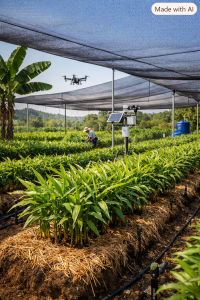
Agriculture’s more recent transformation has centered on precision techniques: GPS-guided equipment, soil and crop sensors, satellite and drone-based field monitoring, and increasingly AI-driven analysis that allow farmers to apply water, fertilizer, and pesticide with far greater targeting than uniform field-wide application, reducing both input costs and environmental impact while maintaining or improving yield. Genetically modified and, increasingly, CRISPR-edited crop varieties have been engineered for pest resistance, herbicide tolerance, drought tolerance, and, more recently, enhanced nutritional content, though regulatory and public acceptance of such crops continues to vary substantially across different countries and regions.
Current agricultural research is increasingly focused on sustainability alongside yield: reducing the substantial greenhouse gas footprint of fertilizer production and livestock farming, developing crop varieties requiring less water and fewer chemical inputs, and exploring alternative protein sources — plant-based and cultivated (lab-grown) meat, as well as increased use of insect and microbial protein — as potential complements to conventional livestock production. Vertical farming and controlled-environment agriculture, which grow crops in stacked, climate-controlled indoor systems using LED lighting and hydroponic or aeroponic techniques, offer dramatically higher yield per unit of land and water in urban settings, though energy costs currently limit their economic competitiveness to high-value crops rather than staple grains.
Part VI
Connectivity and Emerging Frontiers
The final section covers two fields that sit at the convergence of other revolutions covered in this document: telecommunications, which links the digital and physical infrastructure discussed throughout, and quantum biology, an emerging discipline that suggests the boundary between quantum physics and living systems may be less distinct than previously assumed.
27. Telecommunications: Fiber Optics and Wireless Networks
Modern telecommunications rests on two parallel infrastructures: fixed fiber-optic networks and wireless cellular networks, both of which have undergone repeated generational transformation since the late twentieth century. Fiber-optic cable, which transmits data as pulses of laser light through hair-thin glass strands, offers vastly greater bandwidth and lower signal loss over long distances than the copper wire and coaxial cable it has progressively displaced since the 1980s, and now carries the overwhelming majority of the world’s internet, telephone, and data traffic, including nearly all intercontinental traffic via an extensive network of submarine cables spanning every ocean.
Wireless cellular networks have advanced through successive generations, each roughly a decade apart: 1G analog voice service in the 1980s; 2G digital voice and basic text messaging in the 1990s; 3G, which introduced practical mobile internet access in the 2000s; 4G LTE, which enabled high-quality mobile video streaming and the modern app-based smartphone economy through the 2010s; and 5G, now in broad global deployment, which offers substantially higher data speeds, lower latency, and the capacity to connect a far larger density of devices per cell tower — a requirement increasingly important as the number of internet-connected devices, from smartphones to industrial sensors, continues to grow rapidly.
Research and early deployment planning is already underway for 6G, anticipated toward the end of the 2020s, which is expected to integrate satellite and terrestrial networks more seamlessly, support even higher data rates and lower latency for applications such as immersive extended reality and advanced autonomous systems, and make more extensive use of higher-frequency spectrum bands. In parallel, low-earth-orbit satellite constellations — most prominently SpaceX’s Starlink, alongside competing systems from Amazon and others — have introduced a genuinely new category of telecommunications infrastructure, providing broadband connectivity directly from space to underserved and remote regions that terrestrial fiber and cellular infrastructure cannot economically reach, and increasingly offering direct-to-smartphone satellite connectivity as a complement to conventional cellular coverage in areas without ground-based signal.
28. Quantum Biology
Quantum biology is an emerging interdisciplinary field investigating whether quantum mechanical effects — phenomena typically associated with the coherent, isolated conditions of a physics laboratory rather than the warm, wet, chaotic environment of a living cell — play a functional role in biological processes. For decades, most biologists assumed that any quantum coherence within living systems would be destroyed almost instantaneously by thermal noise, rendering quantum effects irrelevant to biological function at any meaningful scale. Accumulating experimental evidence over roughly the past two decades has complicated that assumption.
The clearest evidence comes from photosynthesis, where experiments beginning around 2007 suggested that the initial capture and transfer of light energy within certain photosynthetic protein complexes may exploit quantum coherence — energy exploring multiple pathways simultaneously before settling into the most efficient route to the reaction center — potentially explaining photosynthesis’s remarkably high energy-transfer efficiency, though the extent and functional significance of this coherence under real biological conditions remains an active area of investigation and some scientific debate. Enzyme catalysis provides a second area of evidence: certain enzymes appear to use quantum tunneling to transfer protons or electrons during chemical reactions, allowing reaction rates faster than classical physics alone would predict.
The most striking proposed example is avian magnetoreception: experimental evidence suggests that some migratory birds may sense Earth’s magnetic field through a quantum mechanism involving light-sensitive proteins called cryptochromes in the eye, where a photon of light creates a pair of electrons in a quantum entangled state whose behavior is sensitive to the orientation of the surrounding magnetic field, potentially providing birds with a literal quantum compass. While quantum biology remains a young and still-developing field, with some proposed mechanisms more experimentally established than others, it represents a genuinely open frontier where fundamental physics and biology continue to intersect in ways not fully anticipated by either field, and its eventual maturation could inform new approaches to quantum sensing technology, bio-inspired quantum computing, and a deeper understanding of the physical limits and mechanisms of life itself.



Be First to Comment