
Abstract (1 page)
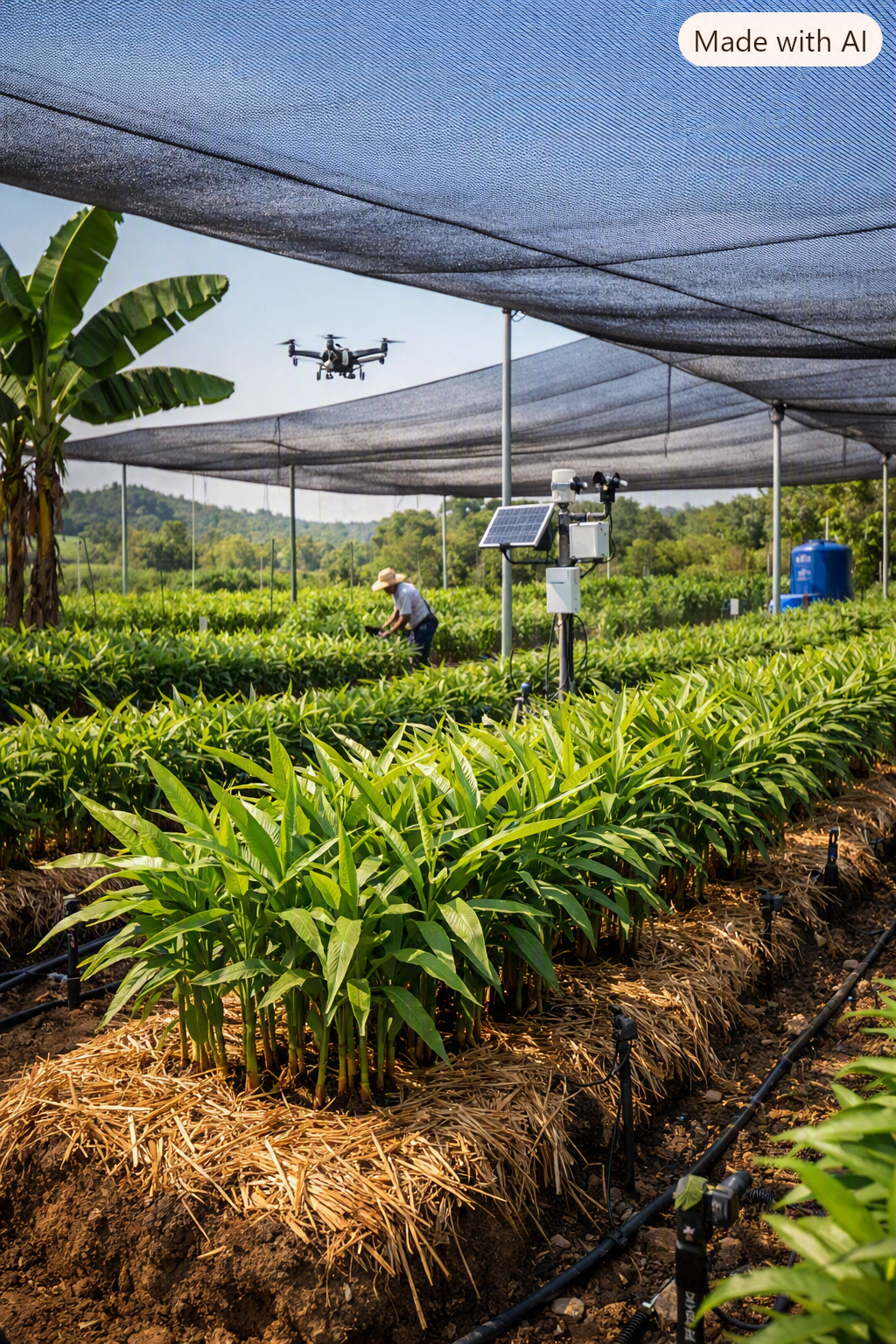
Modern ginger agriculture has evolved from traditional rhizome planting into a scientifically engineered system integrating soil physics, plant physiology, climate adaptation, biotechnology, and precision farming. This thesis synthesizes global best practices, GAP standards, African commercial models, and emerging innovations to define the true state‑of‑the‑art in ginger production.
1. Introduction (2 pages)
1.1 Importance of Ginger in Global Agriculture
- Global production led by India (22.46 lakh tonnes in 2024–25).
- Rising demand from nutraceuticals, beverages, pharmaceuticals, and export markets.
- Ginger as a high‑value, long‑cycle crop (8–10 months).
1.2 Purpose of the Thesis
To define the state‑of‑the‑art in ginger agriculture, focusing on soil preparation, planning, climate adaptation, rhizome biotechnology, and precision farming.
2. Botanical & Physiological Foundations (2 pages)
2.1 Ginger Morphology
- Rhizome structure, buds (“eyes”), fibrous roots.
- Physiological sensitivity to moisture, heat, and soil aeration.
2.2 Growth Stages
- Sprouting → Vegetative → Rhizome expansion → Maturation.
3. Ecological Requirements (3 pages)
3.1 Temperature
- Optimal: 25–32°C. Growth stunted below 20°C.
- Heat stress above 35°C requires microclimate engineering.
3.2 Rainfall & Humidity
- Ideal rainfall: 1,500–3,000 mm.
- High humidity essential for rhizome expansion.
3.3 Altitude
- Thrives from 0–1,500 m above sea level.
4. Soil Science & State‑of‑the‑Art Soil Engineering (6 pages)
4.1 Ideal Soil Type
- Deep, loose, well‑drained sandy loam rich in organic matter.
- Avoid clay (waterlogging → rot).
- Avoid pure sand (nutrient leaching).
4.2 Soil Chemistry
- pH 5.5–6.5.
- Lime application for acidic soils.
4.3 Organic Matter Requirements
- 20–25 tons/ha compost/manure.
- Enhances moisture retention, porosity, microbial life.
4.4 Raised Bed Engineering
- Height: 15 cm, width 30–40 cm.
- Improves drainage and rhizome expansion.
4.5 Modern Soil Innovations
- Biochar integration for moisture retention.
- Cocopeat blends for aeration (inference based on soil science).
- Microbial inoculants (Trichoderma, mycorrhiza).
5. Rhizome Biotechnology & Planting Material (4 pages)
5.1 Variety Selection
- Small ginger: high oil, medicinal.
- Large ginger: commercial, less fibrous.
5.2 Seed Rhizome Preparation
- Setts: 3–5 cm, 2–3 eyes.
- Pre‑sprouting under moist sawdust/gunny bags for 2 weeks.
- Fungicide drench (copper‑based) to prevent rot.
6. Land Preparation & Field Architecture (4 pages)
6.1 Clearing & Tilling
- Deep ploughing → fine tilth.
- Removal of weeds and residues.
6.2 Bed/Ridge Construction
- Precision spacing for drainage and root development.
6.3 Mulching Technology
- Thick mulch layer immediately after planting.
- Controls temperature, moisture, weeds.
7. Planting & Spacing (3 pages)
7.1 Spacing Standards
- Rows: 30 cm; plants: 15–20 cm.
- Depth: 5–10 cm with eyes upward.
7.2 Timing
- Beginning of rainy season for natural moisture.
8. Nutrient Management (4 pages)
8.1 Basal Fertilizer
- 10 tons manure/acre + DAP/NPK (17:17:17).
8.2 Seasonal Fertilizer
- NPK 75:50:50 kg/ha split doses.
8.3 Biofertilizers
- Trichoderma, mycorrhiza, compost teas.
9. Irrigation & Moisture Management (3 pages)
9.1 Drip Irrigation
- Mandatory in low‑rainfall zones.
9.2 Moisture Strategy
- Daily light irrigation early; reduced after canopy formation.
10. Shade & Microclimate Engineering (3 pages)
10.1 Shade Levels
- 25–35% shade during early growth (inference based on GAP).
- Banana intercropping for natural shade.
10.2 Heat Stress Mitigation
- Mulching, evening irrigation, shade nets.
11. Weed, Pest & Disease Management (3 pages)
11.1 Weeding
- Regular shallow weeding first 2 months.
11.2 Earthing Up
- Soil pulled around base after each weeding.
11.3 Disease Control
- Avoid waterlogging.
- Fungicide‑treated setts.
- Crop rotation with legumes/maize.
12. Precision Agriculture & Digital Tools (3 pages)
12.1 Soil Sensors
- Moisture probes for irrigation automation.
12.2 GIS Field Mapping
- Mapping soil variability for targeted fertilization.
12.3 Drone Monitoring
- Canopy health, moisture stress detection.
13. Harvesting & Post‑Harvest Handling (3 pages)
13.1 Harvest Timing
- 8–10 months maturity.
13.2 Post‑Harvest Practices
- Cleaning, curing, grading, storage.
14. Economics & Market Strategy (2 pages)
14.1 Profitability Drivers
- Rhizome size, quality, moisture content.
- Market timing (ginger can remain in soil).
14.2 Value‑Chain Optimization
- Fresh market vs. processing vs. export.
15. Sustainability & Climate Resilience (2 pages)
15.1 Soil Conservation
- Mulching, organic matter, raised beds.
15.2 Climate Adaptation
- Shade nets, drip irrigation, drought‑resistant soil blends.
16. Conclusion (1 page)
Modern ginger agriculture is a fusion of soil science, biotechnology, precision irrigation, microclimate engineering, and GAP‑certified field management. The state‑of‑the‑art approach maximizes yield, quality, and sustainability while reducing disease pressure and environmental impact.





Be First to Comment