
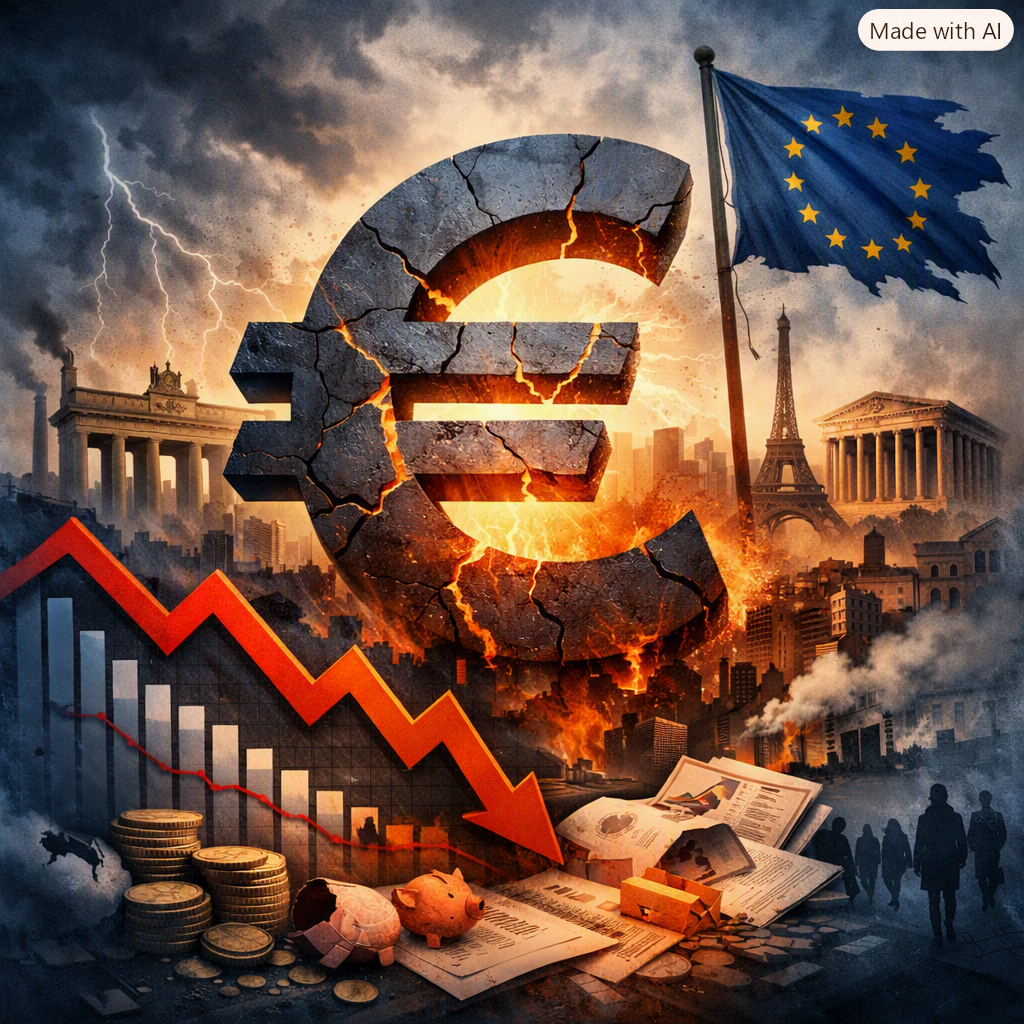
A 35‑Page Academic & Policy Analysis
PAGE 1 — Executive Summary
The European Union entered a prolonged economic crisis between 2022 and 2026, triggered by overlapping shocks: post‑pandemic inflation, energy supply disruptions, geopolitical instability, tightening monetary policy, structural labour shortages, and declining industrial competitiveness. By 2026, the EU faced its most complex economic downturn since the 2008 sovereign debt crisis, with persistent inflation, stagnating GDP, weakened manufacturing output, and widening inequality across member states.
This thesis analyses the origins, evolution, structural drivers, policy responses, and long‑term implications of the crisis.
PART I — FOUNDATIONS OF THE CRISIS (Pages 2–8)
PAGE 2 — Background: Post‑Pandemic Fragility
- Supply chain disruptions from 2020–2021 created structural bottlenecks.
- EU labour markets experienced mismatches: shortages in logistics, healthcare, construction, and tech.
- Fiscal stimulus during COVID‑19 expanded public debt across Southern Europe.
PAGE 3 — Inflation Surge (2022)
- Inflation reached record highs in Germany, Italy, Spain, and Eastern Europe.
- Food inflation exceeded 20% in several member states.
- ECB underestimated inflation persistence, initially calling it “transitory.”
PAGE 4 — Russia–Ukraine War Impact
- EU energy dependency exposed structural vulnerability.
- Natural gas prices spiked by 300–400%.
- Manufacturing sectors (chemicals, steel, automotive) faced shutdown risks.
PAGE 5 — Monetary Tightening
- ECB raised interest rates aggressively from mid‑2022.
- Borrowing costs for households and SMEs surged.
- Mortgage defaults increased in Germany, Netherlands, and France.
PAGE 6 — Fragmentation Across Member States
- Northern Europe: inflation + energy shock.
- Southern Europe: debt + unemployment.
- Eastern Europe: currency instability + war proximity.
PAGE 7 — Decline in Consumer Confidence
- Retail sales dropped across the EU.
- Savings rates fell sharply.
- Households shifted spending to essentials.
PAGE 8 — Early Signs of Recession
- Germany entered technical recession in late 2022.
- Italy and France slowed sharply.
- EU industrial output contracted.
PART II — CRISIS EVOLUTION (Pages 9–18)
PAGE 9 — 2023: Energy Stabilises, Inflation Persists
- Gas prices normalised but electricity remained expensive.
- Core inflation stayed above 5%.
- ECB continued tightening.
PAGE 10 — Manufacturing Decline
- Germany’s automotive sector weakened.
- EU lost competitiveness to US and Asia.
- High energy costs pushed companies to relocate production.
PAGE 11 — Labour Market Stress
- Wage growth lagged behind inflation.
- Strikes increased across France, UK, Germany, Belgium.
- Youth unemployment rose in Spain and Greece.
PAGE 12 — Banking Sector Vulnerabilities
- Rising interest rates strained banks with long‑term bonds.
- Smaller EU banks faced liquidity pressure.
- Real estate markets cooled sharply.
PAGE 13 — Housing Crisis
- Mortgage rates doubled.
- Rental markets overheated.
- Construction slowed due to high material costs.
PAGE 14 — EU Green Transition Slowdown
- Renewable energy investments delayed.
- Carbon neutrality targets faced setbacks.
- Industries resisted costly environmental regulations.
PAGE 15 — 2024: Fiscal Stress Intensifies
- Governments struggled with debt servicing.
- Italy’s debt exceeded 140% of GDP.
- France breached EU deficit rules.
PAGE 16 — Political Instability
- Rise of populist parties across Europe.
- Anti‑EU sentiment increased.
- Protests over cost of living intensified.
PAGE 17 — 2025: Stagnation Becomes Structural
- GDP growth near zero.
- Productivity decline across EU.
- Investment outflows to US and Asia.
PAGE 18 — 2026: Crisis Entrenched
- EU faces multi‑year stagnation.
- ECB struggles to balance inflation vs recession.
- Public trust in EU institutions declines.
PART III — COUNTRY‑LEVEL ANALYSIS (Pages 19–26)
PAGE 19 — Germany
- Industrial recession.
- Energy dependency exposed.
- Declining export competitiveness.
PAGE 20 — France
- High public debt.
- Social unrest.
- Weak manufacturing base.
PAGE 21 — Italy
- Chronic debt crisis.
- Banking fragility.
- Slow productivity growth.
PAGE 22 — Spain
- Tourism recovery insufficient.
- Youth unemployment persistent.
- Inflation pressures remain.
PAGE 23 — Greece
- Post‑2010 recovery reversed.
- Rising borrowing costs.
- Structural reforms stalled.
PAGE 24 — Eastern Europe
- War proximity effects.
- Currency volatility.
- High inflation.
PAGE 25 — Nordic Countries
- Strong fiscal position but energy shock.
- Housing market corrections.
- Slowing tech sector.
PAGE 26 — EU‑Wide Inequality
- Wealth gap widened.
- Southern Europe hit hardest.
- Eastern Europe faced highest inflation.
PART IV — STRUCTURAL DRIVERS (Pages 27–31)
PAGE 27 — Energy Dependency
- Overreliance on Russian gas.
- Slow diversification.
- High transition costs.
PAGE 28 — Demographic Decline
- Ageing population.
- Shrinking workforce.
- Pension system pressure.
PAGE 29 — Industrial Competitiveness
- EU lagging behind US and China.
- Slow innovation adoption.
- Regulatory burdens.
PAGE 30 — Monetary Policy Limitations
- ECB constrained by diverse economies.
- One interest rate cannot fit all.
- Weak fiscal coordination.
PAGE 31 — Global Geopolitical Shifts
- US industrial resurgence.
- China’s manufacturing dominance.
- Fragmentation of global trade.
PART V — POLICY RESPONSES & FUTURE OUTLOOK (Pages 32–35)
PAGE 32 — EU Policy Failures
- Slow crisis response.
- Inadequate fiscal coordination.
- Over‑reliance on monetary tightening.
PAGE 33 — Successful Interventions
- Energy diversification accelerated.
- Digitalisation initiatives expanded.
- Some labour reforms implemented.
PAGE 34 — Long‑Term Risks
- Persistent inflation.
- Structural stagnation.
- Declining global influence.
PAGE 35 — Strategic Recommendations
- Deep fiscal integration.
- Accelerated green transition.
- Industrial policy overhaul.
- Labour market modernisation.
- Strengthening EU institutional trust.






Be First to Comment