
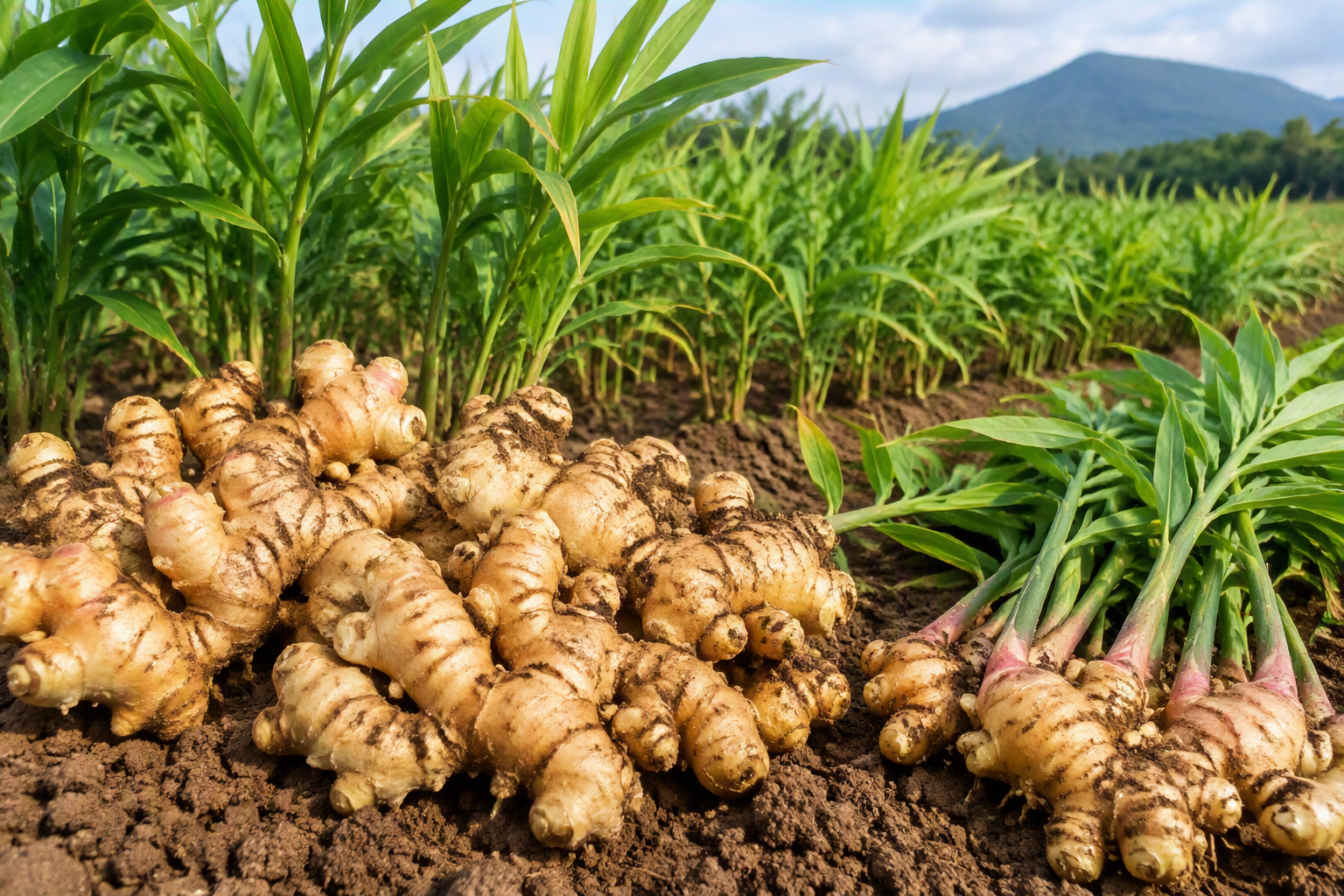
Proper land preparation is one of the most important steps in successful ginger farming. Farmers who understand how to prepare land correctly can achieve higher yields, healthier plants, and better-quality ginger rhizomes.
1. Improves Soil Structure
Well-prepared land creates loose and well-aerated soil, allowing ginger rhizomes to expand easily underground. Compacted soil restricts growth and reduces yields.
2. Enhances Root Development
Ginger plants develop stronger roots when planted in properly tilled soil. Strong roots absorb water and nutrients more efficiently, resulting in vigorous plant growth.
3. Ensures Better Drainage
Ginger does not grow well in waterlogged conditions. Knowledge of creating raised beds and proper drainage channels helps prevent root rot and disease outbreaks.
4. Increases Nutrient Availability
Land preparation often includes incorporating compost, manure, and fertilizers into the soil. This improves soil fertility and provides essential nutrients needed for healthy ginger growth.
5. Reduces Weed Competition
Proper land preparation removes weeds before planting. Fewer weeds mean less competition for water, nutrients, sunlight, and space.
6. Minimizes Pest and Disease Problems
Removing plant residues, controlling weeds, and preparing clean planting beds help reduce pests and diseases that can affect ginger crops.
7. Improves Water Management
Prepared land allows farmers to manage irrigation more effectively. Ginger requires consistent moisture, and proper land preparation helps maintain suitable soil moisture levels.
8. Promotes Uniform Crop Growth
Land that is evenly prepared allows ginger plants to emerge and grow uniformly, making crop management easier and increasing overall productivity.
9. Enhances Harvest Quality
Good land preparation leads to larger, healthier, and more marketable ginger rhizomes. High-quality ginger attracts better prices in local and export markets.
10. Increases Farm Profitability
Higher yields, lower disease incidence, and better-quality produce contribute directly to increased income and profitability for farmers.
Key Land Preparation Practices for Ginger
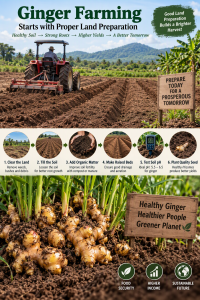
- Select well-drained, fertile loamy soil.
- Clear weeds, stones, and crop residues.
- Plow or dig the soil deeply (20-30 cm).
- Add well-rotted manure or compost.
- Prepare raised beds or ridges.
- Ensure proper drainage channels.
- Test soil pH and maintain it between 5.5 and 6.5 where possible.
- Apply recommended fertilizers based on soil conditions.
Conclusion
Building knowledge of land preparation is essential for successful ginger production. Properly prepared land promotes healthy plant growth, reduces disease risks, improves yields, and ultimately increases farmers’ profits. Land preparation is the foundation upon which a productive and sustainable ginger crop is built.




Be First to Comment