
Introduction
The blue whale is the most massive animal ever to have existed on Earth, surpassing even the largest dinosaurs that roamed the planet millions of years ago. These magnificent marine mammals can reach lengths of up to 100 feet and weigh as much as 200 tons—equivalent to 33 elephants or 1,600 grown men combined. Despite their enormous size, blue whales are gentle filter feeders that consume some of the smallest creatures in the ocean. Their existence represents one of nature’s most extraordinary achievements: the evolution of intelligence, grace, and power in a single species perfectly adapted to life in the deep ocean.
Physical Characteristics and Adaptations
Blue whales possess a streamlined, elongated body designed perfectly for ocean life. Their heart alone weighs approximately 400 pounds and is the size of a compact car. A single blue whale’s tongue can weigh as much as an elephant, and their massive bodies are supported by skeletal structures that have evolved to distribute weight efficiently throughout their enormous frame. Their skin is typically blue-gray in color, appearing more intensely blue when wet or underwater. The lighter coloration on their bellies and undersides serves as camouflage, making them harder to spot from predators or prey below.
Their flippers are proportionally long relative to their body size, measuring up to 16 feet in length. These appendages provide remarkable maneuverability for such a large creature. Their tail flukes are powerful and can be up to 25 feet wide, allowing them to move through water with surprising grace and speed when necessary. Blue whales can reach speeds of up to 20 miles per hour when swimming at a leisurely pace, and they can accelerate to over 30 miles per hour when fleeing danger or chasing food.
Birth and Early Life
Blue whales reach sexual maturity at approximately 5 to 15 years of age, though most females do not reproduce until they are older. Mating typically occurs during winter months in tropical and subtropical waters. After a gestation period of approximately 11 months, a female blue whale gives birth to a single calf, rarely to twins. A newborn blue whale calf is already enormous—measuring about 25 feet in length and weighing approximately 3 tons at birth, making it the largest baby of any animal species on Earth.
The mother nurses her calf with milk that is extraordinarily rich in fat content, containing approximately 50% fat compared to roughly 4% fat in human milk. This incredibly nutritious milk allows calves to gain as much as 200 pounds per day during the nursing period. The mother and calf maintain an incredibly close bond during this time, with the mother being fiercely protective of her young. The nursing period lasts approximately 6 to 7 months, during which the calf grows rapidly and learns the behaviors necessary for survival in the open ocean.
Feeding Behavior: The Filter Feeding Method
Despite their massive size, blue whales are filter feeders that consume only the smallest creatures in the ocean. They feed primarily on krill—tiny shrimp-like crustaceans that often measure less than 2 inches in length. A single blue whale can consume up to 4 tons of krill in a single day during feeding season, which typically occurs in polar waters during summer months. To accomplish this remarkable feat, blue whales employ one of the most extraordinary feeding mechanisms in the animal kingdom.
The blue whale’s mouth is equipped with baleen plates instead of teeth. These baleen plates are composed of keratin—the same material that makes up human fingernails and hair. Each blue whale can have up to 400 baleen plates hanging from its upper jaw. These plates are arranged like the teeth of a comb and are composed of fringed fibers that trap small organisms. The inner edges of these plates are particularly fine and create an effective filter system.
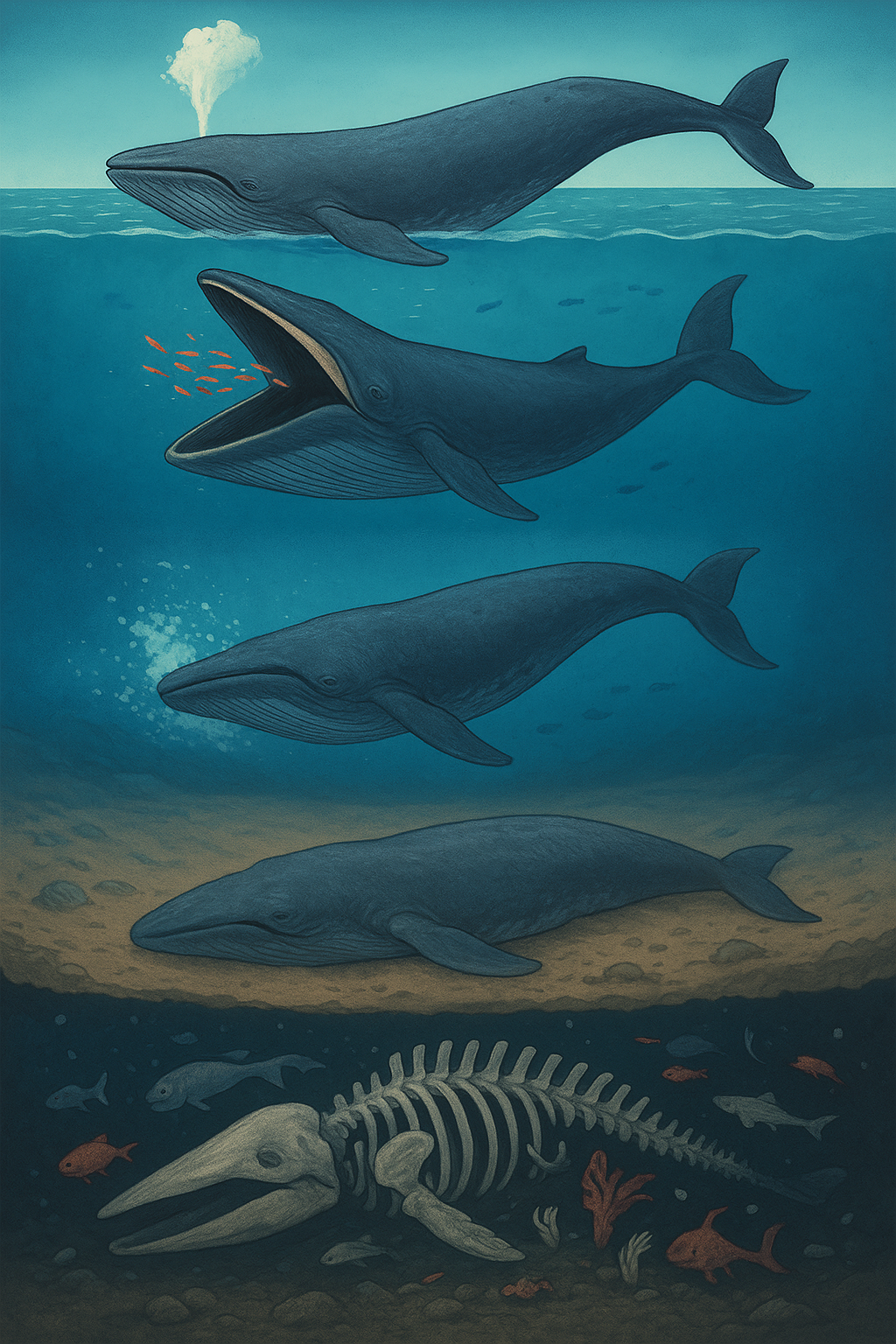
When feeding, a blue whale approaches a swarm of krill with its mouth closed. Once positioned within the densest area of the krill, the whale rapidly opens its mouth to an enormous size—as wide as 25 feet. This sudden opening creates a vacuum that draws up to 500 tons of water into the whale’s mouth along with millions of krill. The whale then closes its mouth and uses its massive tongue to push the water back out through the baleen plates, which trap the krill inside. The krill, unable to escape through the filtering system, are then swallowed as a mass. This entire process, known as lunge feeding, requires tremendous energy but yields an enormous food reward.
Blue whales are seasonal feeders, and their feeding activities follow the migration patterns of krill swarms. During summer months in polar regions, krill populations explode in abundance, and blue whales take advantage of this bounty. During these feeding months, a whale may consume enough krill to last them through the winter, though they may continue to feed at reduced rates even during migration and breeding seasons.
Water and Hydration
Blue whales obtain virtually all their water requirements from their food—primarily krill. Krill, like all living organisms, contains significant water content, providing the whale with necessary hydration. Additionally, the metabolic breakdown of fat in their diet releases water as a byproduct. While blue whales do live in saltwater environments, they have evolved sophisticated kidneys and urinary systems that allow them to conserve fresh water and concentrate salt in their urine for excretion. This adaptation prevents the dehydration that would occur if they relied on drinking seawater directly.
The whale’s ability to obtain water through food and internal metabolic processes represents a remarkable evolutionary adaptation to marine life. Unlike many marine mammals that must periodically surface to breathe air, blue whales have no need to seek sources of fresh water during their oceanic journeys. This independence from fresh water sources allows them to remain at sea for extended periods without returning to land.
Migration and Lifestyle
Blue whales are highly migratory animals that follow a distinct seasonal pattern. The migration cycle typically involves movement between polar feeding grounds and tropical breeding grounds. During summer months (roughly May to October in the Southern Hemisphere and June to October in the Northern Hemisphere), blue whales congregate in polar waters where krill is most abundant. These feeding grounds are located in regions such as Antarctic waters, the North Atlantic, and the North Pacific Ocean.
As water temperatures begin to drop in autumn, blue whales initiate their southward migration (in the Southern Hemisphere) or southward/southwestward migration (in the Northern Hemisphere). These migrations can cover distances of up to 12,000 miles annually. The journey takes several months as whales travel at a measured pace, conserving energy for the breeding season ahead. Some researchers believe that whales may use the Earth’s magnetic field, celestial navigation, or acoustic landmarks to navigate these enormous distances with precision.
During winter months, blue whales arrive at their breeding grounds in warm, tropical waters. Here, mating occurs and pregnant females prepare for calving. The warmer waters provide ideal conditions for nursing calves, as they help maintain the calves’ body temperature. Whales remain in breeding grounds for several months before beginning the migration back to feeding grounds as seasonal water temperatures change again.
Blue whales are generally solitary or found in small groups of two to four individuals, though during migration and feeding periods, many whales may congregate in the same region. These gathering spots can include dozens of whales, creating spectacular displays of marine life. Whales communicate with each other using a complex system of vocalizations, including songs, clicks, and calls that can travel vast distances through the ocean. The communication between whales likely serves purposes ranging from navigation and location-finding to mate attraction and social bonding.
Daily Activities and Behavior
Blue whales spend much of their day engaged in feeding, resting, and traveling. During peak feeding season in polar waters, whales may feed nearly continuously, though they often take breaks between feeding sessions. These breaks allow them to rest and digest their food. Whales sleep for short periods, typically ranging from 10 to 20 minutes at a time. Unlike land mammals, whales retain conscious control of their breathing while sleeping, forcing them to surface periodically even during rest periods. This unique sleep adaptation prevents them from drowning while maintaining the constant vigilance necessary for survival.
Whales are playful creatures and have been observed breaching—leaping out of the water and splashing back down with tremendous force. While the exact purpose of breaching remains somewhat mysterious, researchers believe it may serve purposes such as communication, parasite removal, or simple play. Whales also engage in logging behavior, wherein they float motionless at the surface with minimal body movement, representing a form of rest state. Surface active behaviors, such as tail slapping and pectoral fin slapping, are also commonly observed.
Social Structure and Communication
Blue whales possess complex social systems and communication networks despite often being solitary. Each whale produces vocalizations that are unique to itself, similar to human voices. Whales can recognize individual whales based on their vocalizations, allowing them to identify family members, mates, or other familiar individuals across vast distances. The songs produced by blue whales are among the most complex and longest-lasting vocalizations in the animal kingdom. Some whale songs last for more than 20 minutes and are repeated throughout the day.
The purpose of whale songs appears to be multifaceted. During breeding season, male whales produce elaborate songs that likely serve to attract mates and establish dominance. These songs may also facilitate bonding between whales and communicate information about location, food sources, or dangers. The remarkable aspect of whale communication is that populations in different regions produce distinctly different songs, suggesting that whales learn and transmit culture across generations, much like human cultures.
Calves learn from their mothers during nursing periods, acquiring knowledge about migration routes, feeding grounds, and behavioral patterns. This transfer of knowledge from mother to offspring represents a form of culture unique to populations of whales. Some populations have developed distinct migration patterns, feeding behaviors, or social structures based on their regional circumstances and learned behaviors.
Mating and Reproduction
Blue whales typically breed every other year, though some individuals may breed annually. Mating occurs during winter months in warm tropical waters. The competition for mates can be intense, with multiple males pursuing a single receptive female. Males produce elaborate songs during the breeding season, and their vocalizations may help establish dominance hierarchies and attract mates. Some researchers speculate that females choose mates based on the complexity and quality of their songs, similar to mate selection in songbirds.
After successful mating, females undergo an 11-month gestation period. During this time, the fetus grows at an extraordinary rate. By the time of birth, the calf has developed into a massive creature already larger than many land animals. Most calves are born during winter months in warm tropical or subtropical waters, where conditions are ideal for nursing and early development.
Female blue whales are particularly devoted mothers. They remain with their calves constantly during the nursing period, protecting them from potential threats and ensuring they receive adequate nutrition. Calves stay with their mothers for several years, learning essential survival skills including migration routes, feeding techniques, and social behaviors. The bond between mother and calf is so strong that if a calf becomes stranded or injured, the mother may continue attempting to nurse and protect it despite the hopelessness of the situation.
Lifespan and Aging
Blue whales can live for 80 to 90 years in the wild, making them one of the longest-lived animals on Earth. Some researchers believe that blue whales may potentially live over 100 years, though conclusive evidence is difficult to obtain due to the challenges of tracking individual whales throughout their lives. Growth continues throughout the whale’s life, though the rate of growth slows significantly after reaching maturity. Aging in whales can be determined through examination of ear plugs—waxy substances that accumulate in the ear canals—which contain growth layers similar to tree rings.
As blue whales age, they typically develop thickened skin and accumulate scar tissue from various encounters with ships, other whales, or marine debris. These visible marks and scars allow researchers to identify and track individual whales throughout their lives. Older whales often have extensive scarring and may display signs of wear including damaged flukes, torn fins, or areas of exposed muscle tissue. Despite these signs of aging, elderly blue whales generally remain active and capable hunters until the end of their lives.
Death Mechanisms
Blue whales face multiple threats that can lead to death. Predation occurs primarily during vulnerable periods when calves are young or when adult whales are injured or weakened. Orcas (killer whales) are the primary predators of adult blue whales, though attacks typically target calves or injured individuals. Great white sharks may occasionally prey on whale calves, though such predation is relatively rare. Adult blue whales in good health are rarely preyed upon successfully due to their enormous size and defensive capabilities.
Ship strikes represent a significant source of whale mortality in the modern era. As human shipping traffic has increased, collisions between large cargo ships and whales have become increasingly common in major shipping lanes. These collisions typically result in fatal injuries, either from the immediate impact or from the wounds and infections that follow. Young whales and calves are particularly vulnerable to ship strikes due to their smaller size and reduced ability to evade moving vessels.
Entanglement in fishing gear, including fishing nets, lines, and traps, poses another significant threat to whale populations. Whales may become entangled while feeding or migrating through areas with heavy fishing activity. These entanglements can restrict movement, prevent feeding, cause open wounds, or impede a whale’s ability to surface for breathing. Some whales manage to free themselves or are rescued by human responders, but many die from complications related to their entanglement.
Disease and infection also claim whale lives. Parasitic infestations, bacterial infections, and viral illnesses can debilitate whales and lead to death. Weak or diseased whales may struggle to feed effectively, leading to malnutrition and eventual death. Environmental changes affecting food availability can lead to starvation, a particular concern in recent decades as climate change has altered krill populations and distribution patterns.
Natural causes including organ failure, cancer, and age-related complications lead to death in older whales. Whales that reach advanced old age may gradually decline in health, spending increasing amounts of time resting at the surface before succumbing to age-related illnesses. Some elderly whales appear to develop debilitating conditions that prevent them from feeding effectively or moving with the agility necessary for survival.
Death and the Final Moments
The final moments of a blue whale’s life vary depending on the cause of death. Whales that are fatally struck by ships may die rapidly from massive trauma, their enormous bodies instantly overwhelmed by the force of collision. In other cases, injured whales may experience gradual decline over days or weeks as infections develop and complications multiply. Whales suffering from starvation due to entanglement or migration blockage may slowly weaken over extended periods.
Elderly whales experiencing age-related decline may spend their final days or weeks at the surface, their breathing becoming increasingly labored. Some whales appear to seek out shallow water as they approach death, a phenomenon that sometimes results in stranded whales on beaches. The exact reasons for this behavior remain unclear, though some researchers speculate that whales may seek the thermal support provided by shallow water or that they become disoriented as their condition deteriorates.
In their final moments, dying whales typically experience periods of increasingly shallow breathing with extended intervals between breaths. Some whales appear to lose consciousness before death, while others may remain alert until the very end. The death of a massive creature like a blue whale is often a gradual process rather than an instantaneous event, particularly when caused by disease, starvation, or infection.
Decomposition and Physical Breakdown
Following death, a blue whale’s massive body undergoes dramatic changes during the decomposition process. The initial phase involves bacterial activity within the whale’s body cavity. Bacteria begin breaking down organic tissue, releasing gases that build up within the body. This accumulation of gas can cause the whale’s body to swell to grotesque proportions, sometimes increasing in size by 10 to 20% in the first few days following death. The skin may become discolored and begin to slough off, revealing the blubber layer beneath.
If the dead whale remains at the surface, it becomes exposed to scavengers including seabirds, sharks, and other marine predators. These animals tear away at the decomposing flesh, consuming the nutritious muscle tissue and organs. Fish and other small marine creatures join in the scavenging process, picking away at any exposed tissue. The feeding activity of scavengers can rapidly reduce a whale carcass, sometimes consuming significant portions of the body within days.
The high fat content of whale blubber makes whale carcasses particularly attractive to deep-sea scavengers. If a whale sinks to the ocean floor, its body becomes the centerpiece of what scientists call a “whale fall”—one of the most significant food sources in deep-sea ecosystems. As the carcass descends, smaller scavengers and particles begin breaking down the tissue. By the time the carcass reaches the seafloor, specialized deep-sea organisms are waiting.
During the mobile scavenger phase, sharks, hagfish, and other large predators congregate around the whale fall to feed. These animals can consume vast quantities of tissue. Following this phase comes the enrichment opportunist phase, during which smaller scavengers including crustaceans, polychaete worms, and other invertebrates consume the remaining tissue. This phase can persist for years as these organisms slowly break down the remaining material.
The final phase involves bone-eating specialists including specialized bacteria and worms that can break down the lipid-rich bones themselves. These organisms extract nutrients from the whale’s skeletal structure, slowly dissolving the bone over the course of decades. Some deep-sea bone-eating worms can consume whale bones completely, reducing the massive skeletal structure to nothing over 10 to 15 years.
The Whale Fall Ecosystem
The death and decomposition of a blue whale creates one of the richest ecosystems on the ocean floor. A single whale fall can support millions of organisms and sustain life in one location for 50 to 100 years or more. Species that never meet in any other context gather at whale falls, creating a temporary oasis of abundance in the typically sparse deep-sea environment. Scientists estimate that a single large whale fall can provide as much nutrition to the deep sea as would otherwise require centuries of food particle falling from the surface.
Specialized bone-eating worms such as Osedax are found almost exclusively at whale falls, having evolved to exploit this unique food source. These worms bore into the whale’s bones and derive nutrition from the oils stored within. Other specialized organisms including certain species of crustaceans, mollusks, and bacteria have evolved specifically to exploit whale falls, representing an entire ecosystem adapted to this irregular but extraordinarily abundant food source.
The decomposition of whale remains returns massive quantities of organic material and nutrients to the deep ocean, enriching the surrounding water and sediments. This process helps fertilize deep-sea communities for centuries following a single whale death. The nutrients released from decomposing whale remains gradually disperse through ocean currents, potentially enriching communities far distant from the original whale fall location.
Other Species’ Benefits and the Broader Ecosystem
The presence of living blue whales in ocean ecosystems provides substantial benefits to countless other species, many of which may never encounter a whale directly. Perhaps most directly, blue whales and other baleen whales are tremendous consumers of krill. While this may seem negative for krill, research has shown that whale predation on krill may actually benefit krill populations by preventing overpopulation and associated ecosystem collapse. By removing large quantities of krill, whales create a sustainable balance that prevents krill from overeating the phytoplankton they depend upon.
Blue whales also benefit fish species that feed on the same krill populations. By removing krill, whales reduce competition for food, potentially allowing fish populations to thrive. Additionally, krill that escape whale predation are sometimes pushed into shallower waters or into areas where smaller predators can access them, effectively making the resource available to a wider range of species.
The nutrient-rich waste produced by blue whales has substantial ecosystem benefits. Whale feces are extraordinarily nutrient-rich, containing high concentrations of iron, nitrogen, and other essential elements. When whales feed in nutrient-poor polar waters and then migrate to tropical waters where they defecate, they effectively transport nutrients across ocean basins. This “whale pump” process helps fertilize phytoplankton in tropical regions, supporting the base of tropical food chains and enhancing overall productivity in these regions.
Whale vocalizations provide benefits to numerous other species that eavesdrop on whale communications. Some fish species appear to use whale vocalizations as cues for migration timing or location. Dolphins and other cetaceans may also benefit from information conveyed through whale songs. The acoustic environment created by whale populations helps structure and organize marine communities, influencing the movements and behaviors of other species.
The protection of whale populations also benefits numerous other species that share whale habitats. Policies designed to protect whales from ship strikes, entanglement, and hunting have created marine sanctuaries and regulated shipping lanes that benefit countless other marine species. The conservation efforts required to protect blue whales have led to the preservation of entire ecosystems and habitats that would otherwise be degraded or destroyed.
The Whaling Era and Its Impacts
Historically, blue whales were hunted extensively by human whalers seeking the valuable oil and other products derived from whale bodies. The whaling industry dramatically reduced blue whale populations from an estimated 350,000 individuals in the early 20th century to fewer than 5,000 by the time commercial whaling was banned in 1986. The populations of blue whales and other species were so depleted that some stocks may never fully recover.
The impacts of this intensive hunting extended far beyond whales themselves. The removal of such enormous quantities of top predators from marine ecosystems altered food chains and ecosystem dynamics in ways that scientists are still working to fully understand. Some researchers believe that the removal of whales may have contributed to changes in fish populations, marine bird populations, and overall ecosystem structure.
The recovery of blue whale populations since the hunting ban demonstrates the resilience of nature but also illustrates how dependent ocean ecosystems had become on whale predation and ecological functions. Current populations remain vulnerable to ongoing threats including ship strikes, climate change impacts on krill populations, and persistent pollution.
Modern Challenges and Climate Change
Contemporary blue whales face numerous challenges threatening their survival and wellbeing. Climate change represents one of the most significant long-term threats to blue whale populations. Rising ocean temperatures and changing ocean chemistry are altering krill distribution and abundance patterns. Some regions that historically hosted massive krill swarms are experiencing declining krill populations as conditions shift. This threatens the food security of whale populations that depend on these traditional feeding grounds.
Ocean acidification, resulting from increased atmospheric carbon dioxide absorption, affects krill populations by impacting the calcification processes of their shells and skeletal structures. Krill with weakened shells and structures are less viable, and disruptions to krill populations cascade through marine food webs, affecting whales and countless other species.
Ship strikes continue to pose significant threats despite increased awareness and some implemented precautions. Faster ships, increased shipping traffic, and shipping routes that overlap with whale migration pathways continue to result in fatal collisions. Modifications to shipping corridors, speed restrictions in sensitive areas, and improved detection systems are helping to reduce strikes, but whale mortalities from ship collisions remain a significant conservation concern.
Pollution including plastic debris, oil spills, and chemical contamination affects blue whales both directly and indirectly. Whales can become entangled in plastic debris, and microplastics are accumulating in whale tissues. Chemical pollutants including persistent organic pollutants and heavy metals are found in whale bodies at concentrations that may affect immune function and reproduction.
Conservation Efforts and Recovery
International efforts to protect blue whales have achieved significant success in recent decades. The International Whaling Commission’s commercial whaling moratorium, implemented in 1986, provided the primary protection necessary for whale populations to begin recovering from hunting pressure. Blue whale populations have increased from historically low numbers of around 5,000 individuals in the 1960s to current estimates of approximately 25,000 individuals, though this remains far below pre-whaling population estimates.
Marine protected areas have been established in key whale feeding and breeding grounds, providing regulatory protections and sanctuary from various threats. These protected regions allow whale populations to feed, breed, and rear young with reduced pressure from human activities. International agreements including the Marine Mammal Protection Act in the United States and similar legislation in other countries provide legal protections for blue whales and regulate human activities that might harm them.
Technological innovations are helping to reduce threats to whale populations. Improved ship-based whale detection systems, including acoustic monitoring and visual sighting networks, help identify whale locations and allow ships to alter course to avoid collisions. Modifications to fishing practices and equipment help reduce whale entanglement in fishing gear. These technological and policy innovations, combined with increased public awareness and support for whale conservation, have contributed to the recovery of blue whale populations.
Scientific research continues to enhance understanding of blue whale ecology, physiology, and behavior, informing conservation strategies. Long-term monitoring programs track whale populations, migration patterns, and health status. This research helps identify emerging threats and allows conservationists to develop targeted responses to new challenges.
The Future of Blue Whales
The future of blue whales depends on continued commitment to conservation efforts and on humanity’s ability to address large-scale environmental challenges including climate change and ocean pollution. If krill populations decline significantly due to climate change, blue whale populations could face devastating population reductions regardless of protections from direct human hunting. Conversely, if climate stabilizes and pollution controls prove effective, blue whale populations could potentially recover to levels substantially higher than current numbers.
The remarkable recovery of blue whale populations from near extinction demonstrates the power of coordinated international conservation efforts and the resilience of wildlife. This success provides hope that other endangered species might similarly recover with adequate protection and management. However, this recovery is not complete, and ongoing vigilance is necessary to ensure that blue whale populations continue to thrive.
Conclusion
The blue whale represents one of nature’s greatest achievements—an enormous, intelligent creature perfectly adapted to life in the vast ocean. From birth through death, the blue whale’s life cycle encompasses tremendous biological processes, complex behaviors, and profound interactions with its environment and other species. The feeding strategy of consuming millions of tiny krill through filter feeding, the migration journeys spanning tens of thousands of miles, and the intricate communication systems of blue whales all showcase the extraordinary adaptations that allow these creatures to thrive in the ocean.
The death and decomposition of a blue whale creates cascading effects throughout ocean ecosystems, providing nutrition and habitat for countless species and enriching the deep sea environment for decades. The life and death of blue whales shapes marine ecosystems at scales difficult for humans to fully comprehend.
The story of blue whales is also a story of human impact on nature—the dramatic decline caused by whaling and the recovery enabled by conservation efforts. This narrative demonstrates both humanity’s capacity to devastate natural populations and our ability to reverse course through coordinated action. As we face contemporary challenges including climate change and ongoing pollution, the continued survival and recovery of blue whale populations will depend on our commitment to protecting these magnificent creatures and the ecosystems upon which they depend. The blue whale, in all its immensity and grandeur, represents something larger than itself—a testament to the wonders of the natural world and our responsibility to preserve them.






Be First to Comment