

Origin, History, and Modern Economic Analogy of the Phrase “Negation of Negation”
1. Introduction
The phrase “negation of negation” is one of the most misunderstood yet foundational concepts in dialectical philosophy. It describes how systems—social, economic, technological, biological—advance through contradiction, conflict, resolution, and renewal. This thesis explores its origin, historical evolution, and modern economic relevance, providing a simplified yet academically rigorous interpretation.
2. Philosophical Origins of Negation of Negation
2.1 Hegelian Dialectics
- Developed by Georg Wilhelm Friedrich Hegel in the early 19th century.
- Hegel argued that reality evolves through dialectical movement:
- Thesis → initial condition
- Antithesis → negation
- Synthesis → negation of the negation
- The synthesis does not erase the previous stages; it preserves essential elements while transcending them.
2.2 Hegel’s Logic
- Negation is not destruction; it is determinate negation—a transformation.
- The “negation of negation” is the return to a higher form of the original, enriched by contradiction.
3. Marx’s Transformation of the Concept
Marx adopted Hegel’s dialectics but grounded them in material conditions, especially economic structures.
3.1 Marx’s Dialectical Materialism
- History progresses through contradictions in productive forces and relations of production.
- Examples:
- Feudalism → Capitalism → Socialism
- Each stage negates the previous but retains structural elements.
3.2 Marx’s Use in Capital
Marx applied the principle to:
- Commodity production
- Value formation
- Class struggle
- Technological change
- Cycles of accumulation and crisis
Citation: Marx’s economic writings repeatedly treat negation of negation as a principle of historical and logical analysis .
4. Historical Evolution of the Concept
4.1 Classical Logic and Double Negation
Modern logic formalized negation mathematically:
- Double negation introduction (¬¬A)
- Double negation elimination (A) These rules originate in reductio ad absurdum, showing that negation of negation is structurally embedded in classical reasoning. Citation: Proof‑theoretic foundations of double negation show its role in classical logic and reasoning stability .
4.2 Linguistic History of Negation
Negation evolved across languages, with different types of negators (NEG1 and NEG2) showing how societies encode contradiction and reversal. Citation: Historical linguistics identifies two types of negation with distinct semantic and distributional behaviors .
5. Simplified Explanation of Negation of Negation
5.1 The Three‑Step Movement
- First Negation
- A system encounters contradiction and is negated.
- Second Negation
- The negation itself is negated, producing a new form.
- Outcome
- A higher, more complex, more adaptive stage emerges.
5.2 Everyday Examples
- Seed → Plant → Seed again (higher reproduction cycle)
- Idea → Critique → Improved idea
- Market → Disruption → New market
6. Negation of Negation in Modern Economic Ecosystems
6.1 Innovation Cycles
- Old technology is negated by new technology.
- The new technology is later negated by an even more advanced one.
- Example:
- Landline → Mobile → Smartphone → AI‑integrated devices.
6.2 Market Competition
- Dominant firms are negated by challengers.
- Challengers become incumbents and are later negated by new entrants.
6.3 Regulatory Evolution
- Deregulation → Market chaos → Re‑regulation
- Each stage negates the previous but incorporates lessons learned.
6.4 Consumer Behavior
- Traditional consumption → Digital consumption → AI‑personalized consumption
- Each stage negates the previous while preserving core needs.
7. Economic History Through Negation of Negation
7.1 Agricultural → Industrial → Digital Economies
- Agriculture negated by industrialization.
- Industrialization negated by digitalization.
- Digitalization now being negated by AI‑driven automation.
7.2 Financial Systems
- Barter → Commodity money → Fiat money → Digital currency → Tokenized assets
- Each stage negates the previous while retaining essential functions.
7.3 Globalization
- Local markets → National markets → Global markets → Re‑localized digital micro‑economies.
8. Negation of Negation as an Economic Analogy
8.1 Creative Destruction
Joseph Schumpeter’s concept mirrors the dialectical principle:
- Old industries are destroyed (negated).
- New industries emerge (negation of negation).
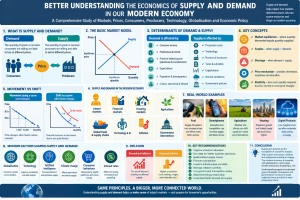
8.2 Supply and Demand Dynamics
- Excess supply negates equilibrium.
- Market correction negates the excess.
- New equilibrium emerges.
8.3 Business Strategy
- Companies negate outdated strategies.
- Competitors negate their innovations.
- Market evolves through cyclical negation.
9. Case Studies
9.1 Technology Sector
- Mainframes → PCs → Cloud → Edge computing → AI agents
- Each stage negates the previous but builds on its infrastructure.
9.2 Retail and E‑Commerce
- Physical stores → Online stores → Marketplaces → AI‑driven autonomous commerce.
9.3 Transport and Logistics
- Manual routing → Digital routing → Algorithmic optimization → Autonomous logistics.
10. Negation of Negation in the Present Economic Ecosystem
10.1 AI as the New Negation
AI negates:
- Traditional labor
- Traditional decision‑making
- Traditional production cycles But AI itself will be negated by:
- Quantum‑AI hybrids
- Autonomous economic agents
- Self‑optimizing ecosystems
10.2 Sustainability Economics
- Over‑consumption → Regulation → Circular economy
- Waste → Recycling → Zero‑waste systems
- Fossil fuels → Renewables → Energy‑autonomous grids
11. Critiques and Misinterpretations
- Some argue negation of negation is too abstract.
- Others claim it oversimplifies historical complexity.
- Modern economists debate its predictive power.
12. Synthesis: Why the Concept Still Matters
Negation of negation remains relevant because:
- It explains non‑linear development.
- It captures contradiction‑driven progress.
- It models economic cycles more accurately than static theories.
13. Conclusion
The phrase “negation of negation” is not merely philosophical jargon—it is a powerful analytical tool for understanding how economies evolve. From Hegel to Marx to modern AI‑driven markets, the principle reveals that progress is cyclical, contradictory, and transformative. In today’s economic ecosystem, it provides a clear analogy for innovation, disruption, and renewal.

Be First to Comment