

Abstract
Electrolytes are electrically charged minerals dissolved in body fluids that play a fundamental role in sustaining life. They regulate hydration, nerve transmission, muscle contraction, blood pressure, acid-base balance, and cellular communication. The human body can be viewed as an advanced electrochemical system in which billions of cells continuously exchange ions through specialized membranes, channels, and transport systems. Understanding the architecture of electrolyte distribution and function is critical for medicine, physiology, sports science, nutrition, and human health.
This thesis explores the science of electrolytes, their biological architecture, physiological mechanisms, regulatory systems, clinical significance, and future research developments.
Chapter 1: Introduction to Electrolyte Science
1.1 Definition of Electrolytes
Electrolytes are minerals that dissociate into electrically charged particles (ions) when dissolved in water. These ions conduct electrical signals essential for biological functions.
Common electrolytes include:
- Sodium (Na⁺)
- Potassium (K⁺)
- Calcium (Ca²⁺)
- Magnesium (Mg²⁺)
- Chloride (Cl⁻)
- Bicarbonate (HCO₃⁻)
- Phosphate (PO₄³⁻)
These ions circulate within blood, intracellular fluid, extracellular fluid, and tissue compartments.
1.2 Historical Development
The understanding of body electrolytes evolved through discoveries in chemistry, anatomy, and physiology. During the nineteenth century, scientists recognized that electrical forces influence nerve activity and muscle function.
The integration of physiology with electrical science revealed that human survival depends upon maintaining specific ionic gradients across cellular membranes.
Chapter 2: Human Body Electrolyte Architecture
2.1 Fluid Compartments
The human body is approximately 60% water.
Body fluids exist in:
Intracellular Fluid (ICF)
Contains about two-thirds of total body water.
Rich in:
- Potassium
- Magnesium
- Phosphate
Extracellular Fluid (ECF)
Contains one-third of total body water.
Rich in:
- Sodium
- Chloride
- Bicarbonate
These compartments create electrochemical gradients essential for function.
2.2 Structural Organization
Electrolytes are distributed across:
- Blood plasma
- Interstitial fluid
- Lymphatic fluid
- Intracellular cytoplasm
- Cerebrospinal fluid
Each compartment possesses unique concentrations maintained by transport proteins and membrane pumps.
Chapter 3: Cellular Architecture of Electrolytes
3.1 The Cell Membrane
The cell membrane acts as a selective barrier controlling electrolyte movement.
Components include:
- Phospholipid bilayer
- Protein channels
- Transport proteins
- Receptors
3.2 Ion Channels
Ion channels permit controlled passage of ions.
Examples:
Sodium Channels
Generate action potentials.
Potassium Channels
Restore resting membrane potential.
Calcium Channels
Trigger muscle contraction.
Chloride Channels
Maintain electrical neutrality.
Chapter 4: Sodium – The Master Extracellular Electrolyte
4.1 Physiological Role
Sodium governs:
- Blood pressure
- Water distribution
- Nerve impulses
- Nutrient transport
4.2 Distribution
Normal plasma concentration:
135–145 mEq/L
Most sodium resides outside cells.
4.3 Regulation
Controlled by:
- Kidneys
- Aldosterone
- Antidiuretic hormone (ADH)
- Thirst mechanisms
Chapter 5: Potassium – The Intracellular Powerhouse
5.1 Structural Importance
Approximately 98% of potassium is located inside cells.
Functions include:
- Nerve transmission
- Muscle contraction
- Protein synthesis
- Cellular metabolism
5.2 Potassium Gradients
The difference between intracellular and extracellular potassium creates membrane potential.
Without this gradient:
- Heart rhythm fails
- Muscles weaken
- Nervous system collapse occurs
Chapter 6: Calcium and Biological Communication
6.1 Calcium Architecture
About 99% of calcium is found in:
- Bones
- Teeth
Remaining calcium circulates in fluids.
6.2 Functional Roles
Calcium regulates:
- Muscle contraction
- Blood clotting
- Hormone secretion
- Cell signaling
Chapter 7: Magnesium – The Silent Regulator
7.1 Distribution
Magnesium is concentrated in:
- Bones
- Cells
- Muscles
7.2 Importance
Magnesium supports:
- ATP synthesis
- DNA replication
- Protein production
- Enzyme activation
Over 300 enzymes depend on magnesium.
Chapter 8: Chloride and Electrical Neutrality
Chloride acts as the major extracellular anion.
Functions:
- Osmotic balance
- Acid-base regulation
- Digestive acid formation
It works closely with sodium.
Chapter 9: Bicarbonate Buffer System
Bicarbonate serves as the body’s primary buffer.
Equation:
CO₂ + H₂O ↔ H₂CO₃ ↔ H⁺ + HCO₃⁻
Maintains blood pH around:
7.35–7.45
Chapter 10: Electrolytes and Nerve Transmission
Neurons communicate through electrochemical impulses.
Steps:
- Resting state
- Sodium influx
- Depolarization
- Potassium efflux
- Repolarization
These events create action potentials.
Without electrolytes, nervous communication ceases.
Chapter 11: Electrolytes and Muscle Function
Muscle contraction requires:
- Sodium
- Potassium
- Calcium
- Magnesium
These ions control:
- Excitation
- Contraction
- Relaxation
This applies to skeletal, smooth, and cardiac muscles.
Chapter 12: Electrolytes and Cardiac Architecture
The heart is an electrochemical pump.
Electrolytes regulate:
- Heart rate
- Cardiac rhythm
- Contractility
Imbalances can produce:
- Arrhythmias
- Heart failure
- Sudden cardiac arrest
Chapter 13: The Sodium-Potassium Pump
Structure
Membrane protein ATPase.
Function:
3 sodium ions out
2 potassium ions in
Consumes ATP continuously.
This pump is one of the most important molecular machines in biology.
Chapter 14: Kidney Control Systems
The kidneys regulate:
- Sodium
- Potassium
- Calcium
- Magnesium
Daily filtration exceeds 150 liters of plasma-derived fluid.
Through reabsorption and secretion, electrolyte balance is maintained.
Chapter 15: Hormonal Control of Electrolytes
Major hormones:
Aldosterone
Increases sodium retention.
ADH
Controls water balance.
Parathyroid Hormone
Regulates calcium.
Calcitonin
Reduces blood calcium.
Chapter 16: Electrolytes and Hydration
Water follows electrolytes through osmosis.
Hydration depends on electrolyte concentration rather than water alone.
Optimal hydration requires balanced sodium and potassium levels.
Chapter 17: Acid-Base Homeostasis
Electrolytes maintain pH through:
- Buffer systems
- Respiratory regulation
- Renal regulation
Disruptions lead to:
- Acidosis
- Alkalosis
Chapter 18: Electrolytes and Brain Function
The brain relies on:
- Sodium gradients
- Potassium gradients
- Calcium signaling
Every thought and memory involves ionic movements across neurons.
Chapter 19: Electrolytes During Exercise
Athletes lose electrolytes through sweat.
Key losses include:
- Sodium
- Chloride
- Potassium
Replacement prevents:
- Cramping
- Fatigue
- Heat stroke
Chapter 20: Electrolyte Imbalances
Hyponatremia
Low sodium.
Symptoms:
- Headache
- Confusion
- Seizures
Hypernatremia
High sodium.
Causes severe dehydration
Chapter 21: Potassium Disorders
Hypokalemia
Low potassium.
Produces:
- Weakness
- Arrhythmias
Hyperkalemia
High potassium.
Can stop the heart.
Chapter 22: Calcium Disorders
Hypocalcemia
Results in muscle spasms.
Hypercalcemia
Produces kidney stones and neurological dysfunction.
Chapter 23: Magnesium Disorders
Deficiency causes:
- Tremors
- Muscle cramps
- Arrhythmias
Severe deficiency affects multiple organ systems.
Chapter 24: Pediatric Electrolyte Biology
Children require specialized electrolyte regulation due to:
- Growth
- Development
- High metabolic rates
Imbalances can rapidly become life-threatening.
Chapter 25: Electrolytes and Aging
Older adults experience:
- Reduced kidney efficiency
- Reduced thirst sensation
- Increased medication interactions
This increases risk of imbalance.
Chapter 26: Electrolytes and Disease
Electrolyte abnormalities occur in:
- Diabetes
- Kidney disease
- Heart disease
- Liver disease
- Endocrine disorders
Chapter 27: Laboratory Assessment
Diagnostic evaluation includes:
- Serum sodium
- Serum potassium
- Chloride
- Calcium
- Magnesium
- Blood gases
These measurements guide treatment.
Chapter 28: Electrolytes in Critical Care
Intensive care monitoring involves constant assessment of electrolyte concentrations.
Small changes can significantly affect survival outcomes.
Chapter 29: Molecular Architecture of Ion Transport
Transport mechanisms include:
- Diffusion
- Facilitated diffusion
- Active transport
- Secondary active transport
These processes sustain cellular life.
Chapter 30: Electrolytes and DNA Function
Electrolytes stabilize DNA structure.
Magnesium is particularly important for:
- Replication
- Transcription
- Repair mechanisms
Chapter 31: Electrolytes in Mitochondrial Function
Mitochondria rely on ionic gradients to generate ATP.
Cellular energy production depends ultimately on controlled ion movement.
Chapter 32: Evolution of Electrolyte Systems
Life evolved in mineral-rich aquatic environments.
Modern electrolyte systems reflect ancient evolutionary adaptations.
Chapter 33: Electrolyte Communication Networks
Electrolytes facilitate communication among:
- Cells
- Tissues
- Organs
- Entire physiological systems
They function as biological information carriers.
Chapter 34: Artificial Electrolyte Technologies
Medical technologies utilize electrolyte principles through:
- Pacemakers
- Dialysis machines
- Biosensors
- Neural interfaces
Chapter 35: Computational Modeling
Mathematical models simulate:
- Ion transport
- Cardiac rhythms
- Neuronal activity
These models aid medical research.
Chapter 36: Future Research Directions
Emerging fields include:
- Nanomedicine
- Bioelectronics
- Precision electrolyte monitoring
- AI-based physiological prediction
Chapter 37: Electrolytes and Human Survival
Electrolytes are indispensable for:
- Brain activity
- Heart function
- Cellular metabolism
- Fluid balance
Human survival depends upon continuous ionic regulation.
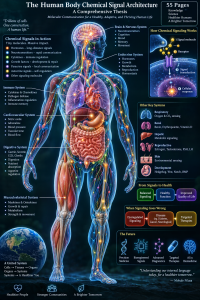
Chapter 38: Integrated Body Architecture
Electrolytes connect:
- Nervous system
- Cardiovascular system
- Muscular system
- Endocrine system
- Renal system
Forming a unified physiological network.
Chapter 39: Scientific Applications
Applications include:
- Clinical medicine
- Sports science
- Biomedical engineering
- Biotechnology
Chapter 40: Cellular Intelligence and Electrochemical Signaling
Cells utilize ionic signals to process information.
This biological communication resembles advanced computational networks.
Chapter 41: Systems Biology Perspective
Electrolytes demonstrate how microscopic processes generate macroscopic physiological outcomes.
Chapter 42: Human Health Implications
Proper electrolyte balance contributes to:
- Longevity
- Cognitive health
- Cardiovascular stability
- Physical performance
Chapter 43: Emerging Innovations
Future developments may include:
- Smart electrolyte sensors
- Implantable monitoring systems
- Digital health integration
Chapter 44: Comprehensive Summary
The architecture of electrolyte physiology encompasses molecular, cellular, organ, and system-wide interactions. Electrolytes function as the electrical currency of life, allowing communication, energy production, and homeostasis. Their precise regulation demonstrates the extraordinary complexity of human biological architecture.
Chapter 45: Conclusion
Electrolytes are among the most fundamental components of human physiology. They form a sophisticated electrochemical network linking every cell, tissue, and organ into a unified living system. Sodium, potassium, calcium, magnesium, chloride, bicarbonate, and phosphate collectively maintain electrical activity, fluid balance, metabolism, and survival. The body’s electrolyte architecture represents one of biology’s greatest engineering achievements, revealing how microscopic ions sustain the macroscopic phenomenon of human life.
References
- Guyton AC, Hall JE. Textbook of Medical Physiology.
- Barrett KE et al. Ganong’s Review of Medical Physiology.
- Lodish H et al. Molecular Cell Biology.
- Alberts B et al. Molecular Biology of the Cell.
- National Institutes of Health (NIH) Resources on Electrolytes and Hydration.
- World Health Organization (WHO) Clinical Physiology Guidelines.
- American Physiological Society Publications.
- Journal of Clinical Investigation.
- Nature Reviews Nephrology.
- Annual Review of Physiology.


Be First to Comment