
I. Introduction
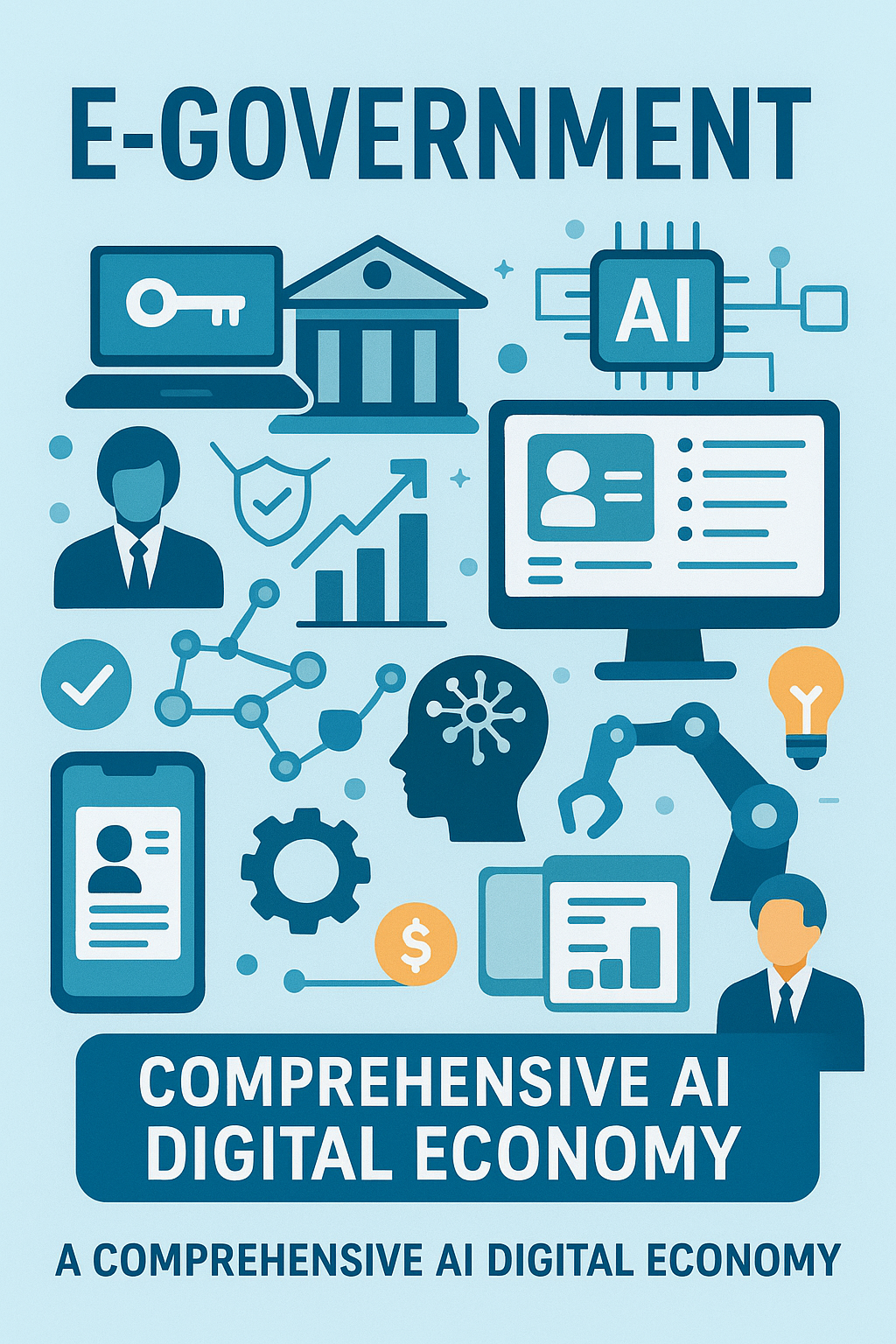
The world is in the midst of a profound digital transformation, a revolution that is reshaping how governments serve their citizens and how economies generate value. At the heart of this transformation lies the powerful convergence of e-government, artificial intelligence (AI), and the burgeoning digital economy. As nations increasingly invest in resilient digital infrastructure and cutting-edge technologies, the progress in e-government services has become a significant catalyst for economic development. The integration of AI is further accelerating this trend, unlocking new efficiencies and creating unprecedented opportunities for growth. However, this rapid technological advancement also presents significant challenges, including the risk of a widening digital divide and the potential for increased economic inequality. This article examines the progress and economic effects of this digital revolution, drawing on recent data and analysis from leading international organizations to provide a comprehensive overview of the opportunities and challenges that lie ahead.
II. E-Government Progress: A Global Transformation
The adoption and sophistication of e-government services have accelerated globally, fundamentally altering the relationship between citizens and the state. The United Nations E-Government Survey 2024 provides compelling evidence of this progress, revealing a significant upward trend in digital government development across its 193 Member States [1]. The survey’s E-Government Development Index (EGDI) shows a substantial improvement in the global average, with the proportion of the population lagging in digital government development decreasing from 45.0% in 2022 to a remarkable 22.4% in 2024. This progress is a direct result of increased investment in resilient digital infrastructure and the adoption of cutting-edge technologies.
To guide this transformation, the UN has introduced a new Digital Government Model Framework, offering a comprehensive roadmap for countries to plan, implement, and assess their digital government initiatives effectively. At the local level, the Local Online Services Index (LOSI) indicates steady progress, although it also highlights persistent disparities between national and local e-government performance, signaling a need for more focused initiatives to empower municipalities. Among the leaders in this digital race, countries like Singapore, the United States, and Denmark have emerged as top performers, demonstrating a strong commitment to digital innovation and citizen-centric services [2].
III. The Expanding Digital Economy
The rapid expansion of the digital economy is a primary driver of global economic growth. The UNCTAD Digital Economy Report 2024 highlights the staggering scale of this expansion, with business-to-business and business-to-consumer e-commerce sales reaching an estimated $27 trillion in 2022, a 60% increase since 2016 [3]. This growth is fueled by the proliferation of digital technologies and platforms. It is estimated that over two-thirds of all new value created in the next decade will be derived from digitally enabled platforms [4].
The digital economy’s contribution to national GDP is becoming increasingly significant. In many major economies, it already accounts for approximately 10% of GDP, a figure that is expected to grow as digital transformation accelerates. This growth is underpinned by the exponential increase in connected devices. The number of Internet of Things (IoT) devices is projected to surge to 39 billion by 2029, while annual smartphone shipments have surpassed 1.2 billion units. This interconnected ecosystem of devices generates vast amounts of data, which in turn fuels innovation and creates new economic opportunities.
IV. AI as a Catalyst for Economic Transformation
Artificial intelligence is acting as a powerful catalyst, accelerating the digital transformation and reshaping the global labor market. An analysis by the International Monetary Fund (IMF) reveals that almost 40% of global employment is exposed to AI, with the technology capable of both complementing and replacing human jobs [2]. In advanced economies, this exposure is even higher, at approximately 60% of jobs. The IMF projects that while half of these roles may benefit from AI integration, leading to enhanced productivity, the other half could see AI performing tasks currently done by humans, potentially leading to lower wages and reduced hiring.
This transformative potential varies across different economic landscapes. Emerging markets and low-income countries face lower immediate exposure, at 40% and 26% respectively. However, these nations often lack the infrastructure and skilled workforce to fully harness AI’s benefits, creating a risk of widening inequality between nations. To measure national readiness, the IMF developed an AI Preparedness Index, which assesses digital infrastructure, human capital, and regulatory frameworks. The index confirms that wealthier economies are generally better prepared for AI adoption, with Singapore, the United States, and Denmark leading the rankings.
Beyond the labor market, AI offers significant opportunities to improve government operations. It can enhance productivity, responsiveness, and accountability in public services. However, the IMF also warns that AI is likely to worsen overall income and wealth inequality if not managed proactively. This underscores the critical need for policies that ensure an inclusive AI transition.
V. Economic Effects and Benefits
The digitalization of government and the growth of the digital economy yield substantial economic benefits. One of the most significant is the enhancement of government efficiency and productivity. By automating routine tasks and streamlining processes, e-government systems reduce administrative burdens and allow public sector employees to focus on more complex, value-added activities. This leads to reduced operational costs and improved delivery of public services, from healthcare and education to social security and tax collection.
Investment in digital infrastructure is a powerful engine for economic growth. The development of robust broadband networks, data centers, and other digital foundations not only supports e-government initiatives but also creates a fertile ground for private sector innovation. This, in turn, fosters technological advancement and the creation of new jobs in high-growth digital sectors. Furthermore, the transparency and accountability inherent in many digital government platforms can help to reduce corruption and improve the business environment, attracting foreign investment and stimulating domestic entrepreneurship. The seamless nature of digital transactions also facilitates cross-border trade, further integrating national economies into the global marketplace.
VI. Challenges and the Digital Divide
Despite the immense potential, the transition to a fully digital economy is fraught with challenges, the most significant of which is the persistent digital divide. The World Economic Forum reports that nearly 2.7 billion people worldwide still lack access to the internet, creating a vast chasm between the digital haves and have-nots [4]. This disparity is particularly acute in developing countries, which often lack the financial resources to invest in the necessary digital infrastructure. Without reliable and affordable internet access, a significant portion of the global population is excluded from the benefits of e-government and the digital economy.
Beyond access, there is a growing skills gap. The rapid pace of technological change is disrupting labor markets, and many workers lack the digital literacy and skills required to participate in the new economy. This can lead to job displacement and exacerbate income inequality. The IMF’s analysis highlights the risk of polarization, where high-skilled workers who can leverage AI see their wages and opportunities increase, while low-skilled workers fall further behind [2].
Furthermore, the digital economy has a significant environmental footprint. The ICT sector is a major consumer of energy, accounting for an estimated 6% to 12% of global electricity use [3]. The production of digital devices is resource-intensive, and the growing problem of e-waste poses a serious environmental threat. The UNCTAD report calls for a global shift towards a circular digital economy, with a focus on sustainable production and consumption patterns [3].
VII. Conclusion: Toward an Inclusive Digital Future
The convergence of e-government, AI, and the digital economy offers a transformative path toward greater prosperity and improved public services. The progress in digital government development is undeniable, and the economic benefits are substantial. However, to realize the full potential of this digital revolution, a balanced and inclusive approach is essential. This requires a concerted effort from governments, the private sector, and civil society to bridge the digital divide, invest in human capital, and create robust regulatory frameworks for the responsible use of AI.
International cooperation and the adoption of global standards are critical to ensuring that the benefits of the digital economy are shared by all. By prioritizing investments in digital infrastructure, promoting digital literacy, and establishing social safety nets for those displaced by technological change, we can mitigate the risks of inequality and build a more equitable and sustainable digital future. The journey ahead is complex, but with a shared commitment to inclusive growth, the digital revolution can be a powerful force for good, empowering citizens and creating a more prosperous world for all.





Be First to Comment