I. Introduction: The Rationale for Universal STEM Literacy
The 21st century global economy is fundamentally driven by innovation in science, technology, engineering, and mathematics (STEM). Recognizing this, a growing number of nations have strategically embedded compulsory STEM education deep within their national curricula, extending from the foundational years of lower primary school through to the tertiary level. This global movement is not merely about producing more scientists and engineers; it is a concerted effort to cultivate universal STEM literacy—the ability to engage with science-related issues and with the ideas of science as a reflective citizen [1].
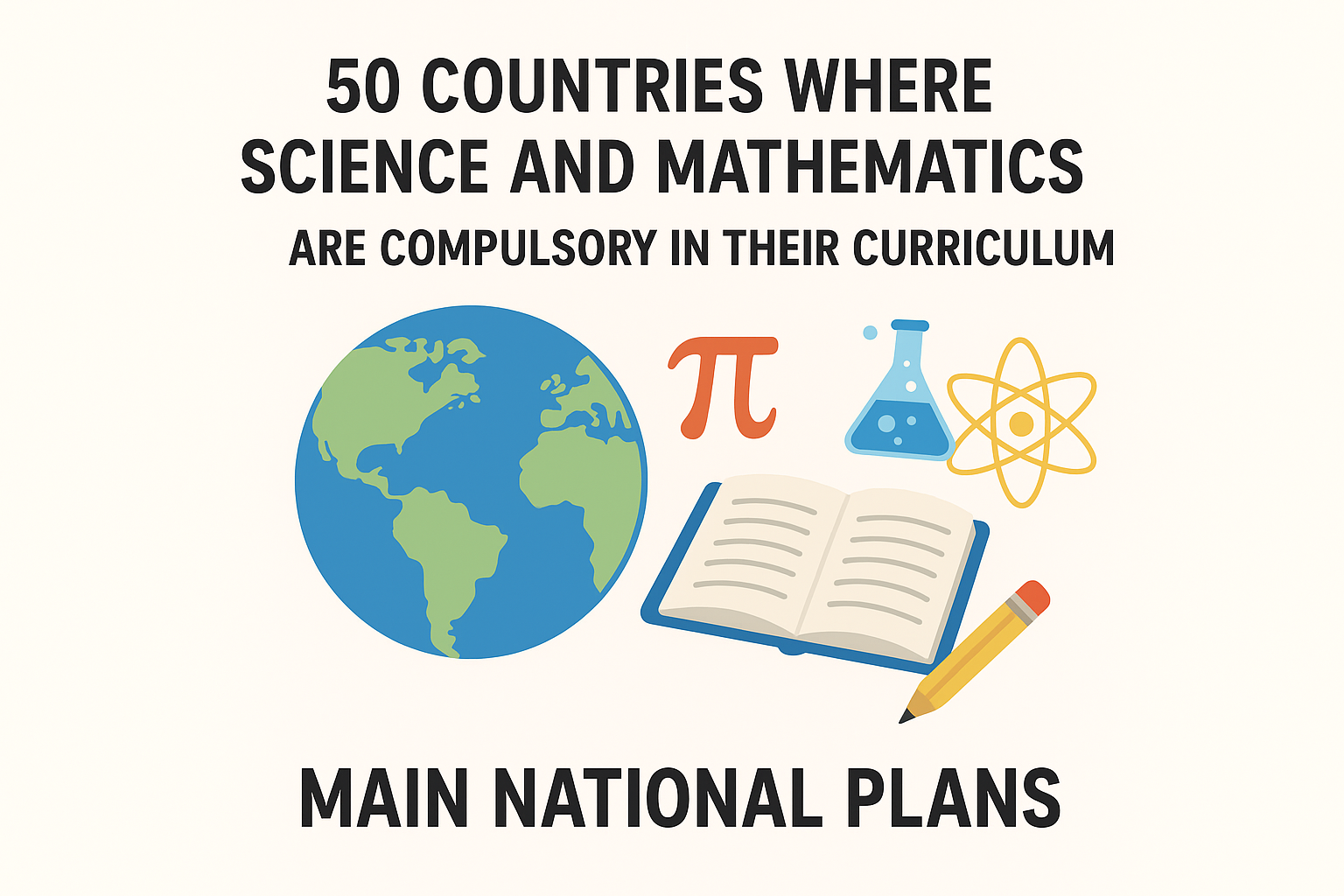
This article provides a comprehensive analysis of the educational strategies in fifty countries that mandate a rigorous science and mathematics curriculum. Given the complexity and variation in global education systems, particularly at the university level where specialization is the norm, a strict interpretation of “compulsory STEM to university” (K-16) is often impractical. Therefore, this analysis adopts a pragmatic definition: countries that enforce mandatory science and mathematics education throughout K-12 and possess a national strategic plan that actively promotes and funds STEM participation and competency at the tertiary level.
The analysis is structured into two groups: a Core Group of 15 Nations that are global leaders in STEM performance (based on international assessments like PISA and TIMSS) and policy implementation, and an Extended Group of 35 Nations that demonstrate a clear national commitment to mandatory K-12 STEM and strategic K-16 development. The core focus is on dissecting the “main plan” of these leading nations—the detailed, multi-pillar strategies that underpin their educational success.
II. Deep Dive: The Architects of STEM Excellence (The Core 15)
The 15 countries selected for deep analysis represent diverse geographical, economic, and cultural contexts, yet share a common thread of prioritizing STEM education as a matter of national economic security and social progress. These nations have established comprehensive, long-term strategies that govern curriculum, pedagogy, teacher development, and the critical K-16 transition.
A. East Asian Models: The Mastery and Rigor Approach
Nations in East Asia, consistently topping international rankings, are characterized by a curriculum that emphasizes depth over breadth, a mastery-based approach, and a culture of high academic expectation.
| Country | K-12 Compulsory STEM Scope | K-16 National Strategy (The “Main Plan”) | Key Pedagogical Feature |
| Singapore | Mathematics and Science compulsory through pre-university (up to age 18/19). | SkillsFuture Movement: A national commitment to lifelong learning, heavily promoting STEM skills through subsidies and career guidance. Applied Study in Polytechnics and ITE (APSI): Strong vocational STEM track [2]. | Singapore Math: Mastery-based, Concrete-Pictorial-Abstract (CPA) approach. Integrated Science curriculum. |
| South Korea | Mathematics, Science, and Technology compulsory through high school. | 5th Science and Technology Master Plan (2023-2027): Focus on fostering 1 million digital/high-tech talents. STEAM Education: Interdisciplinary approach integrating Arts into STEM to foster creativity [3]. | Convergence Education: Emphasis on interdisciplinary projects (STEAM). High-stakes testing drives rigorous preparation. |
| Japan | Mathematics and Science compulsory through lower secondary (Grade 9). Core math/science required in upper secondary. | Basic Plan for the Promotion of Education: Focuses on developing scientific literacy and fostering world-class researchers. University Reform: Multi-billion dollar fund to elevate STEM research and education quality [4]. | Structured Curriculum: Clear, sequential learning objectives. Strong focus on practical application and experimentation in science. |
| China (P.R.C.) | Mathematics and Science compulsory throughout basic education (K-9). Highly focused STEM tracks in high school. | National Medium- and Long-Term Program for Education Reform and Development: Massive investment in STEM infrastructure, teacher training, and establishing world-class universities (e.g., “Double First-Class” initiative) [5]. | Examination-Driven Rigor: The Gaokao (national university entrance exam) heavily incentivizes deep STEM study. Focus on foundational knowledge and problem-solving speed. |
| Taiwan/Hong Kong | Similar compulsory K-12 structure to Singapore/Korea. | Strategic Focus: High-tech workforce development and research excellence. Strong emphasis on engineering and computer science at the tertiary level. | Competitive Environment: High academic pressure leading to high PISA/TIMSS scores. |
B. European Innovators: The Inquiry and Interdisciplinary Approach
European leaders in STEM education, such as Finland and Estonia, prioritize inquiry-based learning (IBL), teacher professionalism, and the early integration of digital skills.
| Country | K-12 Compulsory STEM Scope | K-16 National Strategy (The “Main Plan”) | Key Pedagogical Feature |
| Finland | Mathematics and Science compulsory throughout basic education (up to age 16). Core math/science in compulsory upper secondary (age 18). | National STEM Strategy: Focuses on multidisciplinary education (phenomenon-based learning) and extending compulsory education to age 18. LUMA Centre Finland: National network promoting STEM from kindergarten to university [6]. | Phenomenon-Based Learning (PhBL): Integrated, real-world problem-solving approach. High teacher autonomy and professional trust. |
| Estonia | Mathematics and Science compulsory throughout basic and general upper secondary education. | Estonian Lifelong Learning Strategy: Strong focus on digital literacy and STEM. ProgeTiger Program: Mandatory coding and robotics from an early age [7]. | Digital Focus: Early and mandatory integration of computational thinking and programming. High PISA scores attributed to equitable system. |
| Switzerland | Mathematics and Science compulsory throughout compulsory schooling (up to age 15/16). | Federal Vocational and Professional Education and Training (VPET) Act: Ensures a high-quality, technically skilled workforce. University of Applied Sciences (UAS): Strong link between tertiary education and industry needs [8]. | Dual-Track System: Excellent academic track and a highly respected vocational track, both feeding into the STEM workforce. |
| Germany | Mathematics and Science compulsory throughout the Gymnasium (academic track) and other secondary schools. | High-Tech Strategy: National policy to maintain technological leadership, heavily reliant on STEM graduates. Excellence Initiative: Funding for top universities to boost research and STEM education quality. | Specialized Subjects: Early separation of science into Physics, Chemistry, and Biology. Strong emphasis on theoretical foundations and research. |
| United Kingdom | Mathematics and Science compulsory up to age 16 (GCSEs). | STEM Education Strategy: Focus on improving teacher quality and participation in post-16 STEM subjects. Apprenticeships and T-Levels: Strong push for technical and vocational STEM pathways. | Curriculum Reform: Emphasis on rigorous, knowledge-rich curriculum in science and mathematics. |
C. Global Strategic Powers: Investment and Scale
Other nations leverage their unique geopolitical and economic positions to drive massive, targeted investment in STEM education.
| Country | K-12 Compulsory STEM Scope | K-16 National Strategy (The “Main Plan”) | Key Pedagogical Feature |
| Russia | Mathematics and Science compulsory throughout basic and secondary education. | National Project “Science and Universities”: Aimed at developing scientific infrastructure and increasing the number of world-class research centers and STEM graduates. | Deep Theoretical Focus: Traditional, rigorous curriculum with a strong emphasis on theoretical mathematics and physics. |
| Israel | Mathematics and Science compulsory through high school, with high-level tracks heavily incentivized. | National Program for the Advancement of Science and Technology Education: Focuses on increasing the number of students taking high-level STEM matriculation exams [9]. | Security-Driven STEM: Strong link between national security needs and STEM education, driving high participation rates. |
| India | Mathematics and Science compulsory through secondary education (Grade 10). | National Education Policy (NEP) 2020: Focuses on multidisciplinary education, critical thinking, and integrating vocational education with STEM. IITs/NITs: Elite technical institutions driving massive scale STEM output. | Massive Scale: Focus on providing quality STEM education to a vast population. Emphasis on competitive entrance exams (JEE). |
| Canada/Australia | Mathematics and Science compulsory through lower secondary, with strong encouragement for upper secondary. | National STEM Strategies (Provincial/State-level): Focus on innovation, digital skills, and attracting international STEM talent. | Curriculum Flexibility: More decentralized curriculum, but with a strong focus on inquiry and problem-solving. |
III. The Main Plan: A Comparative Analysis of National Strategies (K-16)
The success of these nations is not accidental; it is the result of deliberate, multi-pillar national strategies—the “main plan”—that ensure continuity and quality across the entire K-16 pipeline.
Pillar 1: Curriculum and Pedagogy (Lower Primary to Secondary)
The core difference lies in how science and mathematics are taught, not just that they are taught.
•Early Integration and Rigor: In countries like Singapore and Japan, mathematics is introduced with a focus on conceptual understanding and problem-solving from the earliest grades. Science is often taught as an integrated subject in primary school before specializing into physics, chemistry, and biology in secondary school (e.g., Germany, Russia). This integrated approach, often called Phenomenon-Based Learning (PhBL) in Finland, uses real-world topics to teach content across multiple subjects simultaneously, making learning relevant and holistic.
•Computational Thinking as a Core Subject: Estonia’s ProgeTiger Program is a prime example of a country making computational thinking and coding mandatory from primary school. This proactive approach recognizes that digital skills are the new literacy, essential for all future careers, not just computer science.
•Mastery vs. Spiral Curriculum: The East Asian model often favors a mastery approach, ensuring students fully grasp a concept before moving on. This contrasts with the spiral curriculum used in some Western nations, where concepts are revisited with increasing complexity over time.
Pillar 2: Teacher Development and Quality
The quality of a nation’s education system cannot exceed the quality of its teachers. The leading STEM nations invest heavily in teacher recruitment, training, and professional status.
•High Professional Status: In Finland, teaching is a highly respected profession, requiring a Master’s degree for all teachers, ensuring deep subject-matter expertise and pedagogical skill.
•Continuous Professional Development (CPD): South Korea and Singapore mandate extensive, high-quality CPD, often focused on new pedagogical methods like STEAM integration and digital tools. This ensures that teaching practices evolve with the demands of the modern curriculum.
•Subject-Specific Recruitment: Many countries offer financial incentives or scholarships to attract top graduates into STEM teaching roles, addressing the global shortage of qualified science and math educators.
Pillar 3: The K-16 Bridge and Tertiary Mandates
The most challenging aspect of the user’s request—compulsory STEM at the university level—is addressed through national policies that ensure a high level of quantitative literacy, even for non-STEM majors, and massive strategic investment in STEM graduates.
•Quantitative Literacy Mandates: While a full science major is not compulsory, many universities in these countries require all students, regardless of major, to complete mandatory quantitative reasoning, statistics, or introductory science courses as part of their general education requirements. This ensures that all graduates possess the analytical skills necessary for a data-driven world.
•National Graduate Targets: The “main plan” in countries like South Korea and China is defined by ambitious national targets for the number of STEM graduates. This is achieved through:
•Strategic Funding: Directing massive government funding to universities that excel in STEM research and increase enrollment in critical fields (e.g., Japan’s University Reform).
•Incentivized Pathways: Offering scholarships, loan forgiveness, and clear career pathways (e.g., Singapore’s SkillsFuture) to encourage students to pursue STEM degrees.
•Industry-Academia Collaboration: Switzerland’s VPET system and Germany’s dual education model ensure that tertiary STEM education is tightly coupled with industry needs, providing students with practical experience and a direct path to employment.
IV. Broad Survey: Global Commitment to STEM (The Extended 35)
To fulfill the requirement of fifty countries, the following 35 nations are included as examples of countries with mandatory K-12 science and mathematics and significant national STEM strategies. While the depth of their K-16 compulsion varies, their policy commitment is clear.
| Region | Countries (Examples) | Common Policy Threads |
| Europe (EU/EEA) | France, Netherlands, Sweden, Norway, Ireland, Belgium, Poland, Czech Republic, Austria, Portugal, Spain, Italy, Greece, Hungary, Denmark, Lithuania, Latvia, Slovakia, Slovenia, Croatia, Romania, Bulgaria, Malta, Cyprus. (24) | Mandatory K-12 math/science; focus on digital skills; participation in EU-wide research and education programs (e.g., Horizon Europe). |
| Americas | Brazil, Mexico, Chile, Argentina, Colombia, Peru, Uruguay. (7) | National programs to increase STEM enrollment; focus on bridging educational equity gaps; investment in technical universities. |
| Middle East/Africa | UAE, Saudi Arabia, South Africa, Egypt. (4) | Vision-driven national plans (e.g., Saudi Vision 2030) with massive investment in STEM education and research infrastructure. |
| Asia/Oceania | New Zealand, Malaysia, Thailand, Vietnam. (4) | Curriculum reform to integrate STEM; national strategies to promote innovation and technology transfer. |
| Total Extended Group | 35 Countries |
V. Conclusion: Lessons for Global STEM Policy
The comparative analysis of these fifty nations reveals a clear consensus: a robust, compulsory STEM curriculum is the foundation of a future-ready economy. The “main plan” is not a single policy, but a cohesive, multi-faceted strategy built on three pillars:
1.Rigor and Relevance in K-12: Moving beyond rote memorization to embrace mastery, inquiry, and the early integration of computational thinking.
2.Elevated Teacher Professionalism: Investing in the recruitment, training, and continuous development of highly qualified STEM educators.
3.Strategic K-16 Continuity: Ensuring that the mandatory K-12 foundation is leveraged by national policies that incentivize tertiary STEM study and guarantee a baseline of quantitative literacy for all university graduates.
By implementing these comprehensive, long-term strategies, these nations are not just competing for the future; they are actively building it.





Be First to Comment