
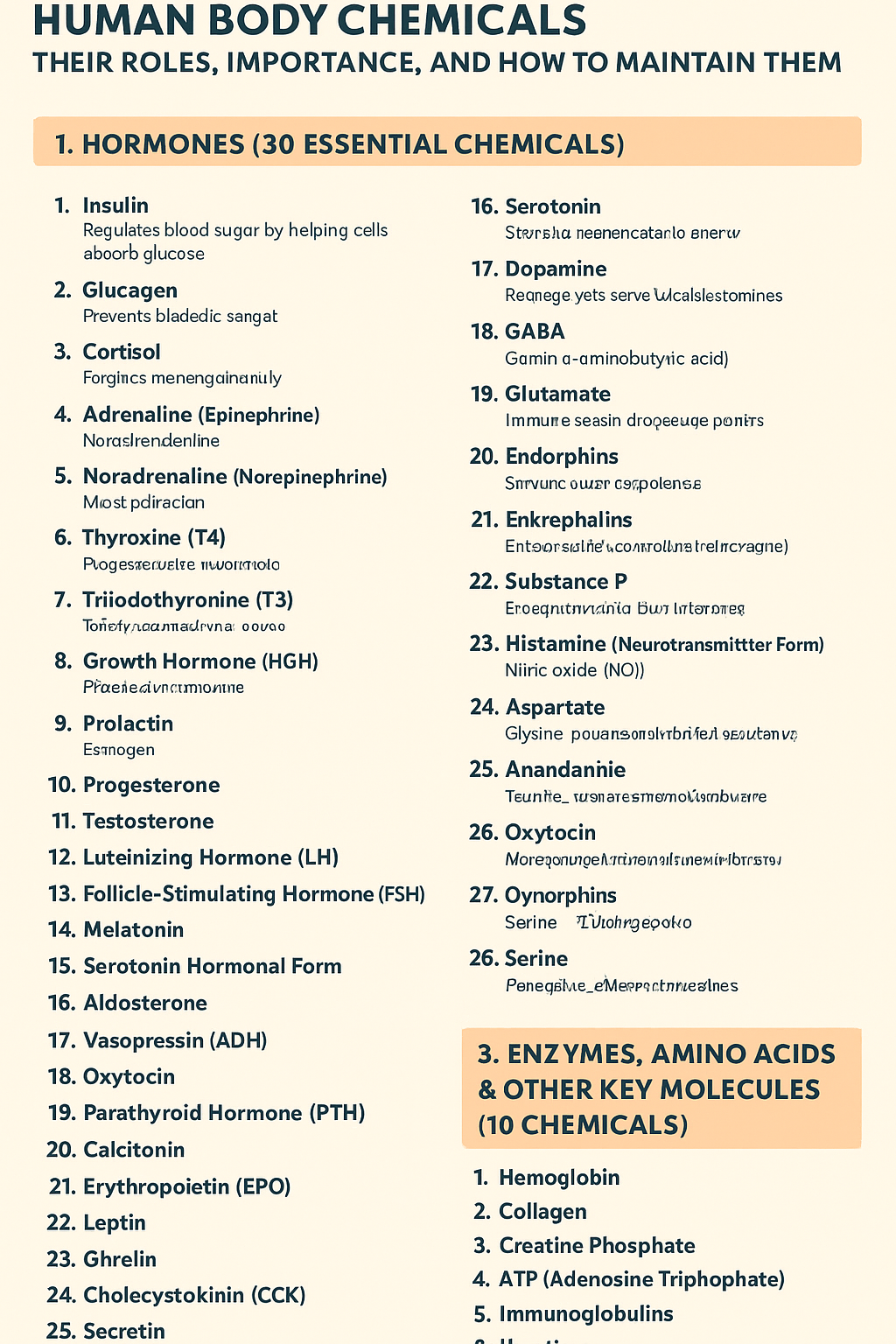
The human body is a marvel of biochemical engineering, a complex ecosystem where trillions of cells communicate and coordinate through a vast network of chemical messengers and structural molecules. To understand human health is to understand the intricate balance of these chemicals. This article provides an in-depth exploration of sixty essential chemicals—from fundamental elements and energy molecules to sophisticated hormones and neurotransmitters—detailing their general significance and, crucially, the strategies for maintaining them at their optimal performance levels.
Part I: Foundational Molecules and Elements (The Building Blocks)
These chemicals form the basic structure of the body, drive cellular energy, and maintain the fundamental conditions necessary for life.
| No. | Chemical Name | General Significance | Optimal Maintenance Strategies |
| 1 | Oxygen | Essential for cellular respiration, the process that generates ATP (energy). The final electron acceptor in the electron transport chain. | Respiratory Health: Regular aerobic exercise (improves lung capacity and efficiency), practicing deep-breathing exercises, and avoiding air pollutants. |
| 2 | Carbon | The backbone of all organic molecules (carbohydrates, lipids, proteins, nucleic acids). Essential for life’s structure and function. | Balanced Diet: Consuming a varied diet ensures a steady supply of carbon-based macromolecules for repair and growth. |
| 3 | Hydrogen | A component of water and all organic molecules. Key in maintaining pH balance and energy transfer (e.g., proton gradients). | Hydration & Diet: Maintaining proper hydration (Water) and consuming a balanced diet rich in fresh foods. |
| 4 | Nitrogen | A critical component of amino acids (proteins) and nucleic acids (DNA/RNA). Essential for genetic material and enzyme function. | Protein Intake: Ensuring adequate, high-quality protein intake (lean meats, legumes, nuts) to support nitrogen balance. |
| 5 | Calcium | Essential for bone and teeth structure, muscle contraction, nerve signaling, and blood clotting. | Diet & Vitamin D: Consuming calcium-rich foods (dairy, leafy greens) and ensuring sufficient Vitamin D intake for absorption 1. |
| 6 | Phosphorus | A key component of ATP, DNA, RNA, and cell membranes (phospholipids). Crucial for energy storage and transfer. | Dietary Balance: Found in most protein-rich foods; maintaining a balanced diet generally ensures adequate intake. |
| 7 | Potassium | The primary intracellular cation. Critical for nerve impulse transmission, muscle contraction, and maintaining fluid balance. | Dietary Intake: Consuming potassium-rich foods (bananas, potatoes, spinach) and limiting excessive sodium intake 2. |
| 8 | Sodium | The primary extracellular cation. Essential for fluid balance, blood pressure regulation, and nerve/muscle function. | Moderation: Limiting processed foods and reducing overall salt intake to prevent hypertension and fluid imbalance 2. |
| 9 | Chlorine | Forms chloride ions (Cl-), which are vital for fluid balance, stomach acid production (HCl), and nerve function. | Salt Intake: Adequate intake is typically met through moderate consumption of table salt (NaCl). |
| 10 | Magnesium | A cofactor for over 300 enzyme systems. Involved in ATP production, muscle and nerve function, and bone health. | Dietary Intake: Consuming magnesium-rich foods (nuts, seeds, whole grains, dark chocolate) and managing stress, which can deplete levels 3. |
| 11 | Water | The solvent of life. Makes up 60% of the body, facilitating all metabolic reactions, temperature regulation, and nutrient transport. | Hydration: Consuming sufficient fluids throughout the day, adjusting intake based on activity level and climate. |
| 12 | ATP (Adenosine Triphosphate) | The universal energy currency of the cell. Powers almost all cellular activities. | Mitochondrial Health: Regular exercise, a nutrient-dense diet (especially B vitamins and CoQ10), and sufficient sleep to support mitochondrial function. |
| 13 | DNA (Deoxyribonucleic Acid) | Contains the genetic instructions for the development, functioning, growth, and reproduction of all known organisms. | Antioxidants & Repair: Consuming antioxidant-rich foods (fruits, vegetables) and ensuring adequate intake of B vitamins (especially B12 and Folate) for DNA repair and synthesis 4. |
| 14 | Hemoglobin | The protein in red blood cells that transports oxygen from the lungs to the rest of the body. | Iron & B Vitamins: Ensuring adequate intake of Iron, Vitamin B12, and Folate, which are essential for red blood cell production and hemoglobin synthesis 5. |
| 15 | Glucose | The body’s primary source of energy, especially for the brain. Its levels are tightly regulated by insulin and glucagon. | Stable Blood Sugar: Consuming complex carbohydrates, pairing carbs with protein and fiber, and engaging in regular physical activity to improve insulin sensitivity. |
| 16 | Cholesterol | A structural component of cell membranes and a precursor for steroid hormones (like Estrogen and Testosterone) and Vitamin D. | Dietary Fats: Limiting saturated and trans fats, increasing monounsaturated and polyunsaturated fats (avocados, nuts, olive oil), and regular exercise 6. |
| 17 | Collagen | The most abundant protein in the body, providing structural support to connective tissues, skin, bones, and tendons. | Nutrient Support: Consuming protein-rich foods and ensuring adequate Vitamin C intake, which is essential for collagen synthesis 7. |
| 18 | Keratin | A key structural protein that makes up hair, nails, and the outer layer of the skin (epidermis). | Protein & Biotin: Adequate protein intake and sufficient Biotin (Vitamin B7) to support keratin structure and production. |
| 19 | Myoglobin | An iron- and oxygen-binding protein found in muscle tissue, providing an oxygen reserve for high-demand activity. | Exercise & Iron: Regular muscle-building exercise and ensuring adequate Iron intake to support myoglobin synthesis. |
| 20 | Urea | The main nitrogenous waste product, formed in the liver from the breakdown of amino acids, and excreted by the kidneys. | Hydration & Kidney Health: Maintaining proper hydration to facilitate kidney function and avoiding excessive, sudden increases in protein intake. |
Part II: Hormones (The Messengers)
Hormones are chemical messengers that travel through the bloodstream to coordinate complex functions like metabolism, growth, mood, and reproduction.
| No. | Chemical Name | General Significance | Optimal Maintenance Strategies |
| 21 | Insulin | Produced by the pancreas, it lowers blood glucose by promoting its uptake into cells for energy or storage. | Lifestyle: Maintaining a healthy weight, regular exercise, and a diet low in refined sugars and high in fiber 8. |
| 22 | Glucagon | Produced by the pancreas, it raises blood glucose by signaling the liver to release stored glucose (glycogenolysis). | Stable Meals: Eating regular, balanced meals to prevent blood sugar from dropping too low, which triggers excessive glucagon release. |
| 23 | Adrenaline (Epinephrine) | The “fight-or-flight” hormone. Increases heart rate, blood pressure, and energy supply in response to stress. | Stress Management: Practicing relaxation techniques (meditation, deep breathing) and ensuring adequate sleep to reduce chronic stress-induced spikes. |
| 24 | Cortisol | The primary stress hormone. Regulates metabolism, immune response, and helps the body respond to stress. | Sleep & Stress: Prioritizing 7-9 hours of quality sleep and implementing effective stress-reduction strategies 9. |
| 25 | Thyroxine (T4) | The main hormone produced by the thyroid gland. Regulates the body’s overall metabolic rate, growth, and development. | Iodine & Selenium: Ensuring adequate dietary intake of Iodine (for T4 synthesis) and Selenium (for T4 to T3 conversion) 10. |
| 26 | Triiodothyronine (T3) | The active form of thyroid hormone, converted from T4. It has a greater impact on metabolism than T4. | Nutrient Support: As with T4, ensuring sufficient Iodine, Selenium, and Zinc intake. |
| 27 | Estrogen | Primary female sex hormone. Regulates the menstrual cycle, supports reproductive tissues, and is crucial for bone health. | Healthy Fats & Exercise: Maintaining a healthy body weight (neither too low nor too high) and consuming healthy fats (e.g., Omega-3s) 11. |
| 28 | Progesterone | Prepares the uterus for pregnancy and helps regulate the menstrual cycle. Also has calming, neuroprotective effects. | Stress Reduction: Managing stress, as the precursor to Progesterone (pregnenolone) is also used to make Cortisol (the “pregnenolone steal”). |
| 29 | Testosterone | Primary male sex hormone (also present in females). Essential for muscle mass, bone density, libido, and mood. | Resistance Training & Sleep: Engaging in regular resistance exercise, maintaining a healthy weight, and ensuring high-quality sleep 12. |
| 30 | Growth Hormone (GH) | Stimulates growth, cell reproduction, and regeneration. Crucial for muscle and bone maintenance throughout life. | Sleep & Exercise: High-intensity exercise and deep, restorative sleep (GH is primarily released during deep sleep) 13. |
| 31 | Prolactin | Primarily associated with milk production (lactation) after childbirth. Also plays a role in immune function and mood. | Stress Management: Chronic stress can elevate Prolactin; stress reduction is key for non-lactating individuals. |
| 32 | Oxytocin | The “love hormone.” Involved in social bonding, trust, sexual reproduction, and childbirth. | Social Connection: Engaging in positive social interactions, physical touch, and altruistic behavior 14. |
| 33 | Vasopressin (ADH) | Antidiuretic Hormone. Regulates water reabsorption in the kidneys, controlling fluid balance and blood pressure. | Hydration: Maintaining consistent, adequate water intake. |
| 34 | Aldosterone | A mineralocorticoid that regulates sodium and potassium balance, thereby controlling blood volume and blood pressure. | Sodium/Potassium Balance: Moderating sodium intake and ensuring sufficient potassium intake. |
| 35 | Parathyroid Hormone (PTH) | Regulates calcium levels in the blood by stimulating its release from bone and increasing absorption in the gut. | Calcium & Vitamin D: Ensuring adequate intake of both Calcium and Vitamin D. |
| 36 | Calcitonin | Produced by the thyroid, it opposes PTH by lowering blood calcium levels, primarily by inhibiting bone breakdown. | Bone Health: Weight-bearing exercise and a diet rich in Calcium and Vitamin D. |
| 37 | Melatonin | The “sleep hormone.” Regulates the circadian rhythm (sleep-wake cycle). | Light Exposure: Limiting blue light exposure before bed and ensuring exposure to bright light during the day 15. |
| 38 | Leptin | The “satiety hormone.” Produced by fat cells, it signals the brain to reduce appetite and increase energy expenditure. | Sleep & Diet: Prioritizing sleep and consuming a diet rich in fiber and protein to improve leptin sensitivity 16. |
| 39 | Ghrelin | The “hunger hormone.” Produced in the stomach, it stimulates appetite. | Meal Timing: Eating regular meals and avoiding extreme calorie restriction, which can cause ghrelin levels to spike 16. |
| 40 | Serotonin | A neurotransmitter (often classified as a hormone in the gut) that regulates mood, appetite, sleep, and digestion. | Diet & Sunlight: Consuming tryptophan-rich foods (precursor), getting regular sunlight exposure, and engaging in exercise 17. |
Part III: Neurotransmitters, Vitamins, and Trace Minerals (The Regulators)
This group includes the chemical messengers of the nervous system, essential micronutrients, and key metabolic regulators.
| No. | Chemical Name | General Significance | Optimal Maintenance Strategies |
| 41 | Dopamine | Associated with the brain’s reward and pleasure centers, motivation, and motor control. | Goal Setting & Exercise: Achieving small goals, regular physical activity, and consuming tyrosine-rich foods (protein precursor) 18. |
| 42 | Norepinephrine | A stress hormone and neurotransmitter. Increases alertness, arousal, and attention. | Sleep & Stress: Adequate sleep and managing stress, as chronic stress can deplete norepinephrine stores. |
| 43 | GABA (Gamma-Aminobutyric Acid) | The primary inhibitory neurotransmitter. Reduces neuronal excitability, promoting calmness and relaxation. | Relaxation & Diet: Practicing mindfulness, meditation, and consuming fermented foods (may support gut-brain axis) 19. |
| 44 | Acetylcholine | The primary neurotransmitter of the parasympathetic nervous system. Involved in muscle contraction, learning, and memory. | Diet & Cognitive Activity: Consuming choline-rich foods (eggs, liver) and engaging in mentally stimulating activities. |
| 45 | Histamine | A compound involved in local immune responses, regulating physiological function in the gut, and acting as a neurotransmitter. | Gut Health: Managing gut inflammation and identifying potential food sensitivities. |
| 46 | Vitamin A (Retinol) | Essential for vision, immune function, cell growth, and differentiation. | Dietary Intake: Consuming foods rich in beta-carotene (carrots, sweet potatoes) and preformed Vitamin A (liver, dairy). |
| 47 | Vitamin C (Ascorbic Acid) | A powerful antioxidant. Essential for collagen synthesis, immune function, and iron absorption. | Dietary Intake: Consuming fresh fruits and vegetables (citrus, berries, peppers) daily, as the body cannot store it 7. |
| 48 | Vitamin D (Calciferol) | Functions as a hormone. Crucial for calcium absorption, bone health, and immune system regulation. | Sunlight & Supplementation: Safe sun exposure and, often, supplementation, especially in winter months or for those with limited sun exposure 1. |
| 49 | Vitamin E (Tocopherols) | A fat-soluble antioxidant that protects cell membranes from oxidative damage. | Dietary Intake: Consuming nuts, seeds, and vegetable oils. |
| 50 | Vitamin K | Essential for blood clotting (coagulation) and bone metabolism. | Dietary Intake: Consuming leafy green vegetables (K1) and supporting gut health (K2 is produced by gut bacteria). |
| 51 | Vitamin B1 (Thiamine) | Essential for glucose metabolism and nerve function. | Dietary Intake: Consuming whole grains, pork, and legumes. Avoiding excessive alcohol, which impairs absorption. |
| 52 | Vitamin B12 (Cobalamin) | Essential for nerve function, DNA synthesis, and red blood cell formation. | Dietary Intake: Found primarily in animal products; supplementation is often necessary for vegans and older adults 4. |
| 53 | Iron | Essential component of Hemoglobin and Myoglobin. Crucial for oxygen transport and storage. | Diet & Absorption: Consuming iron-rich foods (red meat, lentils) and pairing them with Vitamin C to enhance absorption 5. |
| 54 | Zinc | A cofactor for over 300 enzymes. Essential for immune function, wound healing, and DNA synthesis. | Dietary Intake: Consuming red meat, poultry, beans, and nuts. |
| 55 | Copper | Essential for iron metabolism, energy production, and the function of various enzymes. | Dietary Balance: Consuming nuts, seeds, and whole grains. Maintaining a balance with Zinc, as high intake of one can affect the other. |
| 56 | Selenium | A component of antioxidant enzymes (selenoproteins). Important for thyroid function and immune health. | Dietary Intake: Consuming Brazil nuts, seafood, and organ meats. |
| 57 | Coenzyme A (CoA) | A crucial coenzyme in cellular metabolism, particularly in the oxidation of fatty acids and the Krebs cycle. | B Vitamin Intake: Ensuring adequate intake of Pantothenic Acid (Vitamin B5), which is a precursor to CoA. |
| 58 | Folic Acid (Vitamin B9) | Essential for DNA synthesis, cell division, and red blood cell formation. Crucial during periods of rapid growth (e.g., pregnancy). | Dietary Intake: Consuming leafy green vegetables, legumes, and fortified grains 4. |
| 59 | Creatine | A nitrogenous organic acid that helps supply energy to cells, primarily muscle cells, by increasing ATP availability. | Diet & Supplementation: Found in meat and fish; supplementation is common for athletes to enhance muscle performance and recovery. |
| 60 | Nitric Oxide (NO) | A potent vasodilator (relaxes blood vessels), regulating blood flow and blood pressure. Also acts as a neurotransmitter. | Exercise & Diet: Engaging in regular cardiovascular exercise and consuming nitrate-rich vegetables (beets, leafy greens) 20. |
Conclusion: The Symphony of Biochemistry
The sixty chemicals detailed above represent a fraction of the thousands of molecules that orchestrate the human body’s functions. From the simple elegance of Water and the foundational power of ATP to the complex signaling of Dopamine and Insulin, each chemical plays a non-negotiable role in maintaining homeostasis.
The key takeaway for optimal performance is not to focus on one chemical in isolation, but to embrace a holistic lifestyle that supports the entire biochemical symphony. This includes:
1.Nutrient Density: A diet rich in whole foods, ensuring a steady supply of essential vitamins (like Vitamin C and B12) and minerals (Calcium, Magnesium, Iron).
2.Physical Activity: Regular exercise, encompassing both aerobic and resistance training, which enhances oxygen utilization, improves insulin sensitivity, and boosts hormones like Growth Hormone and Testosterone.
3.Rest and Recovery: Prioritizing high-quality sleep to regulate circadian hormones like Melatonin and manage stress hormones like Cortisol.
4.Stress Management: Actively mitigating chronic stress to prevent the depletion of key neurotransmitters and the dysregulation of the HPA axis.
By understanding the significance of these sixty chemical pillars and adopting the recommended maintenance strategies, individuals can actively participate in optimizing their health and unlocking their body’s full potential.





Be First to Comment