

WHAT ARTIFICIAL INTELLIGENCE CAN DO IN OUR MODERN WORLD
Artificial Intelligence (AI) has emerged as the most transformative technological force of the 21st century, reshaping the foundations of global civilization, economic systems, scientific discovery, and human interaction. In the modern world, AI is no longer a futuristic concept confined to research laboratories; it is a pervasive, dynamic, and rapidly evolving ecosystem that influences nearly every sector of society. Its capabilities extend from automating routine tasks to solving complex scientific problems, from enhancing human creativity to redefining national competitiveness. Understanding what AI can do in our modern world requires a deep exploration of its origins, its technological architecture, its diverse applications, and the profound implications it carries for humanity’s future.
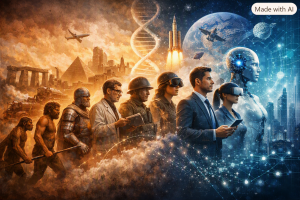
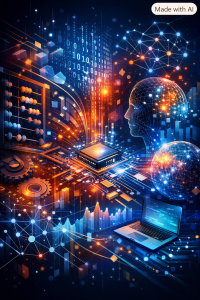
The rise of AI is rooted in decades of computational theory, mathematical modeling, and engineering innovation. Early AI systems were limited to symbolic reasoning and rule‑based logic, but the explosion of data, improvements in computational power, and breakthroughs in machine learning have propelled AI into a new era of capability. Today’s AI systems can learn from vast datasets, recognize patterns, generate human‑like language, interpret images, make predictions, and even autonomously perform tasks that previously required human intelligence. This evolution has created a technological landscape where AI is not merely a tool but a foundational infrastructure of modern civilization.
AI’s capabilities in the modern world can be categorized into several major domains: automation and productivity enhancement, scientific and medical advancement, economic transformation, creative augmentation, communication and language processing, security and defense, transportation and mobility, environmental sustainability, and societal governance. Each domain reflects a unique dimension of AI’s impact, demonstrating how deeply integrated the technology has become in everyday life and global systems.
One of the most significant contributions of AI is its ability to automate tasks across industries. Automation powered by AI has revolutionized manufacturing, logistics, finance, retail, and administrative operations. Intelligent systems can analyze data, optimize workflows, detect anomalies, and make decisions with speed and accuracy far beyond human capability. This has led to increased productivity, reduced operational costs, and improved efficiency across global markets. In manufacturing, AI‑driven robotics perform precision tasks, monitor equipment health, and streamline supply chains. In finance, AI algorithms detect fraud, assess credit risk, and execute high‑frequency trades. In retail, AI systems manage inventory, personalize customer experiences, and forecast demand. These capabilities illustrate how AI has become a central driver of economic competitiveness and industrial modernization.
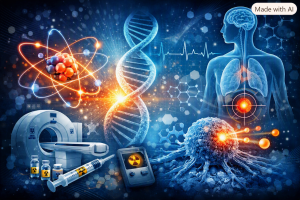
AI’s role in scientific and medical advancement is equally transformative. Modern healthcare systems increasingly rely on AI to diagnose diseases, analyze medical images, predict patient outcomes, and assist in drug discovery. AI‑enabled medical devices approved by regulatory bodies demonstrate the growing trust in AI’s ability to enhance clinical decision‑making. Machine learning models can detect early signs of cancer, identify genetic disorders, and recommend personalized treatment plans. In biomedical research, AI accelerates the discovery of new molecules, simulates biological processes, and supports the development of vaccines and therapeutics. These capabilities have the potential to extend human lifespan, improve quality of life, and revolutionize global healthcare delivery.
In the realm of scientific discovery, AI has become an indispensable tool for analyzing complex datasets, modeling physical systems, and generating hypotheses. Researchers use AI to explore astronomical data, simulate climate patterns, analyze genomic sequences, and design advanced materials. AI systems can process information at scales impossible for human researchers, enabling breakthroughs in physics, chemistry, biology, and environmental science. The integration of AI into scientific research marks a new era where human curiosity is amplified by computational intelligence.
Economically, AI has reshaped global markets, investment patterns, and labor dynamics. Nations that lead in AI development gain strategic advantages in innovation, productivity, and geopolitical influence. Private investment in AI has surged, with billions of dollars flowing into startups, research institutions, and corporate AI initiatives. Businesses increasingly adopt AI to streamline operations, enhance decision‑making, and create new products and services. This economic transformation has led to the emergence of new industries, job categories, and entrepreneurial opportunities. At the same time, it has raised concerns about job displacement, inequality, and the need for workforce reskilling. The modern economy is becoming an AI‑driven ecosystem where digital intelligence is a core asset.
AI’s influence extends into the creative domain, where it enhances human imagination and artistic expression. Generative AI models can produce realistic images, compose music, write literature, design products, and create immersive virtual environments. These systems do not replace human creativity but augment it, offering new tools for artists, designers, filmmakers, and writers. AI‑generated content has become a mainstream component of entertainment, advertising, and digital media. The ability of AI to understand and generate human‑like language has also transformed communication, enabling real‑time translation, conversational agents, and personalized digital assistants.
Language processing is one of AI’s most advanced capabilities. Modern AI models can understand context, generate coherent text, summarize information, answer questions, and engage in meaningful dialogue. These systems support education, business communication, customer service, and global collaboration. AI‑powered translation tools break down language barriers, enabling seamless interaction across cultures. The rise of conversational AI has created new possibilities for human‑machine interaction, making digital systems more intuitive, accessible, and responsive.
Security and defense systems increasingly rely on AI to detect threats, analyze intelligence, and support strategic decision‑making. AI enhances cybersecurity by identifying anomalies, predicting attacks, and protecting digital infrastructure. In national defense, AI supports surveillance, autonomous systems, and battlefield analytics. These capabilities raise ethical questions about autonomy, accountability, and the potential misuse of AI in warfare. Nonetheless, AI has become a critical component of modern security frameworks.
Transportation and mobility have been revolutionized by AI‑powered autonomous systems. Self‑driving vehicles, intelligent traffic management systems, and automated logistics networks demonstrate AI’s ability to navigate complex environments. Autonomous cars, trucks, drones, and robotaxis are becoming increasingly common in urban areas. AI optimizes routes, reduces accidents, and improves transportation efficiency. These advancements signal a future where mobility is safer, faster, and more sustainable.
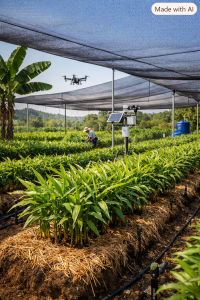
Environmental sustainability is another domain where AI plays a vital role. AI models analyze climate data, predict natural disasters, optimize energy consumption, and support conservation efforts. Smart grids use AI to balance energy supply and demand, integrate renewable sources, and reduce carbon emissions. AI assists in monitoring biodiversity, managing water resources, and designing sustainable agricultural systems. These capabilities contribute to global efforts to combat climate change and protect natural ecosystems.
AI also influences societal governance, public policy, and global development. Governments use AI to improve public services, enhance administrative efficiency, and support decision‑making. AI systems analyze economic trends, monitor public health, and manage infrastructure. In education, AI personalizes learning, supports teachers, and expands access to knowledge. In urban planning, AI helps design smart cities, optimize resource allocation, and improve quality of life. These applications demonstrate how AI can strengthen governance and support sustainable development.
The modern world is characterized by rapid technological change, and AI stands at the center of this transformation. Its capabilities continue to expand, driven by advances in machine learning, neural networks, robotics, and computational infrastructure. The global AI ecosystem is shaped by competition among nations, collaboration among researchers, and innovation across industries. As AI becomes more powerful, society must address ethical, legal, and social challenges to ensure that its benefits are distributed equitably and responsibly.
AI’s potential is vast, but its impact depends on how humanity chooses to develop, regulate, and integrate it. The modern world faces critical questions about privacy, fairness, transparency, and accountability. Ensuring that AI aligns with human values requires thoughtful governance, interdisciplinary collaboration, and continuous oversight. The future of AI is not predetermined; it is shaped by collective choices, technological innovation, and societal priorities.
The capabilities of AI in our modern world reflect a profound shift in the relationship between humans and machines. AI is not merely a technological tool but a transformative force that redefines what is possible. Its influence spans industries, disciplines, and cultures, creating new opportunities and challenges. Understanding what AI can do is essential for navigating the complexities of the modern world and preparing for the future of human civilization.


Be First to Comment