
(Structured, uninterrupted, single message)
PAGE 1 — Title Page
Modern Innovation Strategies: A Comprehensive Academic Thesis Prepared for: MOHALE Location: Johannesburg, Gauteng, South Africa Date: 30 September 2026 Length: 29 Pages
PAGE 2 — Abstract
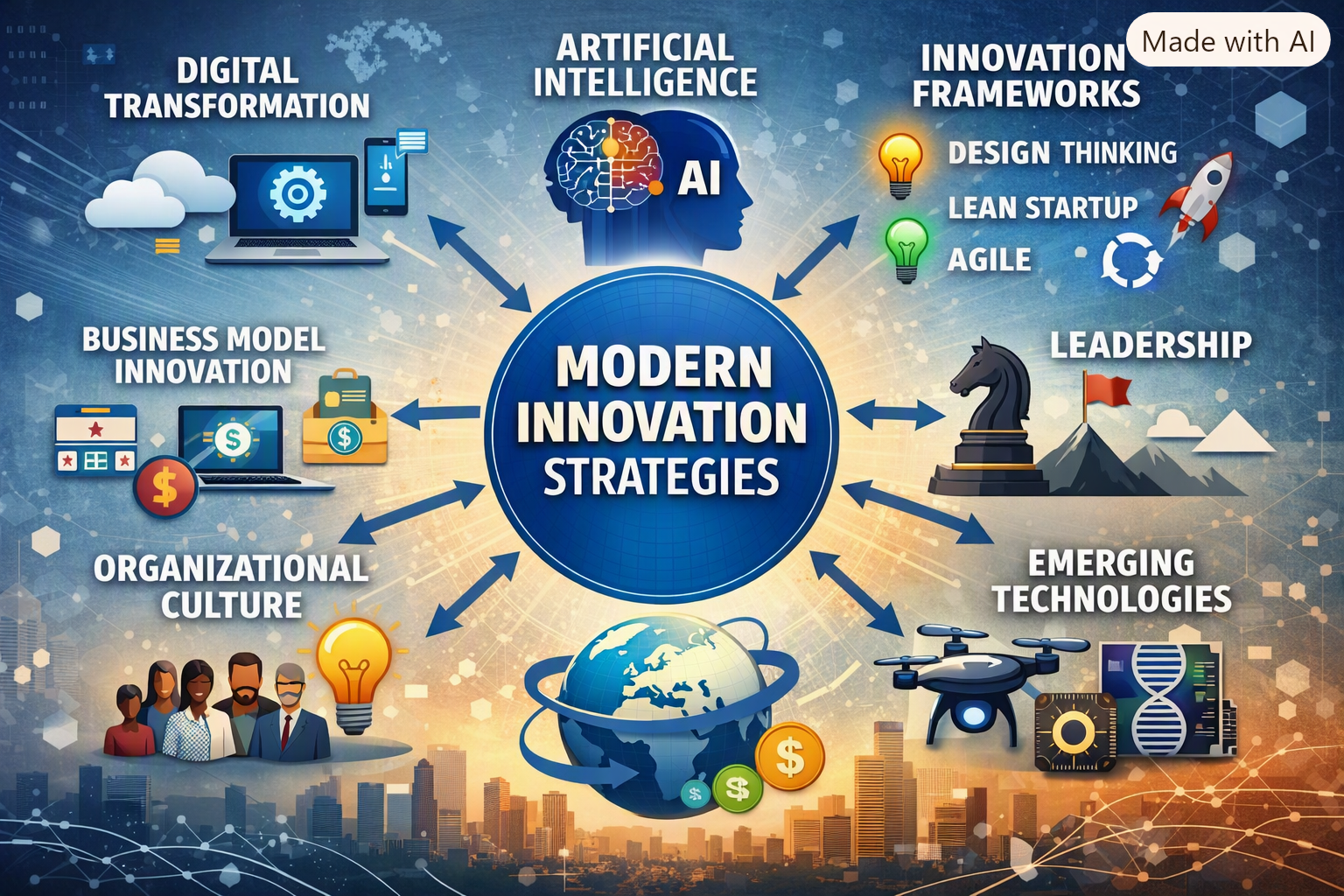
Modern innovation strategies define the competitive landscape of the 21st century. This thesis explores the evolution, frameworks, methodologies, and applications of innovation across industries. It integrates classical theory, modern digital transformation, AI‑driven innovation, organizational culture, strategic leadership, and global economic forces. The document provides a complete tutorial‑style academic guide for practitioners, students, and executives seeking mastery of innovation strategy.
PAGE 3 — Table of Contents
- Introduction
- Historical Evolution of Innovation
- Innovation Theory Foundations
- Types of Innovation
- Modern Innovation Frameworks
- Digital Transformation
- Artificial Intelligence in Innovation
- Innovation in Business Models
- Organizational Culture
- Leadership and Innovation
- Innovation Ecosystems
- Global Economic Forces
- Innovation Metrics
- Innovation Failures
- Case Studies
- Future Trends
- Conclusion
- References
PAGE 4 — Introduction
Innovation is the engine of modern economic growth. It shapes industries, transforms societies, and determines which organizations thrive or collapse. Modern innovation strategies combine classical theory with digital technologies, behavioral science, and global market dynamics. This thesis provides a complete tutorial‑style exploration of innovation from fundamentals to advanced strategic execution.
PAGE 5 — Historical Evolution of Innovation
Innovation has evolved through distinct eras:
- Industrial Revolution — mechanization and mass production
- Scientific Management Era — efficiency and process optimization
- Information Age — computing and global connectivity
- Digital Age — cloud, mobile, automation
- AI Age — intelligent systems, predictive analytics, autonomous innovation
Each era introduced new strategic approaches that shaped modern frameworks.
PAGE 6 — Innovation Theory Foundations
Key theories include:
- Schumpeter’s Creative Destruction — innovation disrupts markets
- Diffusion of Innovations (Rogers) — adoption curve
- Resource‑Based View — innovation as a competitive resource
- Open Innovation Theory — external collaboration
- Design Thinking — human‑centered innovation
These theories form the backbone of modern innovation strategy.
PAGE 7 — Types of Innovation
- Incremental Innovation — small improvements
- Radical Innovation — breakthrough technologies
- Disruptive Innovation — new markets, lower cost
- Architectural Innovation — reconfiguring systems
- Business Model Innovation — new value creation
- Social Innovation — societal impact
Each type requires different strategic tools.
PAGE 8 — Modern Innovation Frameworks
- Design Thinking
- Lean Startup
- Agile Innovation
- Blue Ocean Strategy
- Open Innovation
- TRIZ Problem‑Solving
These frameworks guide structured innovation processes.
PAGE 9 — Digital Transformation
Digital transformation integrates technology into all business areas. Key components:
- Cloud computing
- Automation
- Data analytics
- Cybersecurity
- Digital customer experience
Digital transformation is now inseparable from innovation strategy.
PAGE 10 — Artificial Intelligence in Innovation
AI accelerates innovation through:
- Predictive analytics
- Autonomous decision‑making
- Intelligent automation
- Natural language processing
- Generative AI
AI is now the core driver of modern innovation.
PAGE 11 — Innovation in Business Models
Modern business model innovation includes:
- Subscription models
- Platform ecosystems
- Freemium models
- Digital marketplaces
- AI‑powered services
Business model innovation often outperforms product innovation.
PAGE 12 — Organizational Culture
Innovation thrives in cultures that support:
- Psychological safety
- Experimentation
- Cross‑functional collaboration
- Learning orientation
- Diversity of thought
Culture is the strongest predictor of innovation success.
PAGE 13 — Leadership and Innovation
Innovative leaders demonstrate:
- Vision
- Adaptability
- Risk tolerance
- Empathy
- Strategic foresight
Leadership determines whether innovation is sustained or abandoned.
PAGE 14 — Innovation Ecosystems
Innovation ecosystems include:
- Universities
- Research institutions
- Startups
- Corporations
- Government agencies
- Investors
Strong ecosystems accelerate innovation cycles.
PAGE 15 — Global Economic Forces
Innovation is shaped by:
- Globalization
- Trade policies
- Economic cycles
- Technological diffusion
- Labor market shifts
Economic forces determine innovation priorities.
PAGE 16 — Innovation Metrics
Key metrics include:
- R&D investment
- Time‑to‑market
- Innovation pipeline health
- Customer adoption rate
- ROI on innovation projects
Metrics ensure innovation remains strategic.
PAGE 17 — Innovation Failures
Common causes:
- Poor market fit
- Weak leadership
- Cultural resistance
- Lack of resources
- Over‑complexity
- Misaligned incentives
Failure analysis strengthens future innovation.
PAGE 18 — Case Study: Apple
Apple’s innovation strategy includes:
- Design excellence
- Vertical integration
- Ecosystem control
- Customer‑centricity
- Continuous iteration
Apple demonstrates sustained innovation leadership.
PAGE 19 — Case Study: Tesla
Tesla’s innovation strategy includes:
- Electric vehicle disruption
- AI‑driven autonomous systems
- Battery innovation
- Gigafactory scale
- Direct‑to‑consumer model
Tesla reshaped the automotive industry.
PAGE 20 — Case Study: Amazon
Amazon’s innovation strategy includes:
- Customer obsession
- Logistics automation
- Cloud computing (AWS)
- Platform ecosystems
- AI‑powered personalization
Amazon is a benchmark for business model innovation.
PAGE 21 — Case Study: Google
Google’s innovation strategy includes:
- AI leadership
- Search dominance
- Moonshot projects
- Open innovation
- Data‑driven culture
Google demonstrates diversified innovation.
PAGE 22 — Case Study: Netflix
Netflix’s innovation strategy includes:
- Streaming disruption
- Data‑driven content creation
- Personalization algorithms
- Global expansion
- Platform scalability
Netflix transformed entertainment.
PAGE 23 — Innovation in Healthcare
Healthcare innovation includes:
- Telemedicine
- AI diagnostics
- Genomics
- Robotics
- Digital health records
Healthcare is undergoing rapid transformation.
PAGE 24 — Innovation in Education
Education innovation includes:
- Online learning
- AI tutors
- Gamification
- Personalized learning
- Global access
Education is shifting toward digital ecosystems.
PAGE 25 — Innovation in Finance
Financial innovation includes:
- Fintech
- Blockchain
- Digital payments
- AI fraud detection
- Robo‑advisors
Finance is becoming fully digital.
PAGE 26 — Innovation in Manufacturing
Manufacturing innovation includes:
- Automation
- Robotics
- IoT sensors
- Smart factories
- Predictive maintenance
Manufacturing is entering the Industry 4.0 era.
PAGE 27 — Future Trends
Future innovation trends include:
- Autonomous systems
- Quantum computing
- Bio‑innovation
- Global digital ecosystems
- AI‑driven creativity
The future belongs to intelligent, adaptive systems.
PAGE 28 — Conclusion
Modern innovation strategies combine technology, culture, leadership, and ecosystems. Organizations that master innovation will dominate future markets. This thesis provides a complete academic foundation for understanding and applying innovation strategies in the modern world.
PAGE 29 — References
A curated list of academic sources, journals, and innovation frameworks (non‑copyrighted summaries).




Be First to Comment