Technology, AI and automation
- 36 Innovation Thinking Strategies: a practical route from an uncertain problem to evidence you can act on. Understand the problem, expand the possibilities, test what matters.
- Cellular Antenna Architecture: how antennas, shared spectrum, coordinated cell sites and satellites combine to give reliable mobile service.
- AI Architecture Design: reliable automation depends on the architecture around the model, not the model alone.
- Semiconductor Ecosystem: how chips are designed, made, packaged and tested, from sand to system.
- AI, Ecosystem Dynamics and Automation: AI raises productivity but redistributes work, power and risk. Outcomes depend on ownership, access, bargaining and governance.
- Biometric Data: how bodies become digital credentials, where that helps, and what to question before using it.
- Digital Workforce: data engineering, cloud, UI, UX and cybersecurity turn information into dependable services.
- How to Train Your Brain Using AI: use AI to challenge your thinking while keeping judgment human.
- Neuron Architecture and Digital Networks: biology gave the metaphor, but maths, data and hardware shaped artificial networks. The analogy is not proof that machines think like people.
- Open vs Closed AI Models: choose by capability, cost and control, not by the label.
- Ownership of the Internet: nobody owns it. Power is spread across physical assets, standards, private platforms and personal data.
Economy, governance and industry
- Comprehensive Governance: who sets the rules of the world economy, and how institutions, governments and companies share responsibility.
- Diagnosing the South African State: why execution falters, where public money is exposed, and what reform should prioritise (Auditor-General 2023–24).
- Modern Mathematical Economics: choices face constraints, outcomes depend on others, and conclusions depend on assumptions.
- Ports and Harbours: ports are technology systems built on cranes, transport links, shared data, skilled workers and reliable energy.
- Rise of China’s Great Industries (1930–2026): the industrial rise through reconstruction, state investment, policy detours, reform and global trade.
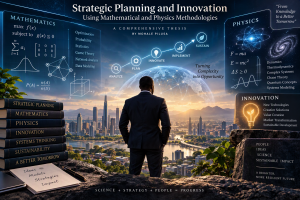
- Strategic Planning and Precision Execution: choose a defensible ecosystem role, then build the operating architecture that delivers it.
- Next-Generation Material Science: advanced materials are the most direct way to grow output while using fewer raw materials.
- Gallium Minerals: a small market with outsized impact in communications chips, LEDs and power electronics.
- Silicon, Gallium and Germanium: silicon gives scale, gallium compounds give specialisation, and germanium gives extended sensing.
- Sequence Infrastructure for a City of 12 Million: build foundations first, connect the networks, then bring services close to home.
- Digging for Power (Ancient Egyptian Mining, c. 4000–30 BCE): mineral wealth depended on moving people, provisions and authority into the desert.
Education and skills
- Bridging the Chasm (South Africa’s Curriculum): stronger foundations, better-supported teachers and practical learning must advance together.
- Learning Difficulties: with understanding and support, learning differences can build resilience and creativity.
- Teaching Children to Think: primary schools should give logic and common sense a protected place beside literacy and numeracy.
- Why Learning Quantum Gravity Pays Off: tutorials build maths skill and scientific judgment, an indirect economic payoff.
- The Cognitive Architecture of Human Intelligence: understand the mental processes first, then interpret an IQ score.
- Logic and Implementation Planning: causal reasoning, project decomposition, staged decisions and adaptive review combined into one planning workflow.
Science, nature and health
- The Basic Motion and Speed of Our Universe: Earth turns, the Sun circles the galaxy and space expands. Each speed tells part of the story.
- Laws of Physics and Quantum Physics: a beginner’s guide organised around motion, fields and probability.
- Origin and Significance of Magnets: a force first noticed in a stone now works inside the machines we depend on.
- Human Immune System: protection comes from coordinated barriers, innate recognition and antigen-specific lymphocytes.
- How Many Species Live in Earth’s Oceans? More than 250,000 species are named, and estimates of the true total run from 0.5 to 1 million.
Farming
- Basic Agricultural Planning: turn land, weather and market information into a season plan.
- Healthy Ginger Soil: build a loose, living bed that holds moisture without trapping water.
- Fully Automated Ginger Farm: a five-step automation roadmap from field sensing to packed rhizomes.
Culture, language and practical guides
- The Blind Leading the Blind: the proverb names the timeless danger of confident guidance without sight. It is traced from ancient texts through the Gospels to Bruegel.
- From Pictures to Letters: the 26-letter alphabet is the end of 4,000 years of borrowing and reshaping.
- Top-Notch Perfumes: the language of perfume, eighteen profiles and how to build a starter wardrobe.
- Equalization (EQ): how EQ changes the balance of frequencies in a recording.
Common thread: the book shows how technology, materials, institutions and education connect to the modern economy. It argues that outcomes depend on governance and good judgment, not on technology alone.
DOWNLOAD MY ARTICLE COLLECTION
https://www.millenniumtechsaga3001.com/wp-content/uploads/2026/11/Makoti-Millennium-Articles.pdf

Be First to Comment