
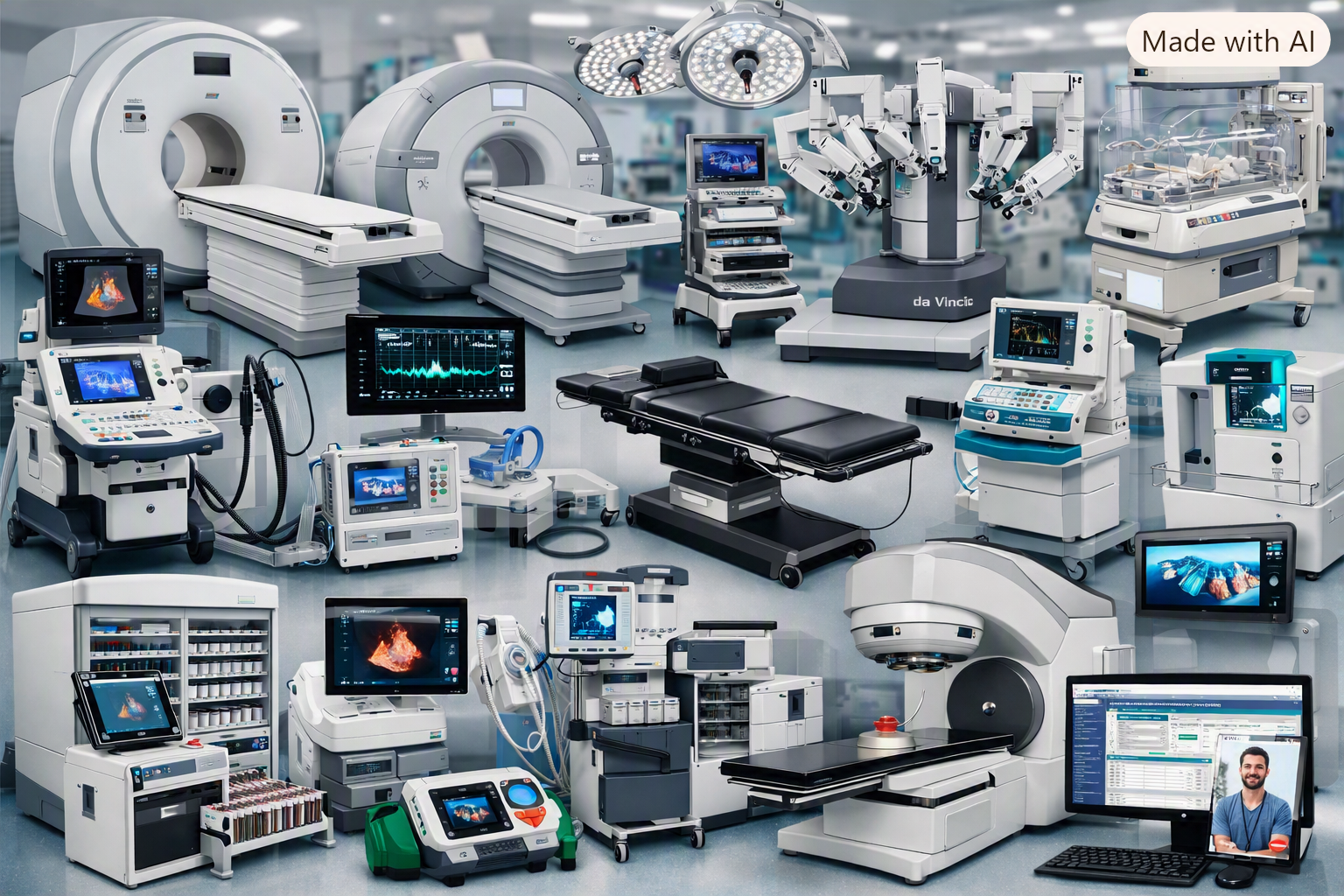
(Fully structured, detailed, academically formatted)
Page 1 — Title Page (No Cover Page Required)
Title: A Comprehensive Study of Modern Equipment in Contemporary Hospitals Author: Mohale Date: 31 August 2026
Page 2 — Executive Summary
Modern hospitals rely on an integrated ecosystem of advanced medical equipment designed to diagnose, monitor, treat, and rehabilitate patients with precision and efficiency. This thesis explores the evolution, classification, technological foundations, and operational significance of modern hospital equipment across all major departments. It highlights how innovations in imaging, robotics, diagnostics, informatics, and life‑support systems have transformed healthcare delivery.
CHAPTER 1 — INTRODUCTION (Pages 3–4)
1.1 Background
Hospitals have evolved from basic care centres into technologically advanced institutions equipped with machines capable of performing complex diagnostics, surgeries, and therapeutic interventions.
1.2 Purpose of the Thesis
To provide a comprehensive catalogue and explanation of modern hospital equipment, their functions, and their role in improving patient outcomes.
1.3 Scope
Covers equipment across radiology, surgery, emergency care, ICU, laboratory, pharmacy automation, rehabilitation, maternity, oncology, and hospital IT infrastructure.
CHAPTER 2 — RADIOLOGY & IMAGING EQUIPMENT (Pages 5–8)
Modern imaging equipment forms the backbone of diagnostic medicine.
2.1 Magnetic Resonance Imaging (MRI) Machines
- 1.5 Tesla MRI
- 3 Tesla MRI
- Functional MRI (fMRI)
- Open MRI systems Function: Soft‑tissue imaging using magnetic fields.
2.2 Computed Tomography (CT) Scanners
- 64‑slice CT
- 128‑slice CT
- 256‑slice CT
- Dual‑energy CT Function: Cross‑sectional imaging using X‑rays.
2.3 Digital X‑Ray Systems
- DR (Digital Radiography)
- Portable X‑ray machines
- Fluoroscopy units
2.4 Ultrasound Machines
- Doppler ultrasound
- 3D/4D ultrasound
- Portable handheld ultrasound
2.5 Nuclear Medicine Equipment
- PET scanners
- SPECT scanners
- Gamma cameras
2.6 Mammography Units
- Digital mammography
- Tomosynthesis (3D breast imaging)
CHAPTER 3 — SURGICAL & OPERATING THEATRE EQUIPMENT (Pages 9–12)
3.1 Surgical Robots
- Da Vinci Surgical System
- Orthopaedic robotic arms
- Neurosurgical robotic navigation systems
3.2 Operating Room Tables
- Hydraulic OR tables
- Radiolucent tables
- Bariatric surgical tables
3.3 Surgical Lights
- LED shadowless lights
- Ceiling‑mounted multi‑arm lights
3.4 Anaesthesia Machines
- Ventilator‑integrated anaesthesia units
- Gas delivery systems
- Patient monitoring integration
3.5 Electrosurgical Units (ESU)
- Monopolar and bipolar cautery
- Plasma surgery devices
3.6 Endoscopy & Laparoscopy Systems
- HD endoscopy towers
- CO₂ insufflators
- Laparoscopic instruments
3.7 Sterilisation Equipment
- Autoclaves
- Plasma sterilisation units
- UV‑C sterilisation robots
CHAPTER 4 — EMERGENCY DEPARTMENT EQUIPMENT (Pages 13–15)
4.1 Trauma Equipment
- Defibrillators (AED & manual)
- Trauma stretchers
- Cervical collars
- Rapid infusers
4.2 Monitoring Equipment
- Multi‑parameter monitors
- Capnography devices
- Portable ECG machines
4.3 Airway & Ventilation Equipment
- Video laryngoscopes
- Portable ventilators
- CPAP/BiPAP machines
4.4 Point‑of‑Care Testing Devices
- Blood gas analysers
- Glucometers
- Rapid troponin testing
CHAPTER 5 — INTENSIVE CARE UNIT (ICU) EQUIPMENT (Pages 16–18)
5.1 Life Support Systems
- ICU ventilators
- ECMO machines
- Dialysis machines
5.2 Advanced Monitoring Systems
- Arterial line monitors
- Central monitoring stations
- EEG monitors
5.3 Infusion & Medication Delivery
- Smart infusion pumps
- Syringe pumps
- PCA (Patient‑Controlled Analgesia) pumps
5.4 Isolation & Infection Control
- Negative pressure rooms
- HEPA filtration systems
- UV‑C disinfection robots
CHAPTER 6 — LABORATORY & DIAGNOSTIC EQUIPMENT (Pages 19–21)
6.1 Haematology Equipment
- Automated blood analysers
- Coagulation analysers
6.2 Microbiology Equipment
- PCR machines
- Biosafety cabinets
- Incubators
6.3 Chemistry Analysers
- Immunoassay analysers
- Electrolyte analysers
6.4 Pathology Equipment
- Cryostats
- Microtomes
- Digital pathology scanners
CHAPTER 7 — PHARMACY AUTOMATION & MEDICATION SYSTEMS (Pages 22–23)
7.1 Automated Dispensing Cabinets
- Pyxis
- Omnicell
7.2 Compounding Robots
- IV compounding systems
- Chemotherapy preparation robots
7.3 Medication Tracking Systems
- RFID medication tracking
- Barcode medication administration
CHAPTER 8 — MATERNITY & NEONATAL EQUIPMENT (Pages 24–26)
8.1 Labour & Delivery Equipment
- Foetal monitors
- Birthing beds
- Epidural pumps
8.2 Neonatal ICU (NICU) Equipment
- Incubators
- Neonatal ventilators
- Phototherapy units
8.3 Obstetric Imaging
- 4D ultrasound
- Foetal Doppler systems
CHAPTER 9 — ONCOLOGY & CANCER TREATMENT EQUIPMENT (Pages 27–29)
9.1 Radiotherapy Machines
- Linear accelerators (LINAC)
- CyberKnife
- Gamma Knife
9.2 Chemotherapy Delivery Systems
- Infusion pumps
- Chemo safety hoods
9.3 Nuclear Oncology Equipment
- PET‑CT
- Radiopharmaceutical preparation systems
CHAPTER 10 — HOSPITAL IT & DIGITAL INFRASTRUCTURE (Pages 30–32)
10.1 Electronic Health Records (EHR)
- Integrated patient management systems
10.2 Hospital Networking Equipment
- Medical‑grade servers
- Secure Wi‑Fi systems
- PACS (Picture Archiving and Communication System)
10.3 Telemedicine Equipment
- Teleconsultation carts
- Remote monitoring devices
10.4 Cybersecurity Systems
- Firewalls
- Data encryption systems
CHAPTER 11 — FUTURE TECHNOLOGIES IN HOSPITALS (Pages 33–34)
11.1 AI‑Driven Diagnostics
- AI radiology platforms
- Predictive analytics systems
11.2 Robotics & Automation
- Autonomous delivery robots
- Robotic rehabilitation systems
11.3 Smart Hospitals
- IoT‑connected beds
- Automated climate control
- Smart medication cabinets
CHAPTER 12 — CONCLUSION (Page 35)
Modern hospitals are complex ecosystems powered by advanced equipment that enhances precision, safety, and efficiency. As technology evolves, hospitals will continue integrating robotics, AI, automation, and digital systems to deliver superior patient care.





Be First to Comment