Abstract
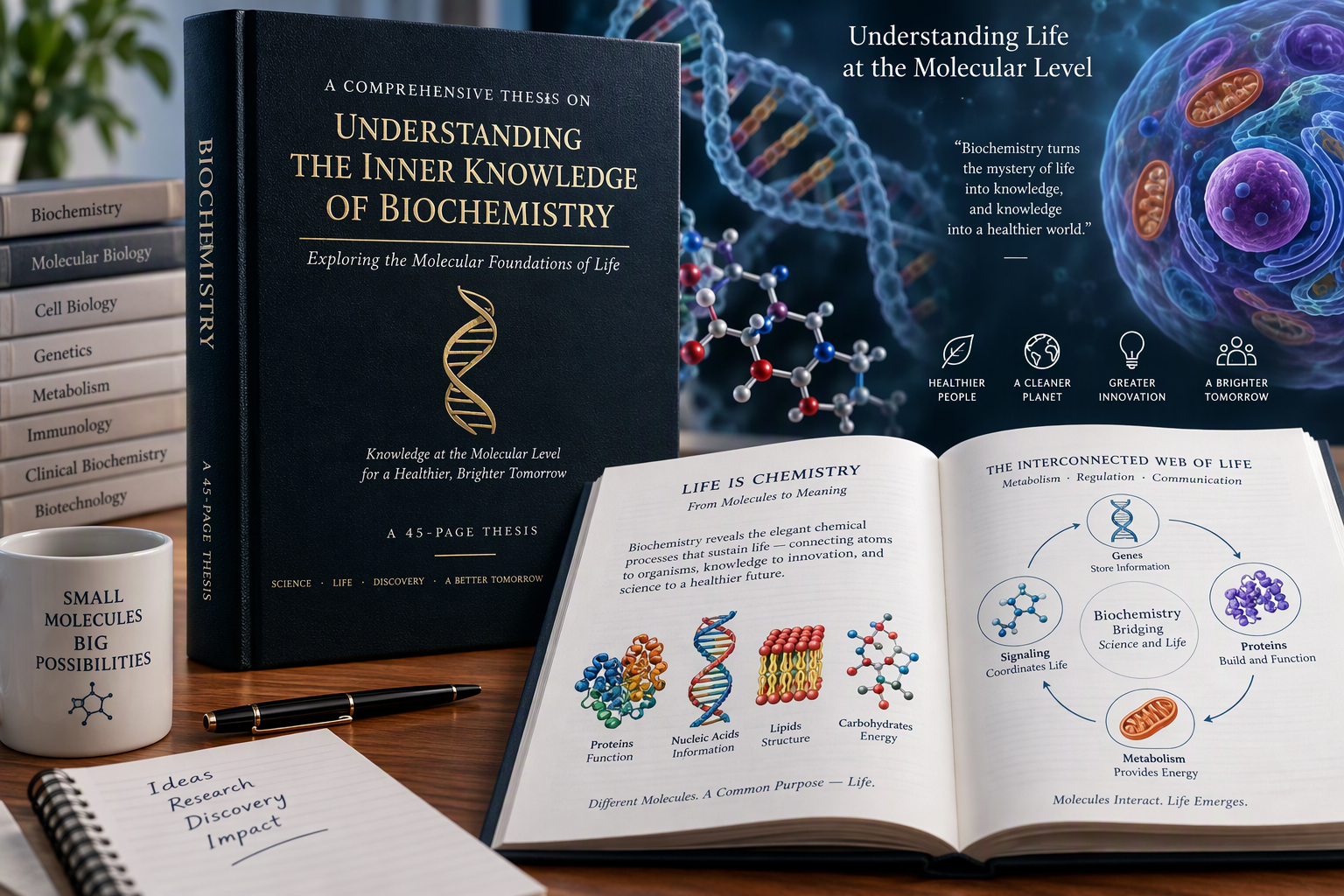
Biochemistry is the scientific discipline that explores the chemical foundations of life. It reveals how living organisms function at the molecular level through interactions among atoms, molecules, cells, tissues, and organ systems. Understanding the inner knowledge of biochemistry involves studying the structure, function, metabolism, regulation, and communication of biological molecules that sustain life. This thesis presents a comprehensive exploration of biochemistry, including its foundations, molecular components, metabolic pathways, genetic mechanisms, cellular communication, disease relationships, biotechnology applications, and future prospects.
Table of Contents
- Introduction to Biochemistry
- Historical Development of Biochemistry
- Chemical Foundations of Life
- Water: The Universal Solvent
- Biological Macromolecules
- Carbohydrates and Their Functions
- Lipids and Biological Membranes
- Proteins: The Machinery of Life
- Enzymes and Biological Catalysis
- Nucleic Acids and Genetic Information
- Cellular Organization
- Bioenergetics and Thermodynamics
- ATP: The Energy Currency
- Metabolism Overview
- Carbohydrate Metabolism
- Glycolysis and Energy Production
- Citric Acid Cycle
- Oxidative Phosphorylation
- Lipid Metabolism
- Protein Metabolism
- Amino Acid Biochemistry
- Vitamins and Coenzymes
- Hormones and Biochemical Regulation
- Cell Signaling Pathways
- Molecular Genetics
- DNA Replication
- Transcription Mechanisms
- Translation and Protein Synthesis
- Gene Regulation
- Epigenetics
- Immunological Biochemistry
- Biochemistry of Disease
- Cancer Biochemistry
- Neurochemistry
- Biochemistry of Aging
- Environmental Biochemistry
- Biotechnology Applications
- Industrial Biochemistry
- Clinical Biochemistry
- Nutritional Biochemistry
- Systems Biology
- Synthetic Biology
- Emerging Biochemical Technologies
- Future of Biochemistry
- Conclusion
Chapter 1: Introduction to Biochemistry
Biochemistry is the branch of science that examines the chemical processes occurring within living organisms. It bridges biology and chemistry to explain life at the molecular level. Every physiological process, from breathing to thinking, depends on biochemical reactions.
Biochemistry answers fundamental questions:
- How do cells obtain energy?
- How is genetic information stored and transmitted?
- How do diseases arise at the molecular level?
- How do drugs affect biological systems?
The field is central to medicine, agriculture, biotechnology, pharmacology, and environmental sciences.
Chapter 2: Historical Development of Biochemistry
The development of biochemistry began with discoveries regarding fermentation, metabolism, and cellular structures.
Key contributors include:
- Antoine Lavoisier
- Louis Pasteur
- Eduard Buchner
- Frederick Sanger
- James Watson
- Francis Crick
These pioneers transformed biology into a molecular science.
Chapter 3: Chemical Foundations of Life
Living systems are primarily composed of six elements:
- Carbon
- Hydrogen
- Oxygen
- Nitrogen
- Phosphorus
- Sulfur
These elements form the basis of biological molecules due to their bonding properties.
Carbon’s unique ability to create stable chains allows extraordinary molecular diversity.
Chapter 4: Water: The Universal Solvent
Water constitutes approximately 60-70% of human body mass.
Functions include:
- Temperature regulation
- Transport medium
- Solvent for biochemical reactions
- Maintenance of cellular structure
Hydrogen bonding gives water remarkable properties necessary for life.
Chapter 5: Biological Macromolecules
Four major classes:
Carbohydrates
Provide energy and structural support.
Lipids
Store energy and form membranes.
Proteins
Perform catalytic and structural functions.
Nucleic Acids
Store genetic information.
Together they form the molecular basis of all living organisms.
Chapter 6: Carbohydrates and Their Functions
Carbohydrates are organic compounds composed of carbon, hydrogen, and oxygen.
Examples:
- Glucose
- Fructose
- Sucrose
- Glycogen
- Starch
Functions:
- Energy generation
- Cell recognition
- Structural support
Chapter 7: Lipids and Biological Membranes
Lipids include:
- Fats
- Oils
- Phospholipids
- Steroids
- Waxes
The phospholipid bilayer forms cellular membranes, creating selective barriers that regulate molecular movement.
Chapter 8: Proteins: The Machinery of Life
Proteins are polymers of amino acids.
Major roles:
- Structural support
- Transport
- Defense
- Hormonal regulation
- Enzymatic catalysis
Protein structure exists at four levels:
- Primary
- Secondary
- Tertiary
- Quaternary
Chapter 9: Enzymes and Biological Catalysis
Enzymes accelerate reactions by lowering activation energy.
Characteristics:
- Specificity
- Efficiency
- Regulation
- Reusability
Examples:
- Amylase
- Lipase
- DNA Polymerase
Enzymes are essential for all metabolic processes.
Chapter 10: Nucleic Acids and Genetic Information
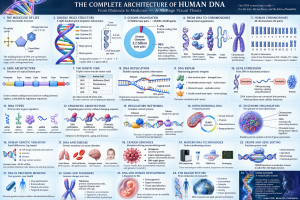
DNA and RNA carry hereditary information.
DNA consists of:
- Adenine
- Thymine
- Cytosine
- Guanine
RNA replaces thymine with uracil.
These molecules direct cellular development and function.
Chapter 11: Cellular Organization
Cells are the fundamental units of life.
Major organelles include:
- Nucleus
- Mitochondria
- Ribosomes
- Endoplasmic Reticulum
- Golgi Apparatus
- Lysosomes
Each organelle performs specialized biochemical functions.
Chapter 12: Bioenergetics and Thermodynamics
Bioenergetics studies energy flow through biological systems.
Important concepts:
- Enthalpy
- Entropy
- Gibbs Free Energy
Living systems maintain order by continuously exchanging energy with their environment.
Chapter 13: ATP: The Energy Currency
Adenosine Triphosphate (ATP) stores chemical energy.
Functions:
- Muscle contraction
- Biosynthesis
- Transport mechanisms
- Cell signaling
ATP turnover in humans can exceed body weight daily.
Chapters 14–20: Metabolism and Energy Production
Metabolism consists of:
Catabolism
Breakdown of molecules to release energy.
Anabolism
Building complex molecules using energy.
Key pathways:
- Glycolysis
- Gluconeogenesis
- Glycogenesis
- Glycogenolysis
- Beta-Oxidation
- Citric Acid Cycle
- Oxidative Phosphorylation
These pathways form an interconnected metabolic network.
Chapter 21: Amino Acid Biochemistry
Twenty standard amino acids form proteins.
Important functions:
- Neurotransmitter synthesis
- Hormone production
- Tissue repair
- Energy metabolism
Essential amino acids must be obtained through diet.
Chapter 22: Vitamins and Coenzymes
Vitamins function as enzyme cofactors.
Examples:
| Vitamin | Function |
|---|---|
| A | Vision |
| B1 | Carbohydrate metabolism |
| B12 | DNA synthesis |
| C | Collagen formation |
| D | Calcium regulation |
| E | Antioxidant |
| K | Blood clotting |
Deficiencies lead to disease.
Chapter 23: Hormones and Biochemical Regulation
Hormones coordinate physiological processes.
Types:
- Peptide hormones
- Steroid hormones
- Amino acid derivatives
Examples:
- Insulin
- Glucagon
- Cortisol
- Estrogen
- Testosterone
Chapter 24: Cell Signaling Pathways
Cell communication occurs through:
- Receptors
- Second messengers
- Signal cascades
Key pathways:
- cAMP pathway
- Calcium signaling
- MAPK pathway
- PI3K pathway
Chapter 25: Molecular Genetics
Genes contain instructions for protein synthesis.
Genetic information flows through:
DNA → RNA → Protein
This principle is known as the Central Dogma.
Chapters 26–29: Information Processing
These chapters examine:
DNA Replication
Faithful copying of genetic material.
Transcription
Conversion of DNA into RNA.
Translation
Production of proteins.
Gene Regulation
Control of gene expression.
These processes ensure cellular function and adaptation.
Chapter 30: Epigenetics
Epigenetics modifies gene expression without altering DNA sequence.
Mechanisms:
- DNA methylation
- Histone modification
- Non-coding RNAs
Epigenetics influences development, aging, and disease.
Chapter 31: Immunological Biochemistry
Immune responses involve:
- Antibodies
- Antigens
- Cytokines
- Complement proteins
Biochemical interactions protect the body against pathogens.
Chapter 32: Biochemistry of Disease
Diseases often result from molecular dysfunction.
Examples:
- Diabetes
- Sickle Cell Disease
- Alzheimer’s Disease
- Parkinson’s Disease
- Metabolic Disorders
Understanding biochemical pathways enables targeted therapies.
Chapter 33: Cancer Biochemistry
Cancer is fundamentally a biochemical and genetic disease.
Common features:
- Uncontrolled cell growth
- Genetic mutations
- Altered metabolism
- Resistance to apoptosis
Modern treatments target specific molecular pathways.
Chapter 34: Neurochemistry
The nervous system relies on biochemical signaling.
Neurotransmitters include:
- Dopamine
- Serotonin
- Acetylcholine
- GABA
- Glutamate
These molecules influence mood, cognition, and behavior.
Chapter 35: Biochemistry of Aging
Aging involves cumulative biochemical changes.
Contributing factors:
- Oxidative stress
- DNA damage
- Mitochondrial dysfunction
- Protein aggregation
Research aims to slow age-related degeneration.
Chapter 36: Environmental Biochemistry
This field examines interactions between organisms and environmental chemicals.
Topics:
- Pollution
- Toxin metabolism
- Biodegradation
- Climate change effects
Biochemical adaptation promotes survival.
Chapter 37: Biotechnology Applications
Biochemistry drives biotechnology innovations:
- Recombinant DNA technology
- Gene editing
- Vaccine production
- Biopharmaceuticals
Applications affect agriculture, medicine, and industry.
Chapter 38: Industrial Biochemistry
Industrial processes employ enzymes and microorganisms.
Examples:
- Biofuels
- Food production
- Fermentation
- Waste treatment
These technologies increase efficiency and sustainability.
Chapter 39: Clinical Biochemistry
Clinical laboratories analyze biomarkers.
Common tests:
- Blood glucose
- Liver enzymes
- Cholesterol
- Electrolytes
These measurements assist diagnosis and treatment.
Chapter 40: Nutritional Biochemistry
Nutrition studies interactions between food and metabolism.
Topics include:
- Macronutrients
- Micronutrients
- Digestive physiology
- Metabolic health
Balanced nutrition supports biochemical homeostasis.
Chapter 41: Systems Biology
Systems biology investigates biological networks rather than isolated components.
Approaches:
- Omics technologies
- Computational modeling
- Network analysis
This holistic perspective improves understanding of complex diseases.
Chapter 42: Synthetic Biology
Synthetic biology combines engineering and biochemistry.
Applications include:
- Engineered bacteria
- Artificial metabolic pathways
- Biosensors
- Sustainable manufacturing
Chapter 43: Emerging Biochemical Technologies
Advanced technologies include:
- CRISPR Gene Editing
- Nanobiotechnology
- Proteomics
- Metabolomics
- Single-cell sequencing
These tools expand scientific understanding dramatically.
Chapter 44: Future of Biochemistry
Future developments are expected in:
- Precision medicine
- Personalized nutrition
- Regenerative medicine
- Artificial intelligence-assisted drug discovery
- Quantum biological modeling
Biochemistry will remain central to scientific advancement.
Chapter 45: Conclusion
The inner knowledge of biochemistry reveals the molecular foundation of life itself. Every biological process originates from highly organized chemical interactions involving proteins, nucleic acids, carbohydrates, lipids, vitamins, minerals, hormones, and countless metabolic intermediates. Understanding these processes allows scientists to diagnose disease, improve health, engineer biological systems, increase agricultural productivity, and develop advanced technologies.
Biochemistry bridges chemistry, biology, medicine, genetics, biotechnology, and computational sciences. As humanity enters an era of precision medicine, synthetic biology, artificial intelligence, and molecular engineering, biochemistry stands as one of the most important disciplines for understanding and shaping the future of life on Earth. Through continuous research and innovation, the biochemical sciences will continue uncovering the hidden molecular mechanisms that govern health, disease, evolution, and biological complexity.

Be First to Comment