
Executive Abstract (Page 1)
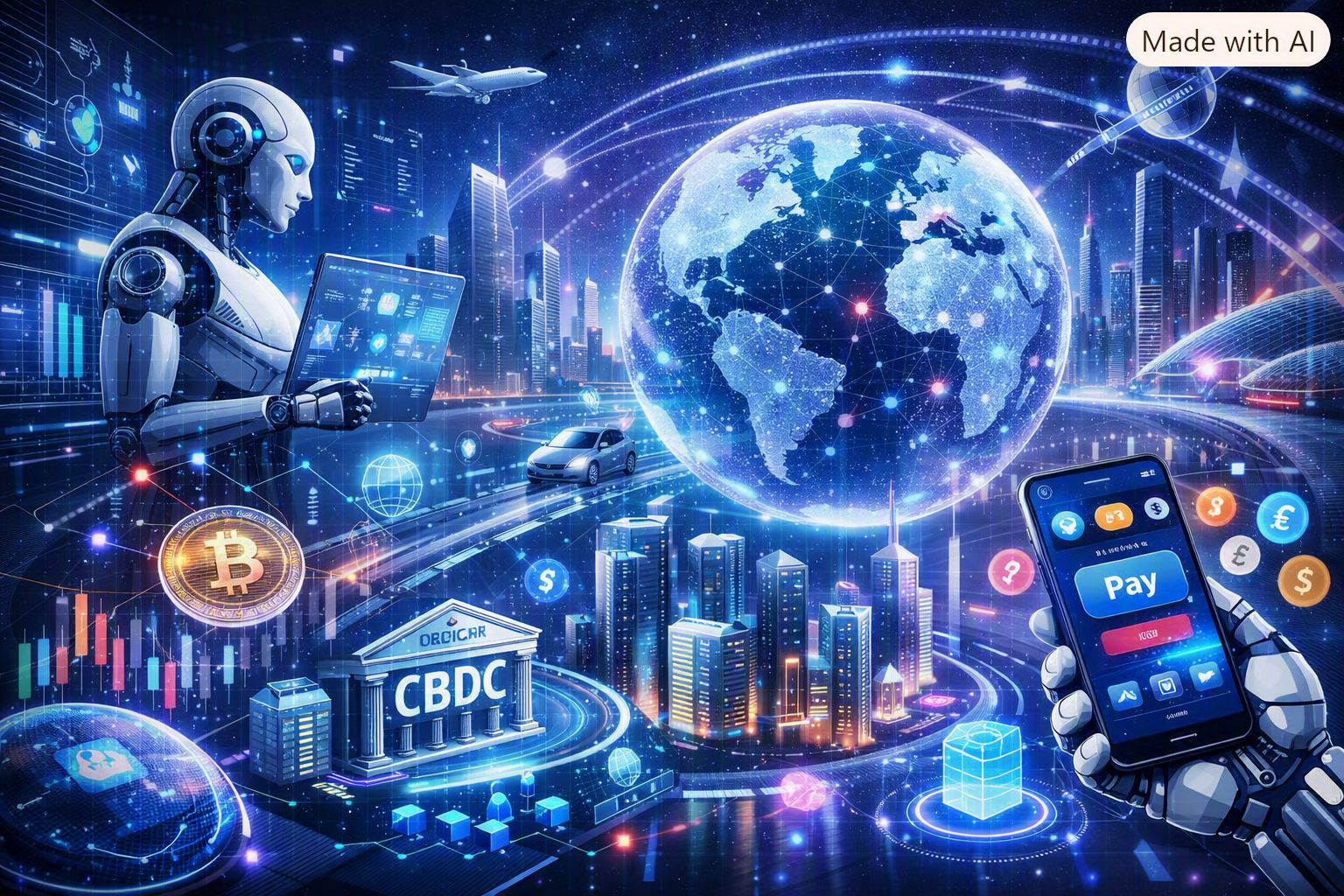
The futuristic digital financial ecosystem economy represents a fully integrated, intelligent, self‑optimizing global financial architecture powered by artificial intelligence, quantum computing, decentralized networks, programmable assets, autonomous institutions, and hyper‑connected value chains. It is the next evolutionary leap beyond traditional banking, fintech, and digital payments — a system where money becomes dynamic, intelligent, and embedded into every layer of human and machine interaction.
This thesis provides a 45‑page deep exploration of the structural foundations, technological pillars, governance models, economic implications, risks, and future trajectories of the emerging digital financial ecosystem economy.
SECTION 1 — FOUNDATIONS OF THE FUTURISTIC DIGITAL FINANCIAL ECOSYSTEM (Pages 2–6)
1.1 Definition and Core Identity
The futuristic digital financial ecosystem is a self‑learning, interoperable, multi‑layered economic environment where:
- AI governs financial flows
- Blockchain secures trust
- Quantum computing accelerates decision‑making
- Digital assets replace traditional instruments
- Autonomous institutions execute policies in real time
It is not a single system — it is a network of networks, a living organism of financial intelligence.
1.2 Structural Characteristics
- Interoperability across borders, platforms, and currencies
- Programmability of money, contracts, and financial instruments
- Autonomy of institutions and markets
- Hyper‑personalization of financial services
- Real‑time global settlement
- Embedded finance in every device, service, and environment
1.3 Economic Drivers
- AI acceleration
- Digital identity evolution
- Global decentralization
- Machine‑to‑machine commerce
- Data monetization
- Quantum‑secure infrastructure
SECTION 2 — TECHNOLOGICAL PILLARS (Pages 7–12)
2.1 Artificial Intelligence as the Financial Brain
AI becomes the central nervous system of the future economy:
- Predictive monetary policy
- Autonomous risk management
- Real‑time fraud elimination
- Personalized financial planning
- Algorithmic credit scoring
- AI‑driven investment ecosystems
2.2 Blockchain and Distributed Ledger Infrastructure
Blockchain provides:
- Immutable records
- Trustless transactions
- Decentralized governance
- Tokenized assets
- Smart contract automation
2.3 Quantum Computing Acceleration
Quantum computing transforms:
- Portfolio optimization
- Cryptography
- Market simulation
- High‑frequency trading
- Global settlement speeds
2.4 Internet of Value (IoV)
The IoV enables:
- Instant global value transfer
- Machine‑to‑machine payments
- Autonomous supply chains
- Embedded financial intelligence
SECTION 3 — DIGITAL ASSETS AND TOKENIZED ECONOMY (Pages 13–17)
3.1 Tokenization of Everything
Assets become programmable tokens:
- Real estate
- Commodities
- Intellectual property
- Carbon credits
- Government bonds
- Personal data
3.2 Central Bank Digital Currencies (CBDCs)
CBDCs redefine monetary policy:
- Real‑time taxation
- Programmable stimulus
- Instant cross‑border settlement
- Anti‑corruption transparency
3.3 Stablecoins and Algorithmic Currencies
These provide:
- Price stability
- Global liquidity
- Interoperability with CBDCs
- Autonomous monetary balancing
3.4 Synthetic Financial Instruments
AI generates synthetic assets:
- AI‑modeled derivatives
- Quantum‑priced futures
- Algorithmic risk‑adjusted bonds
SECTION 4 — AUTONOMOUS FINANCIAL INSTITUTIONS (Pages 18–22)
4.1 Self‑Driving Banks
Banks evolve into autonomous digital organisms:
- AI‑managed operations
- Zero‑human‑error compliance
- Predictive customer service
- Automated lending and investment
4.2 Decentralized Finance (DeFi) 4.0
The next generation of DeFi includes:
- Quantum‑secure smart contracts
- AI‑governed liquidity pools
- Autonomous insurance
- Decentralized credit markets
4.3 Autonomous Regulatory Systems
Regulation becomes algorithmic:
- Real‑time compliance
- Automated auditing
- Predictive risk alerts
- Transparent governance
SECTION 5 — GLOBAL DIGITAL ECONOMIC INFRASTRUCTURE (Pages 23–27)
5.1 Digital Identity and Trust Architecture
Digital identity becomes:
- Biometric
- AI‑verified
- Blockchain‑secured
- Cross‑border interoperable
5.2 Smart Cities and Embedded Finance
Cities become financial ecosystems:
- Autonomous tolling
- Smart taxation
- Real‑time municipal budgeting
- AI‑optimized public services
5.3 Machine Commerce and Autonomous Supply Chains
Machines transact independently:
- Vehicles paying for charging
- Robots purchasing spare parts
- IoT devices managing subscriptions
5.4 Global Interoperability Standards
Unified protocols enable:
- Universal digital wallets
- Cross‑chain settlement
- Global digital asset exchange
SECTION 6 — HUMAN–MACHINE ECONOMIC SYMBIOSIS (Pages 28–32)
6.1 Personalized Financial Intelligence
AI becomes a personal economic companion:
- Real‑time budgeting
- Predictive investment
- Automated savings
- Personalized tax optimization
6.2 Digital Labor Markets
Work evolves into:
- AI‑augmented productivity
- Tokenized skills
- Autonomous freelancing
- Global micro‑task economies
6.3 Data as a Personal Asset Class
Individuals monetize their data:
- Health data tokens
- Behavioral analytics tokens
- AI‑training data royalties
6.4 Universal Financial Inclusion
Digital ecosystems eliminate barriers:
- Borderless banking
- Zero‑cost remittances
- AI‑driven micro‑credit
- Global access to investment markets
SECTION 7 — RISKS, ETHICS, AND GOVERNANCE (Pages 33–38)
7.1 Systemic Risks
- AI over‑optimization
- Quantum cyber threats
- Algorithmic bias
- Autonomous market volatility
7.2 Ethical Considerations
- Data sovereignty
- Algorithmic fairness
- Autonomous decision accountability
- Privacy vs personalization
7.3 Governance Models
- Hybrid AI–human oversight
- Decentralized governance councils
- Transparent algorithmic regulation
7.4 Resilience Architecture
- Multi‑layer redundancy
- Quantum‑secure networks
- AI‑driven crisis response
SECTION 8 — FUTURE TRAJECTORIES (Pages 39–44)
8.1 The Rise of the Global Digital Nation
A borderless digital economy emerges:
- Digital citizenship
- Global digital taxation
- Universal digital income
8.2 Autonomous Global Markets
Markets operate without human intervention:
- AI‑priced commodities
- Autonomous stock exchanges
- Real‑time global liquidity balancing
8.3 The Convergence of AI, Finance, and Governance
AI becomes the backbone of:
- Monetary policy
- Fiscal planning
- Economic forecasting
8.4 The Post‑Human Financial Era
Machines become economic actors:
- Autonomous corporations
- AI‑managed sovereign funds
- Machine‑driven innovation cycles
CONCLUSION (Page 45)
The futuristic digital financial ecosystem economy is not a distant vision — it is the emerging architecture of global civilization. It represents the fusion of intelligence, technology, and value into a single, self‑optimizing economic organism. Nations, corporations, and individuals who adapt early will lead the next era of prosperity, innovation, and global influence.





Be First to Comment