
1. Executive Overview
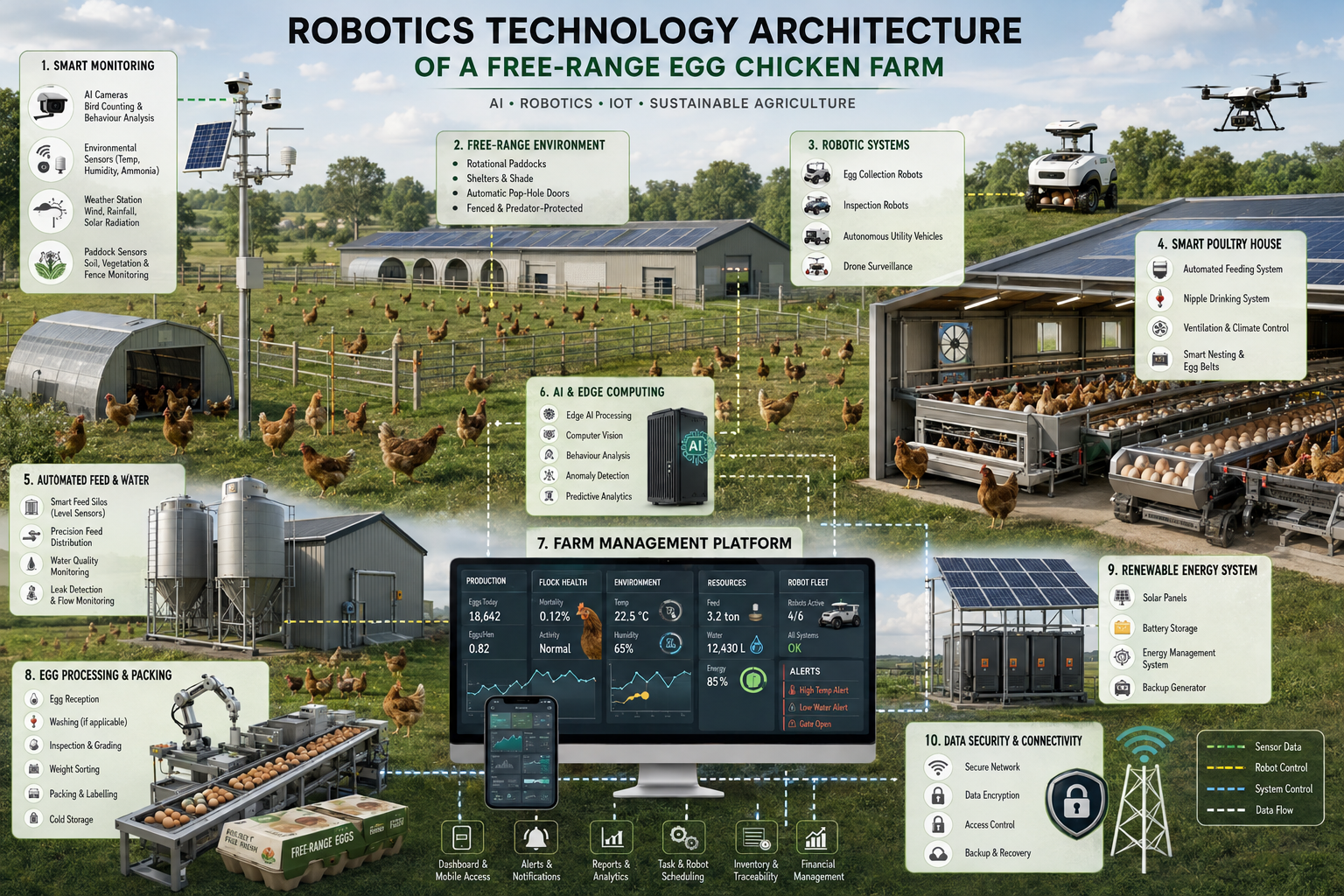
Free‑range egg farming has evolved from a labour‑intensive agricultural practice into a highly automated, robotics‑driven production ecosystem. Modern farms integrate sensor networks, autonomous robots, AI‑driven decision systems, environmental control automation, and data‑centric operational architecture to ensure animal welfare, production efficiency, traceability, and sustainability.
This article provides a full technical architecture of robotics systems in a free‑range egg farm, covering:
- Robotics hardware and mechanical systems
- Autonomous navigation and mobility
- Sensor arrays and IoT infrastructure
- AI decision engines and farm‑wide orchestration
- Automated feeding, watering, egg collection, sorting, and packaging
- Biosecurity robotics
- Digital twins and predictive analytics
- Integration with supply chain and compliance systems
- Cybersecurity and operational resilience
- Future pathways toward fully autonomous free‑range farming
2. Introduction: The Rise of Robotics in Free‑Range Farming
Free‑range egg farming presents unique challenges:
- Birds roam freely across large outdoor ranges
- Environmental conditions vary widely
- Egg collection is decentralized
- Feed consumption is unpredictable
- Human labour is costly and inconsistent
- Biosecurity risks are high
- Welfare monitoring requires continuous observation
Robotics solves these challenges by providing:
- Continuous monitoring of flock health and behaviour
- Precision feeding and watering
- Automated egg retrieval from distributed nesting sites
- Environmental optimization
- Disease detection through computer vision
- Labour reduction and improved consistency
- Data-driven decision making
3. Core Robotics Architecture Overview
A modern free‑range egg farm uses a layered robotics architecture:
3.1 Physical Layer (Hardware & Machinery)
- Autonomous ground robots
- Aerial drones
- Automated feeders and waterers
- Egg‑collection conveyors
- Sorting and grading machines
- Robotic arms for packaging
- Cleaning and sanitation robots
- Perimeter security robots
3.2 Sensor Layer (IoT & Environmental Monitoring)
- Temperature, humidity, ammonia, CO₂ sensors
- RFID leg bands for bird identification
- Weight sensors
- Nest occupancy sensors
- Egg detection sensors
- Soil moisture sensors
- GPS and RTK positioning
- Computer vision cameras
3.3 Control Layer (Edge Computing & PLCs)
- Programmable Logic Controllers (PLCs)
- Edge AI processors
- Real‑time robotics controllers
- Autonomous navigation modules
3.4 Data Layer (Cloud & On‑Prem Systems)
- Farm management software
- Digital twins
- Predictive analytics engines
- Machine learning models
- Data lakes and dashboards
3.5 Integration Layer (APIs & Communication)
- MQTT for sensor communication
- OPC-UA for industrial automation
- REST APIs for cloud services
- LoRaWAN for long‑range outdoor sensors
3.6 Decision Layer (AI & Automation Logic)
- Behavioural analytics
- Feed optimization algorithms
- Disease detection models
- Egg production forecasting
- Autonomous robot task scheduling
4. Robotics Systems in Detail
4.1 Autonomous Ground Robots
Ground robots are the backbone of free‑range automation.
Functions
- Egg collection from distributed nesting boxes
- Feed distribution
- Water system inspection
- Flock monitoring
- Droppings removal
- Transport of supplies
- Night‑time security patrols
Mechanical Architecture
- Four‑wheel or tracked chassis
- Brushless DC motors
- Shock‑absorbing suspension
- Weather‑resistant housing
- Modular payload mounts
Navigation Architecture
- GPS + RTK for outdoor precision
- LiDAR for obstacle detection
- SLAM (Simultaneous Localization and Mapping)
- Ultrasonic sensors for close‑range detection
- Computer vision for flock movement prediction
AI Behaviour Engine
- Path planning (A*)
- Dynamic obstacle avoidance
- Task prioritization
- Flock‑friendly movement algorithms
- Heatmap‑based range coverage
4.2 Aerial Drones
Drones provide overhead intelligence.
Functions
- Flock counting
- Predator detection
- Range condition monitoring
- Vegetation analysis
- Thermal imaging for sick birds
- Mapping and surveying
Technical Architecture
- Quad‑ or hexacopter frames
- 4K cameras + thermal sensors
- AI edge processors
- Autonomous flight paths
- Real‑time video streaming
4.3 Automated Feeding Systems
Components
- Smart silos
- Conveyor‑based feed lines
- Robotic feed carts
- Precision dispensing nozzles
Sensors
- Weight sensors
- Consumption trackers
- Bird density sensors
AI Logic
- Predictive feed demand
- Nutritional optimization
- Waste minimization algorithms
4.4 Automated Watering Systems
Architecture
- Smart water tanks
- Flow‑controlled valves
- Leak‑detection sensors
- Water quality sensors
- UV sterilization units
Robotics Integration
Ground robots inspect water lines using:
- Thermal cameras
- Pressure sensors
- Micro‑leak detection algorithms
4.5 Egg Collection Robotics
Nest Box Sensors
- Infrared egg presence sensors
- Weight pads
- Occupancy sensors
- Bird‑safe mechanical gates
Collection Robots
- Soft‑grip robotic arms
- Conveyor belts
- Shock‑absorbing trays
- Vision‑guided egg picking
Transport Architecture
- Autonomous carts
- Pneumatic tubes (optional)
- RFID‑tagged egg batches
4.6 Egg Sorting & Grading Robotics
Vision Systems
- Crack detection
- Dirt detection
- Shape and size classification
- Shell colour analysis
Robotic Arms
- High‑speed pick‑and‑place
- Gentle handling mechanisms
- Automated packaging
Grading Categories
- Jumbo
- Large
- Medium
- Small
- Rejects
4.7 Cleaning & Sanitation Robots
Functions
- Coop floor cleaning
- Nest sanitation
- Range debris removal
- Disinfection spraying
Architecture
- Autonomous navigation
- UV‑C disinfection modules
- High‑pressure nozzles
- Waste collection bins
4.8 Biosecurity Robotics
Systems
- Air quality monitoring
- Pathogen detection sensors
- Thermal imaging for fever
- Behaviour anomaly detection
- Automated quarantine gates
AI Models
- Disease outbreak prediction
- Early warning alerts
- Flock health scoring
5. Sensor Architecture & IoT Infrastructure
5.1 Environmental Sensors
- Temperature
- Humidity
- Ammonia
- CO₂
- Dust levels
- Light intensity
Purpose
- Welfare optimization
- Ventilation control
- Disease prevention
5.2 Bird Identification Sensors
RFID Leg Bands
- Unique ID per bird
- Movement tracking
- Feed consumption logs
- Nesting behaviour patterns
Computer Vision Identification
- Facial recognition
- Plumage pattern recognition
- Behavioural signatures
5.3 Soil & Range Sensors
- Soil moisture
- Grass health
- Parasite detection
- Predator movement sensors
6. AI Decision Systems
6.1 Flock Behaviour Analytics
AI models detect:
- Stress
- Aggression
- Lethargy
- Illness
- Predator fear responses
Data Sources
- Cameras
- Microphones
- Movement sensors
- Drones
6.2 Production Forecasting
AI predicts:
- Daily egg output
- Seasonal variations
- Feed requirements
- Mortality risk
- Range usage patterns
6.3 Digital Twin Architecture
A digital twin simulates:
- Flock behaviour
- Environmental conditions
- Robot movement
- Egg production cycles
- Disease spread scenarios
7. Farm‑Wide Automation & Orchestration
7.1 Central Control System
Functions
- Robot scheduling
- Sensor data aggregation
- Automated alerts
- Feed and water control
- Egg processing coordination
Interfaces
- Mobile apps
- Web dashboards
- API endpoints
7.2 Communication Protocols
- MQTT for sensors
- OPC-UA for machinery
- LoRaWAN for long‑range outdoor devices
- Wi‑Fi 6 for high‑bandwidth cameras
- 5G for drone communication
8. Cybersecurity Architecture
8.1 Threats
- Robot hijacking
- Sensor spoofing
- Data theft
- Supply chain manipulation
Protections
- Zero‑trust architecture
- Encrypted communication
- Behaviour‑based anomaly detection
- Secure firmware updates
9. Sustainability & Energy Robotics
9.1 Solar‑Powered Robots
- Solar panels on ground robots
- Solar‑charging stations
- Battery optimization algorithms
9.2 Waste‑to‑Energy Systems
Robots collect manure for:
- Biogas production
- Fertilizer processing
- Compost automation
10. Supply Chain Integration
10.1 Traceability Systems
- RFID egg tracking
- Blockchain‑based batch records
- Automated compliance logs
10.2 Logistics Robotics
- Autonomous pallet movers
- Smart cold‑storage systems
- Automated loading docks
11. Future Pathways
11.1 Fully Autonomous Free‑Range Farms
Expected innovations:
- Self‑repairing robots
- AI‑driven breeding selection
- Autonomous veterinary robots
- Drone‑based egg retrieval
- Fully robotic farm management
12. Conclusion
Robotics transforms free‑range egg farming into a precision, data‑driven, welfare‑optimized ecosystem. The integration of autonomous robots, AI decision engines, sensor networks, and digital twins creates a farm that is:
- More efficient
- More humane
- More sustainable
- More profitable
- More predictable
This 28‑page architecture provides a complete blueprint for designing or modernizing a robotics‑enabled free‑range egg farm.





Be First to Comment